

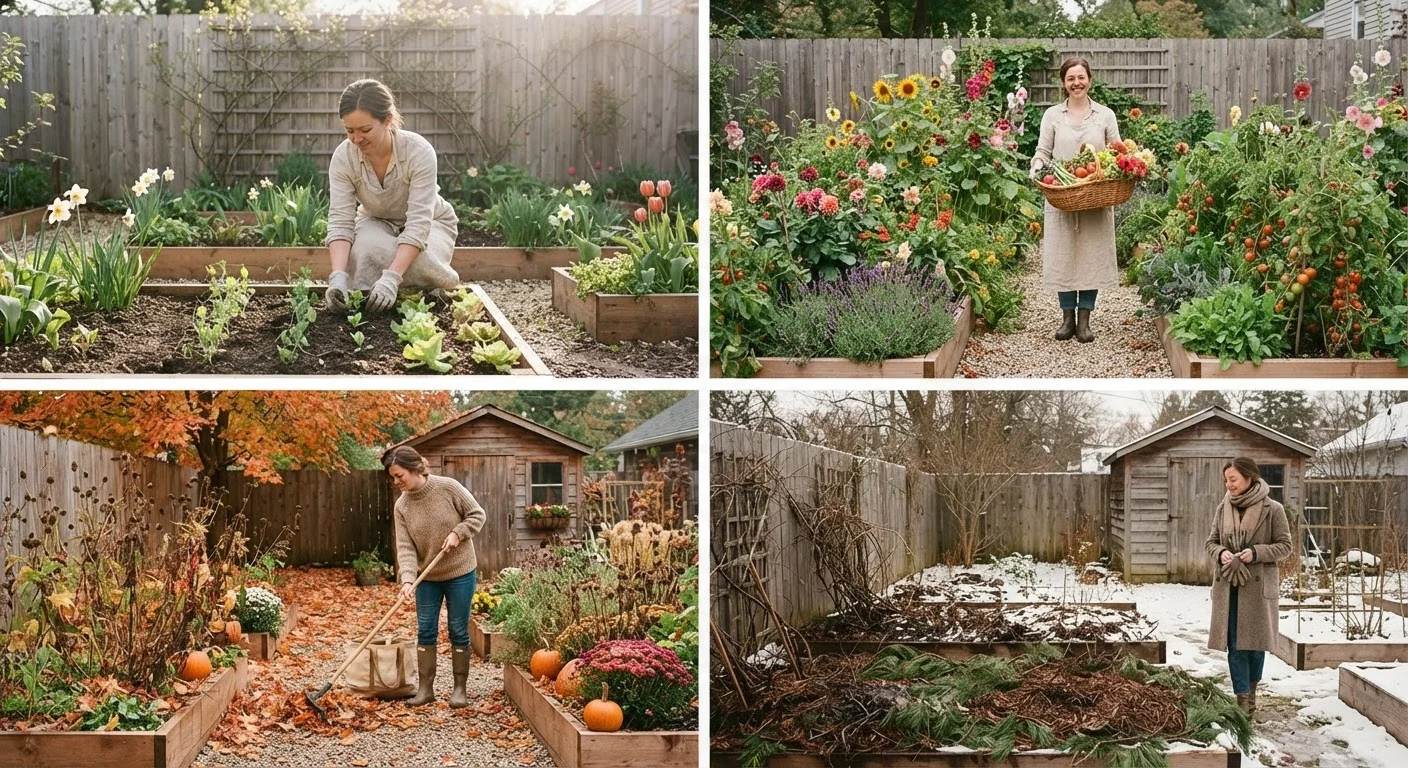
How to Use This Month-by-Month Reference
Healthy gardens are built on consistent, well-timed effort rather than occasional bursts of heavy work. This reference breaks the gardening year into seasonal blocks so you can spend a few focused minutes each month rather than scrambling to catch up. Tasks are grouped by season because local climate varies - a gardener in Georgia will move through these stages earlier than one in Minnesota. Adjust timing to your USDA Hardiness Zone and average last frost date.
For a companion resource on structuring your yard's health alongside your home, see the seasonal home maintenance checklist that covers indoor and outdoor upkeep together.
Winter (December - February): Rest, Plan, and Protect
December: Cut back dead perennial stems to about 4-6 inches if you haven't already, or leave ornamental seed heads standing to feed birds. Drain and store hoses. Check stored bulbs for rot or mold, discarding any that are soft.
January: Order seed catalogs and plan crop rotations on paper. Test stored soil amendments and note what you used last year. Inspect tool handles for cracks; sharpen blades while you have time indoors.
February: Start slow-growing annuals like onions and petunias indoors under grow lights 10-12 weeks before your average last frost. Apply a fresh layer of mulch around perennials if hard freezes are still likely - see the mulch types guide to choose the right material. Prune dormant fruit trees on dry days above freezing.
Spring (March - May): Prepare, Plant, and Feed
March: Remove winter mulch once nighttime temperatures stay above 28°F consistently. Test soil pH and amend with lime or sulfur as needed. Divide overcrowded clumping perennials before new growth emerges. Use the spring garden readiness checklist for a structured walkthrough of every startup task.
April: Direct-sow cool-season crops - lettuce, spinach, peas, and carrots - once soil reaches at least 40°F. Transplant hardened-off seedlings after your last frost date passes. Apply a balanced, slow-release granular fertilizer to established shrubs and perennial beds.
May: Stake tall perennials before they flop. Install soaker hoses or drip irrigation before summer heat arrives. Begin regular weeding - weekly sessions prevent small problems from becoming costly infestations. If you're mixing plant types, the perennials vs. annuals guide explains how to combine both for continuous color at lower cost.
Hardening off
The process of gradually acclimatizing seedlings grown indoors to outdoor conditions - wind, direct sun, and temperature swings - over 7-14 days before transplanting.
Deadheading
Removing spent flower heads from plants to redirect energy toward new blooms rather than seed production, extending the flowering period.
USDA Hardiness Zone
A geographic designation based on average annual minimum winter temperatures, used to determine which plants are most likely to survive outdoors in a given region.
Slow-release fertilizer
A granular or coated fertilizer formulated to break down gradually in soil over weeks or months, supplying nutrients steadily rather than in a single large dose.
Crop rotation
The practice of planting different plant families in the same garden bed across successive seasons to reduce pest and disease buildup in the soil.
Summer (June - August): Maintain, Water, and Monitor
June: Deadhead flowering annuals and reblooming perennials weekly to extend bloom time. Mulch vegetable beds to 2-3 inches to retain moisture and suppress weeds. Watch for aphids, spider mites, and whiteflies; address early with water sprays or insecticidal soap before populations spike.
July: Water deeply and infrequently - most established gardens need about 1 inch per week, ideally delivered at the soil surface early in the morning. Harvest vegetables promptly to encourage continued production. If water use is a concern, the drought-tolerant landscaping guide offers strategies to reduce irrigation demands.
August: Direct-sow fast-maturing cool-season crops (radishes, arugula, spinach) for a fall harvest. Take softwood cuttings from favorite annuals to overwinter indoors. Ease back on fertilizing woody plants so they begin hardening off before fall.
Fall (September - November): Clean Up, Fortify, and Wind Down
September: Plant spring-flowering bulbs (tulips, daffodils, alliums) once soil cools below 60°F. Overseed bare lawn patches and apply fall lawn fertilizer. See the lawn care season-by-season guide for exact timing on aeration and overseeding.
October: Pull out spent annuals and compost disease-free material. Cut back perennials that have gone fully brown, but leave those with decorative seed heads or wildlife value. Apply a 2-3 inch layer of compost to vegetable beds and turn it lightly into the top inch of soil.
November: Drain and blow out irrigation lines before the first hard freeze. Wrap young or tender shrubs with burlap in cold climates. Move container plantings to a protected spot - a garage or unheated shed works well for most hardy plants. For small-space growers, the container gardening guide includes overwintering tips for pots and planters.