

Key Takeaways
Why Containers Work for Small Outdoor Spaces
Container gardening is one of the most accessible forms of food and ornamental growing available to homeowners and renters alike. Unlike in-ground planting - which requires suitable native soil, adequate yard space, and often significant site prep - containers let you define the growing environment entirely. You control the soil quality, drainage, and placement, making it possible to grow productive plants on a concrete balcony or a narrow patio with no ground access at all.
The approach also scales gracefully with budget. A few pots, a bag of potting mix, and some seedlings from a local nursery represent a modest initial investment with potentially high returns in fresh produce or pollinators attracted to flowering plants. For a deeper comparison of growing approaches, see our article on raised beds vs. in-ground planting.
What you will need
Container gardening does require more attentive management than in-ground beds - particularly around watering and feeding - but the trade-off is flexibility. Pots move. If one corner gets too much afternoon sun, you reposition. If frost threatens, you bring sensitive plants inside. That adaptability is a genuine advantage in small, variable urban spaces.
What You'll Need
Containers (various sizes)
Hold growing medium and plants; size determines what crops you can grow.
High-quality potting mix
Provides the drainage, aeration, and nutrient base container plants need - garden soil compacts and suffocates roots.
Drainage saucers or trays
Catch excess water and protect surfaces while allowing pots to drain freely.
Watering can or hose with a gentle nozzle
Delivers water without dislodging soil or damaging seedlings.
Slow-release granular fertilizer
Supplements nutrients that leach out of containers with regular watering.
Trowel and hand fork
Used for potting, transplanting, and loosening soil between plantings.
Trellis or bamboo stakes
Supports climbing plants like beans, cucumbers, and small-fruited varieties vertically.
Self-watering inserts or reservoirs
Reduce how often you need to water, helpful during hot summer periods or when traveling.
Step-by-Step: Setting Up Your Container Garden
Assess your space and sunlight
Before buying a single pot, observe your outdoor space over the course of a full day. Note how many hours of direct sunlight different areas receive. Most vegetables and fruiting plants need 6 or more hours; leafy greens and herbs generally manage with 4-5. Also check whether the space is sheltered or exposed - wind can dry out containers rapidly and damage tender plants.
If you're working on a balcony, check your building's weight limits. A large ceramic pot filled with wet soil can exceed 100 pounds. Lightweight fabric grow bags and resin planters are practical alternatives.
Choose the right containers
Matching container size to plant type is essential. Shallow-rooted crops like lettuce and radishes do well in 6-8 inch deep containers. Tomatoes, peppers, and eggplant need pots that are at least 12-16 inches deep and wide. When in doubt, go larger - bigger containers hold more moisture and buffer against heat stress.
Ensure every container has at least one drainage hole. Pots without drainage cause waterlogged roots and plant death. If you love a decorative pot without drainage, use it as a cachepot - place a functional container inside it.
Fill with the right growing medium
Always use a potting mix specifically formulated for containers - never garden soil or topsoil. Garden soil compacts in pots, cutting off the air pockets roots need and causing drainage problems. A good potting mix typically contains peat moss or coconut coir, perlite or vermiculite, and some composted material.
For heavier feeders like tomatoes, look for mixes with added slow-release fertilizer blended in, or plan to supplement early. Fill containers to within about an inch of the rim to allow watering without overflow.
Select crops suited to containers
Compact and dwarf varieties bred for container growing will outperform standard full-size cultivars in limited spaces. Strong candidates include:
- Herbs: Basil, chives, parsley, mint (keep mint in its own pot - it spreads aggressively), and thyme
- Greens: Lettuce, spinach, arugula, and kale - great for partial shade areas
- Fruiting vegetables: Cherry tomatoes, bush beans, compact peppers, and patio-type cucumbers
- Root vegetables: Radishes and small carrots in deep containers (at least 12 inches)
Avoid space-hungry plants like full-size pumpkins, corn, or sprawling squash varieties - they're rarely worth it in a small-space setup. If you're new to growing vegetables from the ground up, our article on starting a vegetable garden from scratch covers foundational principles that apply to containers too.
Water and feed consistently
Containers dry out far faster than in-ground beds, especially in summer heat or wind. Check soil moisture by pressing a finger about an inch into the mix - water when it feels dry at that depth, not on a fixed schedule. In peak summer, most containers need daily watering; in cooler seasons, every two to three days may suffice.
Because nutrients leach out with each watering, supplement every two to three weeks with a balanced liquid fertilizer or incorporate slow-release granules at planting time. Under-feeding is a common reason container plants stall after early growth.
Maximize vertical space
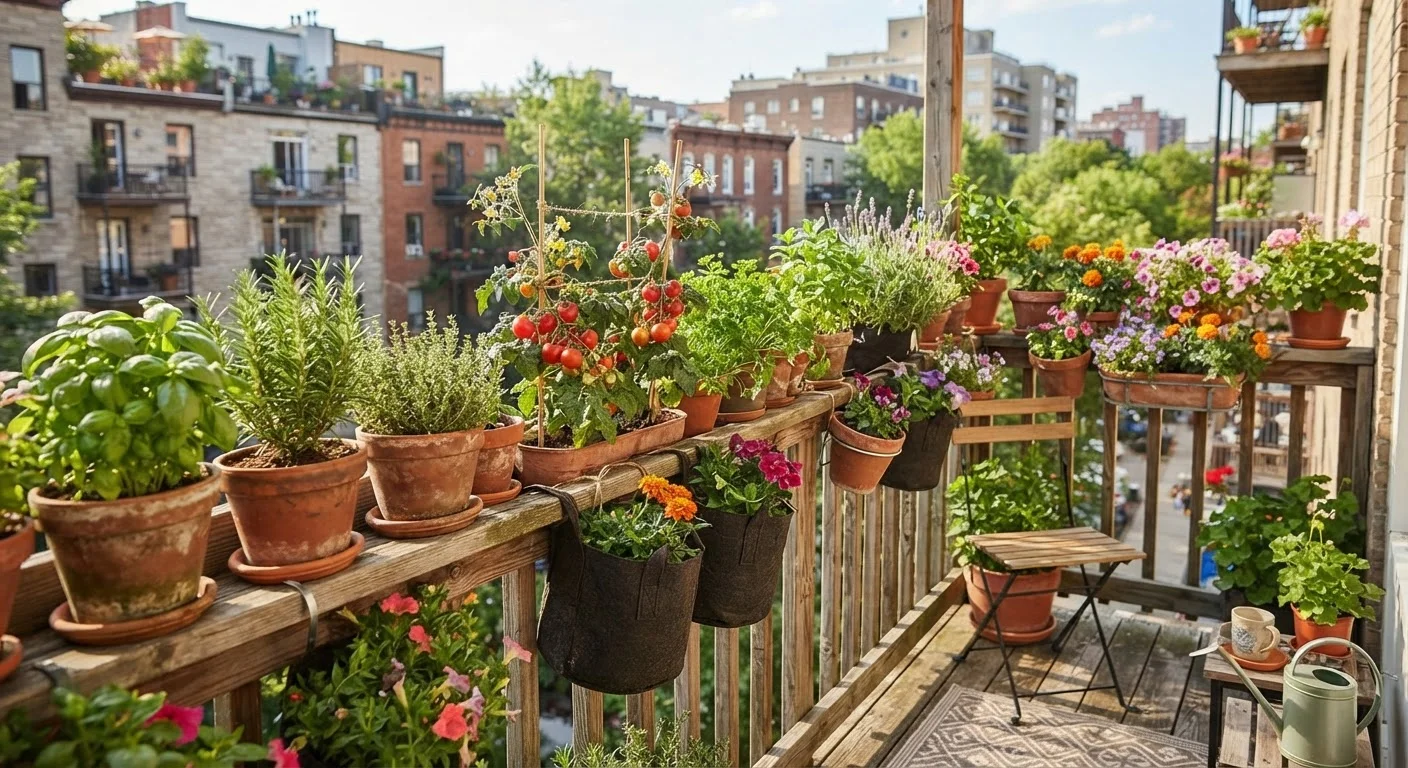
On a small patio or balcony, floor space is finite but vertical space is often untapped. Lean trellises against walls for climbing beans, cucumbers, or small-fruited squash. Hang fabric wall pockets for herbs or strawberries. Stack tiered plant stands to multiply growing levels in the same footprint.
Wall-mounted planters can also double as privacy screening when planted with dense foliage. Check that any mounting hardware is appropriate for your wall type and that combined weight is within safe limits for railings or structures.
Seasonal Upkeep and Troubleshooting
Container gardens need light seasonal management to stay productive year-round. At the end of each growing season, empty spent containers, remove old root matter, and refresh potting mix - reusing old mix repeatedly degrades drainage and may harbor pathogens. Our month-by-month garden maintenance guide can help you stay on top of these tasks as seasons shift.
Group Containers Strategically
Clustering pots together creates a more humid microclimate that benefits most plants and slows individual pot drying. It also makes watering rounds more efficient. Arrange taller plants at the back or center so they don't shade smaller, sun-hungry neighbors.
Common container problems and what they typically indicate:
- Yellowing leaves: Often a sign of overwatering, poor drainage, or nitrogen deficiency - check drainage first, then feeding schedule.
- Leggy, pale growth: Usually insufficient light; move the container to a sunnier position if possible.
- Wilting despite moist soil: May indicate root rot from prolonged soggy conditions - inspect roots and consider repotting into fresh mix.
- Stunted growth after early vigor: Likely a nutrient deficit; begin a regular liquid feeding routine.
Before each new growing season starts, use the spring garden readiness checklist to inspect tools, refresh soil, and plan your container lineup thoughtfully.
Watch for Pest Buildup in Tight Spaces
Densely arranged container gardens on patios and balconies can see pests spread quickly from plant to plant - particularly aphids, spider mites, and fungus gnats. Inspect plants weekly, especially the undersides of leaves. Removing affected growth early and keeping air circulating between pots are the most effective first responses.