

Key Takeaways
What Is Xeriscaping and Why Does It Matter?
Xeriscaping - derived from the Greek word xeros, meaning dry - is a landscaping approach that minimizes supplemental irrigation by working with natural rainfall and local conditions rather than against them. Developed in response to water scarcity concerns, the concept has grown far beyond its arid-region origins into a mainstream practice for homeowners across the U.S.
Outdoor irrigation accounts for a substantial share of residential water use. According to the U.S. Environmental Protection Agency, landscape irrigation represents roughly one-third of all residential water use nationally - and much of that water is lost to evaporation, runoff, or overwatering. Designing a landscape that works with your climate rather than against it directly addresses that inefficiency.
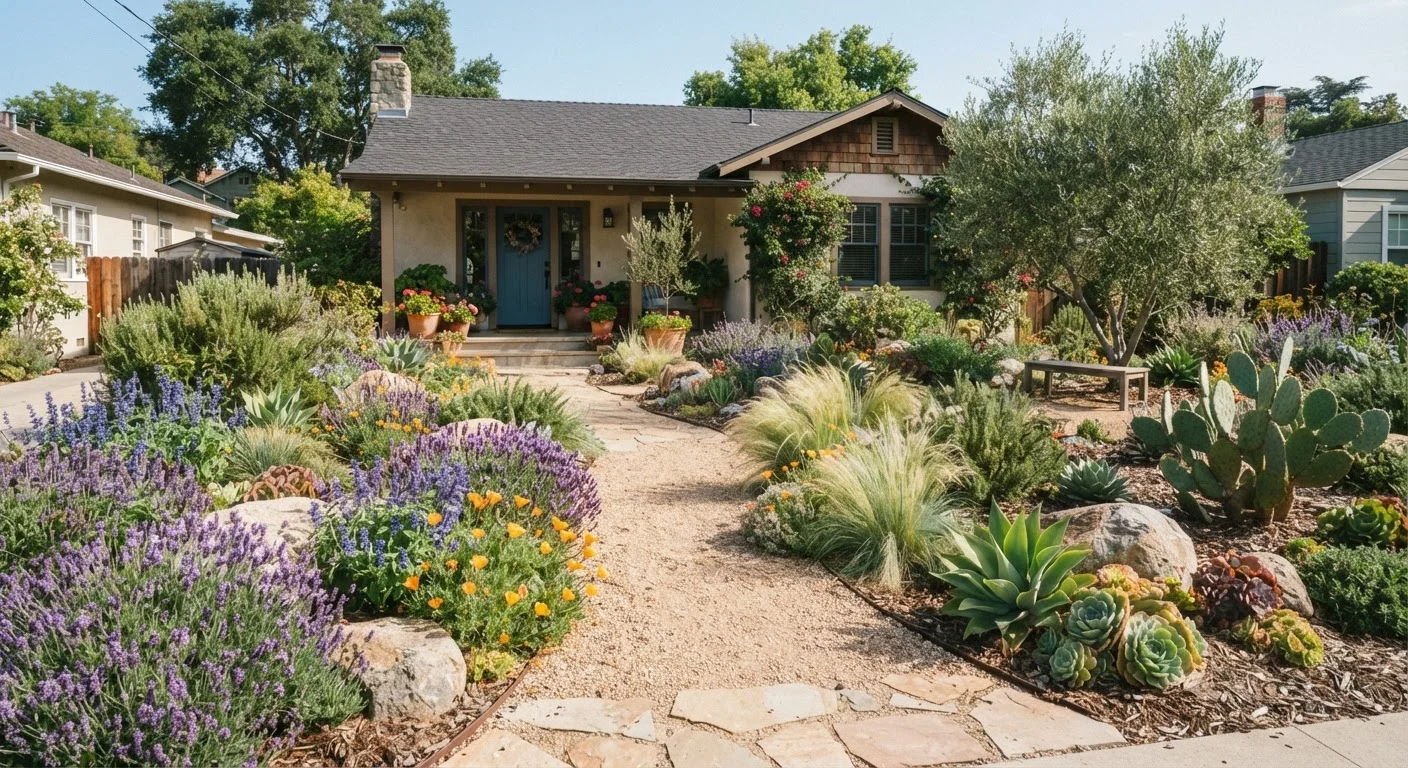
Crucially, xeriscaping does not mean replacing your yard with rocks and cacti. A well-designed drought-tolerant landscape can feature layered textures, seasonal color, and lush ground covers - all while demanding far less water than a conventional lawn. For more on how excess moisture harms plants, see our guide on why overwatering kills more plants than drought does.
~30%
Share of residential water used outdoors
According to the U.S. Environmental Protection Agency, landscape irrigation accounts for roughly one-third of all residential water consumption nationally.
50%+
Outdoor water potentially wasted
The EPA estimates that more than half of landscape irrigation water is lost to evaporation, wind, or runoff due to inefficient application methods.
1-2 seasons
Typical establishment period for drought-tolerant plants
Most native and drought-adapted plants require supplemental watering only during their first one to two growing seasons before becoming largely self-sufficient.
Assessing Your Site Before You Plant
Successful drought-tolerant landscaping begins with observation, not purchasing. Walk your property at different times of day and note where sun hits longest, where water pools after rain, and which areas dry out fastest. These microclimates determine which plants will thrive where.
- Sun exposure: South- and west-facing slopes or beds receive the most heat and will benefit most from drought-adapted species.
- Soil type: Sandy soils drain quickly and require plants that tolerate low moisture. Clay soils retain water longer but may cause root rot if not amended. A simple jar test - mixing soil with water and letting it settle - reveals your approximate sand, silt, and clay ratio.
- Existing drainage: Identify low spots where rainwater naturally collects. These are candidates for rain gardens or moisture-tolerant plants, rather than drought-tolerant ones.
- Slope and runoff: Sloped areas lose water quickly through runoff. Terracing or planting groundcovers with deep root systems stabilizes soil and holds moisture longer.
Taking the time to map these conditions before selecting plants prevents costly replacement cycles later.
Choosing the Right Drought-Tolerant Plants
Plant selection is the cornerstone of any water-efficient garden. The goal is to match plants to conditions rather than force conditions to suit plants. Native plants are a natural starting point - they've evolved alongside local rainfall patterns, soil types, and seasonal temperature swings. Our in-depth article on the case for native plants covers the ecological benefits in detail.
Beyond natives, look for plants labeled as climate-adapted or drought-tolerant for your USDA hardiness zone. Useful categories include:
- Ornamental grasses: Species like blue fescue, switchgrass, and feather reed grass provide movement and texture with minimal water once established.
- Perennials: Lavender, salvia, yarrow, and echinacea are reliably drought-tolerant in most temperate climates and support pollinators.
- Groundcovers: Creeping thyme, sedum, and ice plant suppress weeds, reduce evaporation from bare soil, and rarely need supplemental irrigation.
- Shrubs: Manzanita, native sagebrush species, and Russian sage tolerate prolonged dry periods while providing structure and height.
When in doubt, check your county extension service's recommended plant list before buying. These lists are curated specifically for your local rainfall and soil conditions and can save you from selecting species that look drought-tolerant on the label but struggle in your region.
University extension programs maintain regionally specific horticultural data and field-test plant performance under local conditions - information that generic plant tags often omit.
Install plants in fall rather than spring where possible. Cooler temperatures and seasonal rainfall reduce establishment stress, giving root systems time to develop before summer heat arrives.
Fall planting leverages natural precipitation and mild temperatures to reduce the irrigation burden during the critical establishment window, improving plant survival rates.
When shopping for plants, prioritize species described as requiring low to moderate water in your region. Avoid species whose native range is significantly wetter than your local average annual rainfall.
Soil Preparation and Mulching
Even drought-adapted plants perform better in soil that drains well and retains a modest level of organic matter. Before planting, amend heavy clay with coarse sand and compost to improve drainage. For sandy soils, incorporate compost to improve moisture and nutrient retention without waterlogging roots.
Mulch is one of the highest-impact, lowest-cost interventions in drought-tolerant landscaping. A layer of organic mulch - shredded bark, wood chips, or straw - placed 3 to 4 inches deep around plants:
- Reduces soil moisture evaporation significantly, particularly during hot, dry periods.
- Moderates soil temperature fluctuations that stress roots.
- Suppresses weed growth, reducing competition for available water.
- Gradually improves soil structure as it decomposes.
Inorganic mulches such as gravel or crushed rock work well in hot, dry climates where organic material decomposes rapidly, but they do not improve soil structure over time. Keep mulch a few inches away from plant stems and tree trunks to prevent rot.
Smart Irrigation Strategies
Even a well-designed xeriscape typically needs supplemental irrigation during establishment - usually the first one to two growing seasons - and during extended heat waves. The goal is to deliver water efficiently, not abundantly.
Drip irrigation delivers water directly to root zones at a slow rate, minimizing evaporation and surface runoff. It is widely considered the most water-efficient method for garden beds. Paired with a timer or smart controller that adjusts run times based on weather data, drip systems can reduce irrigation water use compared to conventional sprinklers.
Hydrozoning - grouping plants with similar water needs in the same irrigation zone - prevents the common mistake of watering drought-tolerant and thirsty plants on the same schedule. Plants accustomed to dry conditions can be harmed by the same frequency of irrigation that a vegetable bed requires.
Deep, infrequent watering encourages plants to develop deeper root systems, making them more resilient during dry spells. Shallow, frequent watering keeps roots near the surface where they are most vulnerable to heat and drought. For context on how this affects plant health over a full year, our seasonal garden maintenance guide outlines month-by-month watering adjustments.
Layout and Design Principles
A drought-tolerant landscape is most effective - and most visually compelling - when its layout reinforces water efficiency rather than working against it. A few foundational design principles guide the process:
- Reduce lawn area strategically: Conventional turf grasses are among the thirstiest plants in most residential landscapes. Replacing high-traffic lawn areas with hardscape (patios, permeable pavers) or low-water groundcovers reduces irrigation demand considerably. If you maintain some lawn, our season-by-season lawn care guide can help you minimize water use while keeping existing turf healthy.
- Use contour planting on slopes: Planting across a slope rather than up and down it slows runoff and gives water more time to penetrate the soil.
- Create rain gardens in low spots: Shallow, planted depressions that collect and absorb runoff can reduce the irrigation burden on surrounding areas by capturing water that would otherwise run off the property.
- Layer plant heights: Taller shrubs and ornamental trees cast shade on lower plantings, reducing soil moisture loss and creating a naturalistic aesthetic.
Design coherence matters too. Repeating plant species in drifts rather than scattering individual specimens creates visual rhythm and, practically, makes irrigation and maintenance more manageable. Whether you're starting from scratch or retrofitting an existing garden, even modest changes - replacing a strip of turf, adding mulch to existing beds, or introducing one drought-tolerant planting zone - compound into meaningful water savings over time.