

| Engine air filter interval | Every 15,000-30,000 miles (varies by conditions) (General industry guideline; verify in owner's manual) |
| Cabin air filter interval | Every 15,000-25,000 miles or annually (General industry guideline; verify in owner's manual) |
| Fuel filter interval | Varies widely; many modern in-tank filters are lifetime units (Manufacturer-dependent; consult owner's manual) |
| Typical DIY difficulty | Engine & cabin filters: easy. Fuel filter: advanced/professional recommended |
| Primary engine air filter material | Pleated paper or synthetic fiber |
| Fuel system safety note | Fuel line work involves pressurized, flammable fuel - professional service advised |
Three Filters, Three Jobs
Your car relies on clean air and clean fuel to run efficiently and keep its occupants comfortable. Three separate filters do that work - and most drivers confuse at least two of them. Understanding what each one does makes it far easier to follow your maintenance schedule with confidence.
| Engine air filter interval | Every 15,000-30,000 miles (varies by conditions) (General industry guideline; verify in owner's manual) |
| Cabin air filter interval | Every 15,000-25,000 miles or annually (General industry guideline; verify in owner's manual) |
| Fuel filter interval | Varies widely; many modern in-tank filters are lifetime units (Manufacturer-dependent; consult owner's manual) |
| Typical DIY difficulty | Engine & cabin filters: easy. Fuel filter: advanced/professional recommended |
| Primary engine air filter material | Pleated paper or synthetic fiber |
| Fuel system safety note | Fuel line work involves pressurized, flammable fuel - professional service advised |
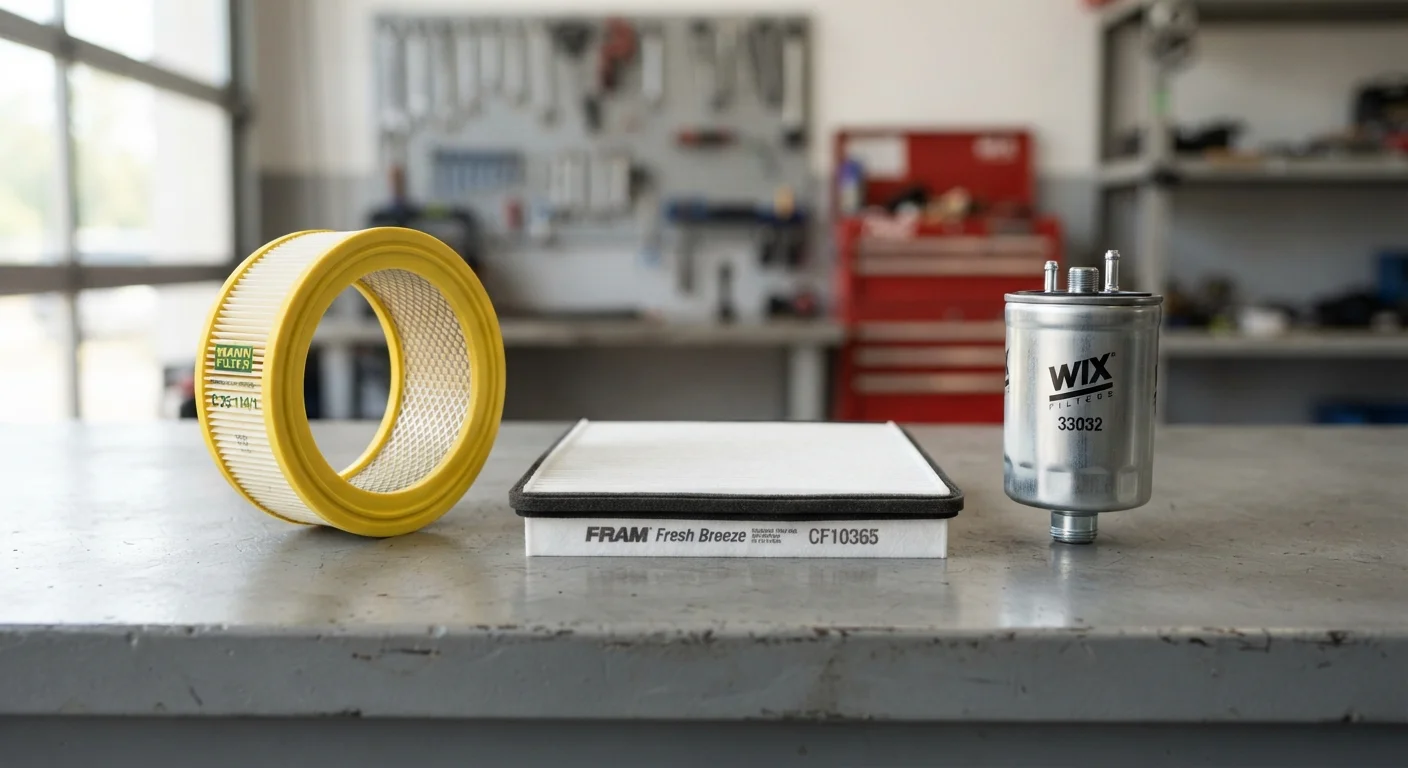
Engine air filter - Sits in the air intake system and catches dust, pollen, insects, and debris before they enter the engine. A dirty engine air filter starves the combustion process of airflow, which can reduce fuel economy and engine responsiveness over time.
Cabin air filter - Located behind the dashboard or glove box, this filter cleans the air that flows through your heating and air-conditioning system before it reaches passengers. It catches pollen, road dust, mold spores, and even exhaust particulates. A clogged cabin filter can reduce HVAC airflow noticeably and affect air quality inside the vehicle.
Fuel filter - Positioned in the fuel line (sometimes inside the fuel tank on modern vehicles), it prevents rust particles, sediment, and contaminants from reaching your fuel injectors or carburetor. Injectors are precision components; even small debris can impair their spray pattern and reduce engine performance.
How Often Each Filter Needs Replacing
Replacement intervals vary by vehicle, driving environment, and manufacturer specifications - always check your owner's manual first. That said, widely cited general guidelines give useful starting points.
- Engine air filter: Roughly every 15,000-30,000 miles under normal conditions. Driving frequently on unpaved or dusty roads can cut that interval significantly. Inspect it annually even if the mileage hasn't been reached.
- Cabin air filter: Typically every 15,000-25,000 miles, or once a year. If you notice reduced airflow from your vents, musty odors, or increased allergy symptoms in the car, inspect it sooner. It's one of the most commonly overlooked filters in routine service.
- Fuel filter: Intervals vary widely - some manufacturers recommend replacement every 20,000-40,000 miles on older vehicles; many modern cars with in-tank filters are designed to last the life of the fuel pump assembly. Because accessing a fuel filter can involve fuel line disconnection, this task is generally best handled by a qualified mechanic.
Fuel Filter Access Varies by Vehicle
On many vehicles built after the mid-2000s, the fuel filter is integrated into the fuel pump module inside the gas tank and is not intended for routine replacement. On older or some current vehicles, a serviceable in-line filter sits along the fuel line under the hood or beneath the vehicle. Check your owner's manual to determine which design your car uses before assuming a replacement is needed or accessible.
Skipping any of these filters isn't just inconvenient - it can compound into costlier problems. See how deferred maintenance turns small services into big repair bills for a fuller picture.
Warning Signs and What to Do
Filters rarely fail dramatically - they degrade gradually, which makes it easy to miss the early signals.
Engine air filter warning signs: reduced acceleration feel, slightly lower fuel economy, or a visible gray-brown color when you pull the filter out and hold it to light. Some vehicles trigger a check-engine light if airflow becomes severely restricted.
Cabin air filter warning signs: weak airflow from vents even at high fan settings, musty or stale odors when the HVAC runs, or visible debris on the filter surface. On most vehicles, the cabin air filter is accessible without tools - your owner's manual will show the location.
Fuel filter warning signs: hard starting, engine hesitation or stumbling under acceleration, rough idling, or a stalling engine at low speeds. These symptoms overlap with several other issues, so a mechanic's diagnosis is worthwhile before replacing parts. Fuel system work carries safety risks involving pressurized fuel lines and should not be a first DIY project.
For context on how filters fit into your vehicle's broader maintenance rhythm, the under-the-hood fluid checks guide is a practical companion read. Keeping filters clean also directly supports fuel efficiency, since restricted airflow forces the engine to work harder.
DIY vs. Professional Service
Engine air filters and cabin air filters are among the most DIY-friendly maintenance tasks on most vehicles. Replacing them typically requires no special tools, takes under 15 minutes, and the correct filter for your vehicle is identified by year, make, model, and engine size - information found in your owner's manual or on the existing filter itself.
Fuel filters are a different matter. On older vehicles where the filter sits externally in the fuel line, replacement involves relieving fuel system pressure, handling gasoline, and working with pressurized fittings. Doing this incorrectly creates a fire hazard. Unless you have mechanical experience and the right equipment, this job belongs at a repair shop.
Engine air filter
A dry filter element, usually made of pleated paper or foam, that blocks airborne contaminants from entering the engine's combustion chambers. It sits in the air intake housing and is designed to be replaced periodically.
Cabin air filter
A filter installed in the HVAC system that cleans air before it reaches the passenger cabin. It captures pollen, dust, and particulates and is separate from the engine air filter.
Fuel filter
A filter in the fuel delivery system that removes sediment and contaminants from gasoline or diesel before it reaches fuel injectors or a carburetor. Its location varies - external in older vehicles, in-tank in many modern ones.
Fuel injector
A precision nozzle that sprays a measured amount of fuel into the engine's intake or combustion chamber. Injectors require clean fuel to maintain their spray pattern and performance.
HVAC system
Heating, Ventilation, and Air Conditioning - the integrated system that controls temperature and airflow inside the passenger cabin of a vehicle.
Intake restriction
A reduction in the volume of air able to flow into the engine, often caused by a clogged air filter. Significant restriction can reduce engine power and fuel efficiency.
When in doubt about any filter replacement, a quick inspection at a reputable service center - where a technician can show you the condition of the filter - is money well spent. Understanding what you're paying for puts you in a better position to make informed decisions about your vehicle.