

| Recommended mulch depth | 2-4 inches for most applications |
| Organic mulch lifespan | 1-2 seasons before replenishment needed |
| Best mulch for vegetable beds | Straw or compost |
| Best mulch for permanent borders | Bark mulch or gravel over landscape fabric |
| Mulch to avoid near food crops | Rubber mulch (recycled tires) |
| Primary weed suppression benefit | Blocks light, preventing most seed germination |
What Mulch Does and Why It Matters
Mulch is any material laid over the soil surface to regulate temperature, retain moisture, suppress weeds, and in many cases improve soil health over time. Choosing the wrong type for your situation won't ruin your garden, but choosing the right one can meaningfully reduce watering frequency, labor, and plant stress - especially across seasonal extremes.
Mulch broadly divides into two categories: organic (materials that decompose and feed the soil) and inorganic (materials that don't break down and focus purely on weed suppression and moisture retention). Each has a legitimate role depending on your goals, plant types, and budget.
Timing matters too. Most mulch applications benefit from being laid in late spring after soil has warmed, and refreshed in fall to protect root zones from freeze-thaw cycles. For a month-by-month view of when to apply and refresh mulch, see our seasonal garden maintenance guide.
| Recommended mulch depth | 2-4 inches for most applications |
| Organic mulch lifespan | 1-2 seasons before replenishment needed |
| Best mulch for vegetable beds | Straw or compost |
| Best mulch for permanent borders | Bark mulch or gravel over landscape fabric |
| Mulch to avoid near food crops | Rubber mulch (recycled tires) |
| Primary weed suppression benefit | Blocks light, preventing most seed germination |
Organic Mulch Types and When to Use Them
Organic mulches decompose gradually, adding nutrients and improving soil structure - a meaningful advantage in vegetable beds, perennial borders, and any area where long-term soil health is the goal.
Organic mulch
Any mulch material derived from plant or animal matter that decomposes over time, adding nutrients and organic matter to the soil beneath it.
Inorganic mulch
Mulch made from non-decomposing materials such as gravel, rubber, or landscape fabric. These materials don't feed the soil but can offer durable weed suppression and moisture retention.
Xeriscape
A landscaping approach that reduces or eliminates irrigation needs by using drought-tolerant plants and water-conserving design strategies.
Volcano mulching
The practice - widely considered harmful - of piling mulch high against the base of a tree trunk in a cone shape, which can cause rot, disease, and pest damage.
pH (soil)
A measure of soil acidity or alkalinity on a scale from 0 to 14. Most garden plants prefer a pH between 6.0 and 7.0; some plants like blueberries thrive in more acidic conditions.
Wood Chips
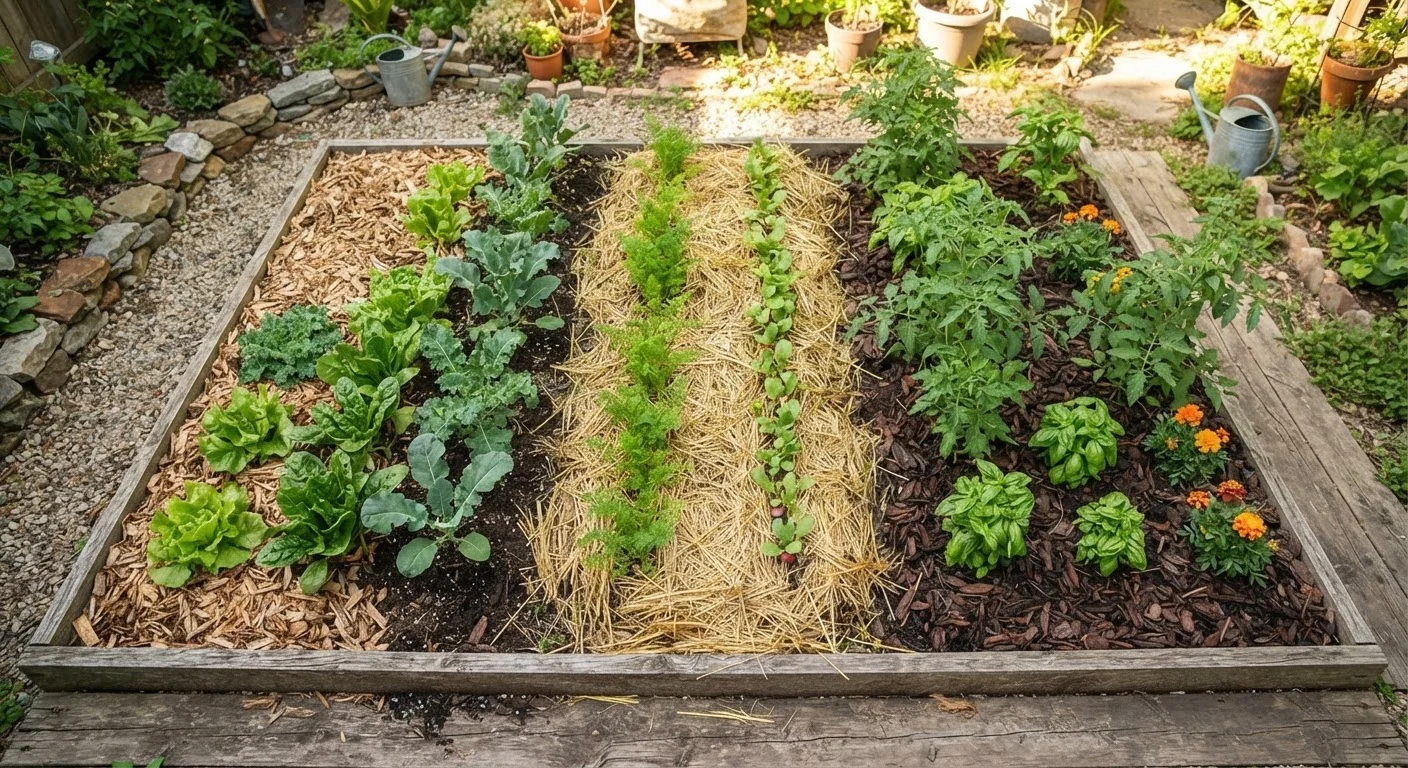
Best for: Trees, shrubs, perennial beds, pathways. Wood chips break down slowly, so they're low-maintenance and excellent at retaining moisture and suppressing weeds around established plantings. Avoid mounding chips directly against plant stems or tree trunks - this can trap moisture and invite rot or disease. Freshly chipped wood can temporarily tie up soil nitrogen as it decomposes, so it's generally a poor choice as a top dressing directly in active vegetable beds.
Bark Mulch (Shredded or Nuggets)
Best for: Ornamental beds, foundation plantings. Shredded bark knits together and resists displacement better than nuggets in sloped areas. Nuggets last longer but can float during heavy rain. Both are better suited to decorative applications than edible gardens.
Straw
Best for: Vegetable gardens, strawberry beds, newly seeded lawns. Straw is light, cheap, and easy to work around transplants. It breaks down in a single season, adding modest organic matter. Choose straw (dried stalks) over hay - hay contains seeds that will sprout in your beds. Straw is also a common choice for protecting raised bed gardens over winter.
Compost
Best for: Vegetable beds, transplant areas, soil-building situations. Applied 1-2 inches thick, compost acts simultaneously as mulch and soil amendment. It breaks down quickly, so it needs seasonal replenishment. Learn how to produce your own with our home composting walkthrough.
Pine Needles (Pine Straw)
Best for: Acid-loving plants such as blueberries, azaleas, and rhododendrons. Pine needles interlock well, resist washing away, and decompose slowly. Contrary to a common belief, they don't dramatically acidify soil in normal use, but they're a natural fit for plants that prefer slightly lower pH.
Grass Clippings
Best for: Vegetable garden paths and beds, short-term coverage. Apply in thin layers (under 2 inches) to prevent matting and anaerobic decomposition, which produces an unpleasant odor. Avoid clippings from lawns recently treated with herbicides.
Inorganic Mulch Types and When to Use Them
Inorganic mulches don't feed the soil, but they excel in situations where longevity and low maintenance outweigh the benefits of organic matter - play areas, permanent landscape borders, or xeriscaping projects.
Gravel and River Rock
Best for: Drought-tolerant plantings, xeriscape landscapes, drainage areas. Stone mulch absorbs and radiates heat, which can stress some plants in hot climates but benefit heat-lovers. It's essentially permanent but can be difficult to remove if you change your planting plans.
Rubber Mulch
Best for: Playground surfaces, high-traffic decorative areas. Made from recycled tires, rubber mulch provides good cushioning and resists compaction. It doesn't feed soil organisms and can heat up significantly in direct sun, making it unsuitable near edible plants. Research on potential chemical leaching from rubber mulch into soil is ongoing; its use around food crops is not recommended.
Landscape Fabric
Best for: Under gravel or stone mulch in permanent beds. On its own, landscape fabric tends to degrade over time and can become difficult to remove as plant roots and organic debris work into it. It's most effective as a base layer beneath decorative rock in areas with no plans for replanting. Avoid using it in vegetable beds or areas where you want healthy, living soil - it restricts earthworm activity and organic matter incorporation. For more on maintaining soil health, see our article on common garden soil myths.
Application Tips That Apply to Every Mulch Type
Regardless of which mulch you choose, a few consistent practices improve results across the board:
- Depth matters: Most mulches perform well at 2-4 inches. Too thin and weeds push through; too thick and water struggles to penetrate to roots.
- Keep it away from stems: Mulch piled against plant crowns, trunks, or stems - sometimes called "volcano mulching" around trees - traps moisture and can cause crown rot or pest problems.
- Weed before you mulch: Mulch suppresses new weed germination but won't smother established weeds. Clear the bed first for best results.
- Replenish organic mulches annually: Most organic materials break down within one to two seasons and need topping up to maintain their benefits.
Tracking your mulch applications alongside other lawn and garden tasks is easier with a structured approach. Our season-by-season lawn care guide covers timing for related outdoor maintenance tasks.
A Note on Dyed Mulch
Colored wood mulches (often red, brown, or black) are popular for decorative beds. The dyes used in most commercially available products are generally considered safe for gardens when the product specifies non-toxic colorants. However, the quality of the wood base material varies - some dyed mulches are made from recycled wood including pallets or construction debris, which may contain treated wood. When in doubt, check the source material listed on the product label before using dyed mulch in edible gardens.