

Key Takeaways
Showrooming & Webrooming
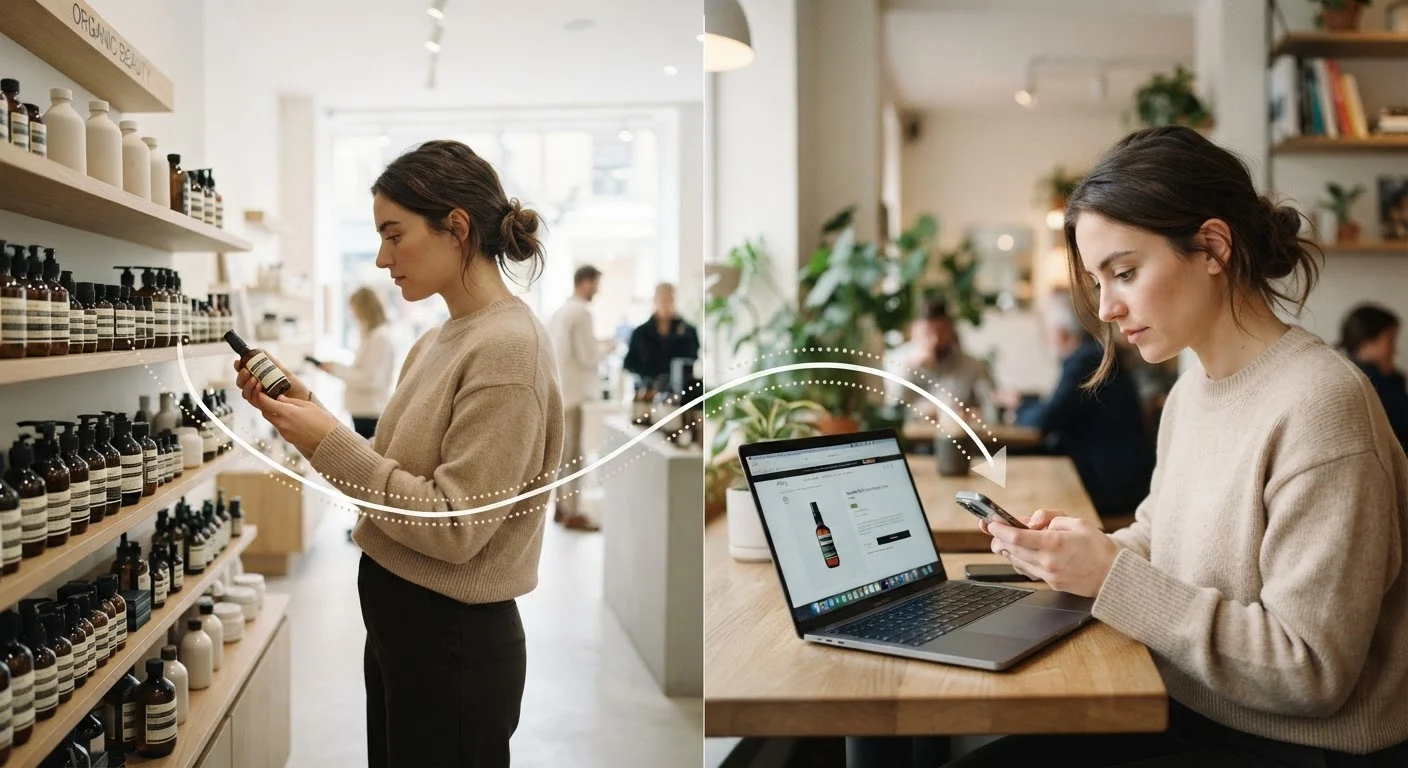
Showrooming is the practice of examining a product in a physical store, then purchasing it online - often at a lower price. Webrooming is the reverse: researching a product extensively online before going to a store to buy it in person. Both behaviors describe how modern shoppers blend digital and physical channels in the same purchase journey.
In retail analytics, these behaviors are tracked through cross-channel attribution models, which attempt to assign purchase credit across touchpoints - a notoriously difficult measurement problem.
Two Behaviors, One Connected Shopping Journey
American shoppers have never been purely online or purely in-store buyers. Long before smartphones, people would visit a dealership, consult a catalog, and then make a decision using both inputs. What has changed is the speed, ease, and frequency of switching between channels - and the vocabulary retailers use to describe it.
Showrooming names the pattern where a shopper uses a physical store as a hands-on evaluation space, then completes the purchase through an online retailer. Webrooming is the opposite flow: deep online research - reading reviews, comparing specifications, watching video walkthroughs - followed by a trip to a store to buy in person.
Neither behavior is niche. Consumer research from Bazaarvoice and similar survey firms has consistently found that majorities of shoppers engage in one or both behaviors during high-involvement purchases. For a fuller view of what each channel actually offers and costs, see the real trade-offs between shopping online and in a store.
~69%
Shoppers who webroom before in-store purchases
Multiple consumer surveys, including research published by the National Retail Federation, have found that a large majority of shoppers conduct online research before visiting a physical store for significant purchases.
~46%
Shoppers who have showroomed at least once
Retail industry surveys have consistently found that roughly half of US shoppers report having used a physical store for product evaluation before buying elsewhere online.
2-in-3
High-consideration purchases involving both channels
Research on consumer electronics and appliance purchases suggests the majority of shoppers interact with both physical and digital touchpoints before completing a significant purchase.
Why These Behaviors Emerged - and Why They Persist
The rise of smartphones made real-time price comparison effortless. A shopper standing in front of a television display can now pull up three competing prices within seconds. That capability created the conditions for showrooming to scale beyond early-adopter behavior into something mainstream.
Webrooming, meanwhile, reflects a different anxiety: the concern that an online product description won't accurately convey how something fits, feels, or functions in real life. For apparel, the stakes of this mismatch are especially clear - something explored in depth when it comes to clothing fit and fabric feel.
Both behaviors persist because neither channel is comprehensively superior. Online retail offers breadth of selection and price transparency; physical retail offers sensory confirmation and immediate possession. Shoppers have rationally learned to extract value from each at the appropriate moment in their decision process.
How Retailers Have Responded
Retailers didn't observe these behaviors passively. The showrooming wave of the early 2010s prompted significant operational responses across the industry.
The most direct countermeasure is the price-match guarantee, now offered by many large-format retailers. By committing to match verified online prices, these stores remove the primary incentive for a showroomer to take the purchase elsewhere. The implicit argument: you're already here, the price is the same, and you leave with the product today rather than waiting for shipping.
A subtler response involves exclusive product configurations - selling a slightly different model SKU in-store than the one available online, making direct price comparison difficult. This practice has drawn some consumer criticism for reducing price transparency.
For webroomers, retailers have invested in training staff to serve customers who arrive already deeply informed. A shopper who has spent hours reading reviews doesn't need a product introduction - they may need help with a specific technical question or want to confirm a detail before committing. Understanding these retail tactics designed to expand purchases can help you stay focused on your original plan once you're in-store.
Applying These Concepts to Your Own Shopping
Recognizing whether you're naturally showrooming or webrooming in a given purchase can help you be more intentional about it. Consider what you're actually trying to accomplish at each stage.
If you're in a store primarily to handle a product before deciding, that's legitimate evaluation - but it's worth knowing in advance whether you're committed to buying in-store if the experience confirms your interest, or whether you plan to comparison-shop afterward. Return policies differ meaningfully between channels, which affects the total cost of getting something wrong. How return terms differ between channels is worth understanding before you commit to either.
If you're a habitual webroom researcher, the main risk is decision fatigue - extended online research can create analysis paralysis, or expose you to review ecosystems that aren't entirely trustworthy. Setting a deliberate endpoint to the research phase and defining your decision criteria before you start tends to produce cleaner outcomes.
For a structured approach to leveraging both channels strategically, channel switching strategies offer a practical framework. And if you're newer to navigating these dynamics, a beginner's introduction to multi-channel shopping lays out the fundamentals clearly.
“The store is no longer just a place to transact - it's a node in a much larger decision journey that starts and ends in different places for different shoppers.”
— Barbara Kahn, Professor of Marketing, Wharton School of the University of Pennsylvania