

Key Takeaways
Why Retail Environments Are Engineered, Not Accidental
Every element of a retail experience - from the path through a grocery store to the sequence of prompts during online checkout - reflects deliberate design choices made to increase the total value of each transaction. This is not a conspiracy; it is a well-documented field of retail strategy. Understanding how these systems work is one of the most practical things a shopper can do before opening their wallet.
The tactics below are not inherently predatory, but they are optimised to serve the retailer's revenue goals, not your budget. Knowing them by name - and recognising them in the moment - is the first step toward keeping your cart aligned with your actual list. For additional context on how shopping channels shape purchasing behaviour, see our guide to showrooming and webrooming.
Anchor Pricing: The Reference Point That Frames Everything
Anchor pricing involves displaying a higher reference price alongside the selling price - so a $40 item marked down from $80 feels like a gain, even if $40 was always the intended price point. Research in behavioral economics consistently shows that the first number people see disproportionately influences how they evaluate subsequent numbers. Retailers use this by prominently displaying original, manufacturer-suggested, or competitor prices that make the actual price feel favorable by comparison.
When you see a crossed-out price, ask yourself: do you have independent evidence that the item was ever sold at that higher price, and would you consider $40 reasonable on its own merits? Those two questions bypass the anchor and bring you back to your own valuation.
The crossed-out price shapes your perception - not necessarily your real savings.
Bundle Offers: Savings That Depend on Wanting Everything Inside
Bundles package multiple items together at a price that appears lower than buying each separately. They can represent genuine value - but only if you actually need every component. The math often looks compelling on the surface: a three-item bundle priced 25% below individual totals. But if you would only use one or two items, the effective cost per useful item may be higher than a standalone purchase.
A useful test: price out only the items you actually want individually, and compare that figure to the bundle price. If the bundle still wins and you have a realistic use for the extras, it may be worth it. If you are stretching to justify the extras, the bundle is doing its job - not yours.
A bundle only saves money when you genuinely need every item it contains.
Upsells and Cross-Sells: The Moment of Checkout
Both in physical stores and during online checkout, the moment you have committed to a purchase is carefully exploited for add-on sales. You are already in a buying mindset, your resistance to spending is lower, and smaller additions feel proportionally insignificant next to your primary purchase. Warranties, accessories, premium upgrades, and "frequently bought together" suggestions all follow this logic.
Some of these additions are legitimately useful. The discipline is to evaluate them on their own merits rather than as natural extensions of a decision you have already made. A simple rule: if you would not add the item to your cart on its own, pause before adding it as an afterthought. For context on related markup patterns, see why shoppers pay more for identical products.
Checkout is the moment your resistance is lowest - retailers know this and plan for it.
Urgency Cues: Scarcity and Countdown Timers
"Only 3 left in stock," "Offer expires in 14:32" - these messages trigger loss aversion, a well-established cognitive bias where the fear of missing out weighs more heavily than the potential gain of waiting. Countdown timers and low-stock warnings may reflect genuine inventory realities, but they are also design choices that retailers deploy to compress deliberation time.
When you encounter urgency cues, the practical question is: what actually happens if I wait 24 hours? In many cases, the product will still be available, the price will not change meaningfully, and a day of reflection will clarify whether you wanted the item or just didn't want to lose it. Genuine scarcity exists, but it is far less common than the frequency of scarcity messaging suggests.
Urgency messaging is designed to shorten your decision window - waiting often costs less than it seems.
Loyalty Programs and Threshold Incentives
"Spend $10 more to unlock free shipping" or "Earn double points on orders over $75" are threshold incentives - they invite you to spend more in order to receive a benefit you would not have sought otherwise. Loyalty programs layer on top of this by creating a points economy that can obscure the real-dollar value of what you are accumulating and spending.
The key calculation is straightforward: what is the actual dollar value of the benefit being offered, versus the extra spending required to unlock it? If free shipping saves $6.99 and you would need to spend $15 more to reach the threshold, you are paying $8.01 for $6.99 in value. The math does not always favor the shopper, even when the offer feels like a reward. For strategies that combine genuine savings mechanisms effectively, our stacking strategies guide covers how to layer approaches without letting the mechanics work against you.
Always calculate the real dollar value of a loyalty benefit before spending extra to unlock it.
Store Layout and Product Placement
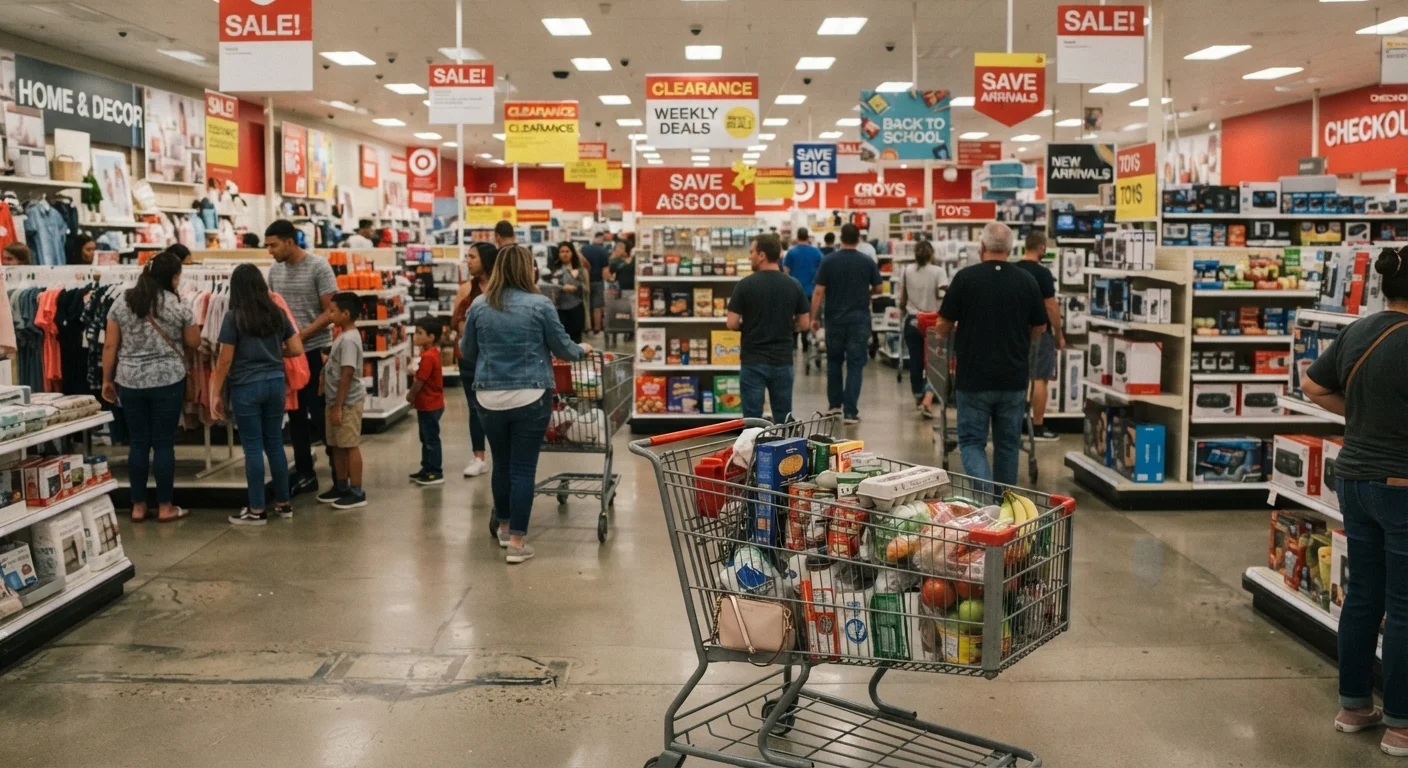
In physical retail, the placement of everyday necessities at the back of the store, high-margin items at eye level, and impulse goods near the checkout line are all deliberate spatial decisions. The goal is to maximize the number of product encounters per trip. Research published in retail trade literature consistently identifies product placement as one of the highest-leverage tools available to store designers.
Online stores replicate this logic through page layouts, default sorting (often by margin rather than relevance), and promoted listings mixed into search results. Being aware that a product appearing prominently is not necessarily there because it is the most relevant option allows you to apply your own filters - sorting by price, reading past the first page, or searching specifically rather than browsing.
Prominent placement signals a retailer priority, not necessarily the best match for your needs.
Staying on Your Own Plan
None of these tactics require a retailer to deceive you. Most work precisely because they align with genuine human tendencies: loss aversion, social proof, cognitive shortcuts under time pressure. The countermeasure is not cynicism - it is preparation. Arriving with a list, a rough budget, and a few seconds of deliberate pause before adding unplanned items is more effective than willpower alone.
The Pre-Shop Pause Habit
Before entering a store or opening a shopping app, take 60 seconds to write down exactly what you intend to buy and a ceiling price for each item. This simple step creates a concrete reference point that makes it easier to notice when you are drifting from your original plan. Shoppers who enter with a written list consistently report spending closer to their intended budget than those who shop from memory.
If your shopping involves timing larger purchases strategically, our personal shopping calendar guide covers how to map purchases around predictable retail cycles rather than reacting to in-the-moment promotions. And when you are comparing prices across channels, hidden costs in online shopping can shift the math significantly - worth factoring in before a bundle deal looks like a clear win.