

Key Takeaways
Shopping Channel Trade-Off
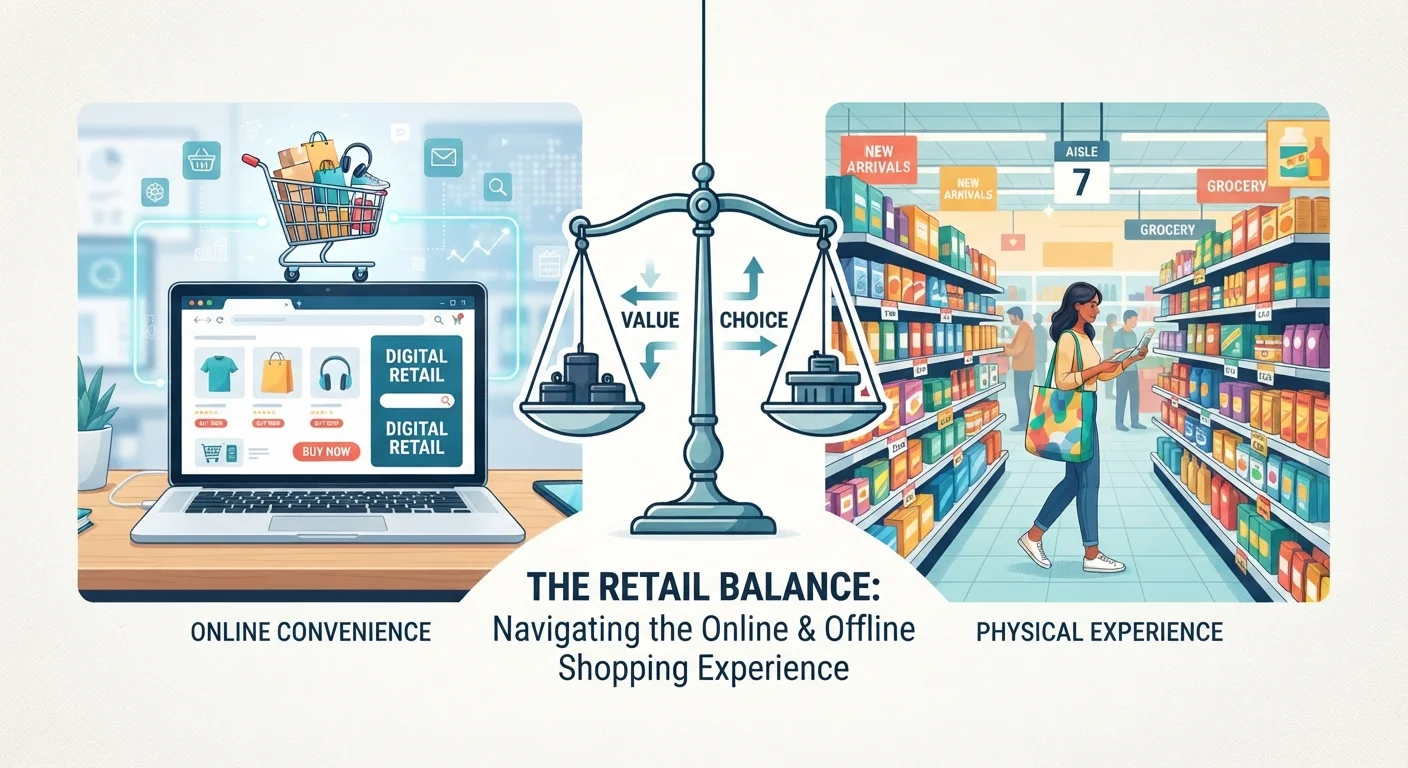
A shopping channel trade-off is the practical give-and-take between buying something online versus buying it in a physical store. Each channel offers distinct advantages - and each requires you to accept specific limitations. Understanding these trade-offs helps you choose the channel that fits the purchase, not just the habit.
Retail researchers distinguish between 'channel attributes' (price, assortment, convenience) and 'purchase context' (urgency, product type, sensory need) - both dimensions affect which channel delivers more value for a given transaction.
What Each Channel Actually Offers
Online and in-store shopping aren't simply the same transaction in different wrappers - they involve different cost structures, different sensory information, and different risk profiles. Treating one as automatically superior leads to avoidable mismatches between how you buy and what you actually need.
Online retail's core strengths are breadth and transparency. You can compare dozens of SKUs and read aggregated reviews in minutes, something physically impossible in a single store visit. Inventory is often deeper, and niche or discontinued items are more accessible. The primary limitation is that you're buying from a description and photograph - sensory evaluation isn't available until the package arrives.
Physical stores trade breadth for immediacy and certainty. You can hold the product, check build quality, confirm color against real lighting, and walk out owning it. Salesperson expertise - when genuine - can also surface options you hadn't considered. The limitation is that assortment is constrained by floor space and local stocking decisions, and price comparison requires more active effort. For a grounded look at category-by-category differences, see how each channel performs across major product categories.
~22%
US retail sales made online
According to US Census Bureau quarterly retail e-commerce estimates, online sales have consistently represented roughly one-fifth of total retail in recent years, meaning in-store still dominates overall volume.
30%
Online purchases returned on average
Industry estimates from the National Retail Federation suggest online return rates are roughly two to three times higher than in-store return rates, reflecting the limitation of buying without physical inspection.
Over 60%
Shoppers who research online before buying in store
Consumer surveys consistently show a majority of in-store buyers consult online sources - reviews, specs, or price comparisons - before completing a physical purchase.
The Price Picture Is More Complicated Than It Looks
Sticker price rarely tells the full story. Online purchases may carry shipping fees, expedited delivery charges, or require a paid membership to access free delivery thresholds. Sales tax treatment, which has largely equalized across channels following regulatory changes, used to favor online shopping but is no longer a reliable differentiator for most US shoppers.
In-store purchases eliminate shipping costs but introduce their own friction costs: driving time, fuel, and parking. Impulse purchases - well-documented in physical retail environments - can inflate the effective spend of a store trip beyond what was intended.
Price matching is a tool that blurs channel distinctions further. Many large physical retailers will match verified online prices, and some online platforms price-match competitor listings. This means the channel itself matters less than your willingness to check and ask. For practical methods to compare true total costs, see how to price-check effectively across channels.
Always Calculate Total Out-of-Pocket Cost
Before deciding a channel has the better price, add shipping fees, membership costs, estimated return shipping if the item doesn't work out, and any applicable taxes. In-store, factor in your time and travel cost. A modest online discount can evaporate quickly once these variables are included. Smart price-comparison habits help you make like-for-like assessments rather than reacting to surface price differences.
Returns, Trust, and the Friction Factor
Return experience is one of the most underweighted factors in channel choice. In-store returns are typically faster: walk in, hand over the item, leave with a refund or exchange. Online returns require repackaging, generating a label, and either dropping off or scheduling a pickup - and then waiting for processing before money is returned.
Restocking fees appear in both channels but are more common online, particularly for electronics and large items. Some retailers charge return shipping fees even when the original delivery was free. Understanding these mechanics before purchase is worth the two-minute policy read. Our guide to return policy fine print breaks down what the terms actually mean.
Trust dynamics also differ. Physical stores offer in-person accountability - you're interacting with an established location. Online purchases from third-party marketplace sellers introduce more variability: seller ratings, fulfillment source, and return dispute resolution all require more consumer vigilance. Established direct-from-retailer online purchases carry less of this ambiguity.
When to Let the Purchase Type Decide
The most practical frame is this: let the nature of the product and your specific priorities guide the channel, rather than defaulting to one out of habit.
Products that benefit from sensory evaluation - clothing fit, mattress feel, furniture scale, paint color - have a genuine in-store advantage. Certain purchases genuinely benefit from a physical visit, and forcing them online introduces return risk you could have avoided.
Commodity purchases with well-established specs - a specific cable, a familiar household staple, a product you've bought before - carry much lower online risk because there's no sensory evaluation needed. Time-sensitive needs, meanwhile, favor physical stores unless same-day or next-day delivery is reliably available in your area.
Many experienced shoppers use both channels within a single purchase journey: researching specs and reviews online, then verifying in person before committing - or the reverse. Showrooming and webrooming describes these cross-channel strategies and why they've become common practice. For shoppers new to thinking about channels deliberately, a beginner's introduction to multi-channel shopping provides a useful starting framework.
“The channel is just the transaction venue. The decision that matters is whether the information you have at the moment of purchase is sufficient to avoid regret - and both channels have gaps.”
— Consumer Behavior Research Perspective, General principle drawn from retail channel literature