

Key Takeaways
Why Channel Switching Makes Sense
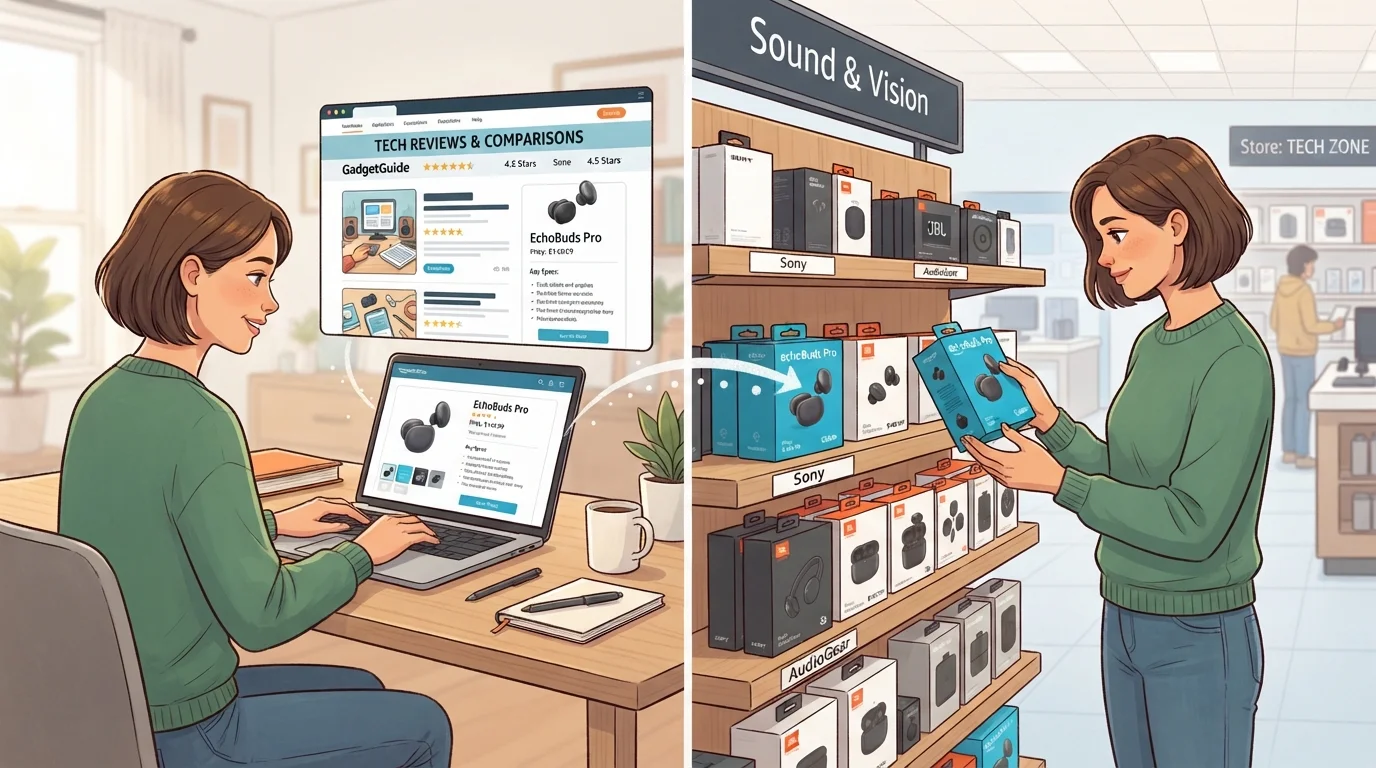
Most shoppers have already discovered channel switching by accident: they spot a product in a store, look it up on their phone, and finish the purchase elsewhere-or vice versa. What separates intentional channel switchers from accidental ones is a clear sense of what each channel does well and when to hand off between them.
Neither online nor in-store shopping is universally superior. As explored in the real trade-offs between channels, each format carries distinct advantages and genuine limitations. The practical question isn't which channel to be loyal to-it's how to route different parts of a purchasing decision through the channel that handles each part better.
This matters most for high-consideration purchases: appliances, electronics, furniture, and anything where fit, function, or feel is difficult to judge from a photo. For everyday consumables, the calculus is simpler. For everything in between, a deliberate approach saves both money and regret.
~73%
Shoppers who research online before buying in-store
Industry surveys have consistently found that a substantial majority of in-store buyers conduct some form of online research before visiting a physical location, though specific figures vary by category and survey methodology.
1 in 3
Online purchases returned due to fit or expectation mismatch
Return rate studies across apparel and home goods categories suggest that a significant share of online returns stem from items not matching physical expectations-a gap that in-store evaluation can help close.
Core Practices for Effective Channel Switching
The following practices reflect patterns used by experienced value-seeking shoppers. They aren't complicated, but they do require a bit of front-loaded effort that pays off at the register-and after the sale.
Use online channels for price benchmarking before visiting a store.
Physical store pricing is rarely uniform across comparable retailers, and shoppers who arrive without a reference point have no way to evaluate whether a shelf price is reasonable. Establishing a price range online takes minutes and provides a defensible baseline. This is especially useful when a retailer offers price-matching, since you'll need documented evidence of a lower price to request a match.
Evaluate physical attributes in-store before committing to an online purchase.
Dimensions, materials, color accuracy, and ergonomics are difficult to assess from product listings. Returning an item purchased online costs time and, in some cases, money-particularly if the seller charges restocking fees or the buyer covers return shipping. Evaluating in person first reduces the chance of a mismatch. See practices for comparing prices across channels to pair this step with effective price comparison.
Read return policies for both channels before purchasing.
Assuming that a return will be simple-especially when buying online and returning in-store, or vice versa-often leads to frustration. Return windows, fee structures, and cross-channel return eligibility vary by retailer and category. Knowing the terms before you buy changes how much risk you're accepting.
Factor in total cost-including shipping, tax, and time-when comparing channels.
An online price that appears lower than a store's shelf price may close the gap once shipping, handling, or delayed delivery is accounted for. Conversely, driving to a store has a real cost in time and fuel. A fair comparison includes all the variables relevant to your specific situation, not just the listed price.
Leverage in-store expertise for high-complexity purchases, then finalize your decision with online research.
Store staff can provide hands-on context for complex products-demonstrating features, clarifying specifications, and answering questions that product listings don't address. That input is valuable even if the final purchase happens elsewhere. Combining that knowledge with independent online reviews produces a more complete picture than either source alone.
Quick-Start Actions You Can Take Today
If the idea of a fully coordinated channel-switching strategy feels like a project, start smaller. A few habits, applied consistently, deliver most of the benefit without requiring a detailed process every time you shop.
For purchases involving stacked discounts, loyalty programs, or cashback portals, see the guide to combining savings approaches before you finalize a purchase. Coordinating those elements across channels adds another layer of value.
Where Channel Switching Has the Biggest Impact
Not every purchase warrants an elaborate multi-channel process. The effort pays off most in specific situations:
- Electronics and appliances: Online reviews and pricing data are abundant, but hands-on evaluation of a screen, keyboard feel, or appliance size remains valuable. Electronics purchasing decisions involve additional considerations like warranty terms and delivery risk that differ meaningfully by channel.
- Apparel and footwear: Fit is notoriously difficult to judge online. Trying items in-store and purchasing from whichever channel offers the better return policy and price is a common and practical approach.
- Category-by-category variation: The complete channel comparison by category offers a reference point for understanding where each channel tends to serve shoppers better.
Understanding return policies is critical when you're buying in one channel but might need to return through another. Restocking fees, return windows, and who absorbs shipping costs vary widely-see how return terms differ between channels before assuming a return will be straightforward.
For shoppers newer to comparing channels systematically, an introduction to multi-channel shopping provides a useful foundation.