

Key Takeaways
Our Verdict
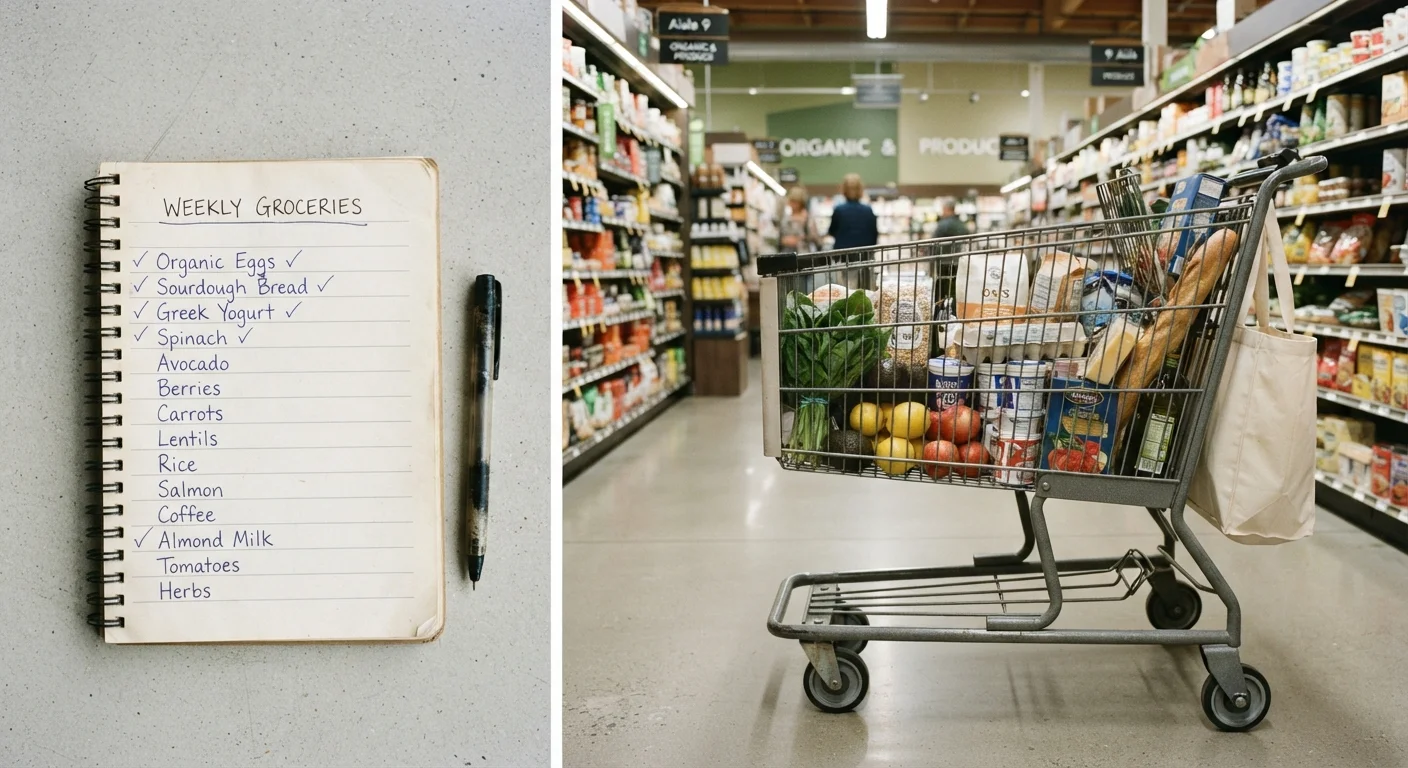
List-based shopping offers demonstrable advantages for budget control and purchase accuracy, while open-ended shopping has legitimate value for discovery-oriented categories like clothing or home décor. Neither approach universally dominates - the evidence points toward a hybrid strategy calibrated to category and context.
| Best for | Recommended |
|---|---|
| Households managing a tight weekly budget | List-based shopping |
| Routine grocery or household supply runs | List-based shopping |
| Exploratory categories like seasonal décor or gifts | Open-ended shopping |
| Shoppers who want elements of both control and flexibility | Hybrid approach (core list, limited browse budget) |
What Consumer Research Actually Shows
Consumer behaviour researchers have studied list use for decades, and the findings skew clearly in one direction: shoppers who bring a list to the store - physical or digital - tend to make fewer unplanned purchases and exit closer to their intended spend. A frequently cited finding from research published in the Journal of Consumer Research and related literature is that unplanned purchases account for roughly 50-70% of all in-store buying decisions, a figure that drops noticeably when a concrete list is in hand.
That said, the relationship is not perfectly linear. Research also shows that a list can create a kind of cognitive tunnel vision - shoppers who fixate on completing their list may miss genuinely better alternatives or relevant clearance items. The takeaway isn't that lists are infallible, but that they change the default mode of decision-making from reactive to intentional.
50-70%
Share of in-store purchases that are unplanned
A range cited across multiple consumer behaviour studies examining grocery and general merchandise shoppers in physical retail environments.
~20%
Reduction in unplanned purchases with a written list
Research on list use in grocery contexts suggests a meaningful but not total reduction in off-plan buying when shoppers carry a specific written list.
For a broader framework on structuring purchasing decisions, the needs, wants, and impulse framework offers a useful mental model to layer on top of your list-building habit.
The Case for List-Based Shopping
The clearest advantage of list-based shopping is constraint: you enter the store knowing what you need, which reduces the cognitive load of evaluating every available option. This narrowing of scope is particularly valuable in environments designed to encourage browsing - wide aisles, end-cap displays, and sensory cues like music and scent are all retail design elements documented to increase dwell time and, with it, unplanned spending.
Lists also reduce what behavioural economists call decision fatigue - the documented decline in decision quality that follows a long sequence of choices. A shopper working from a list makes fewer marginal choices, preserving mental bandwidth for decisions that genuinely warrant deliberation.
Make Your List More Specific to Strengthen Its Effect
Behavioural research suggests that vague list entries - 'bread,' 'cleaning supplies,' 'something for dinner' - provide weaker guardrails than specific ones. Before your next shopping trip, try replacing category-level entries with exact items and quantities. This small change narrows the decision space and makes it easier to stick to your plan in a store environment designed to pull your attention elsewhere.
The budget-protection effect extends to online shopping as well. Using a saved cart or wish list before checkout functions similarly to a paper list - it creates a review step between desire and purchase. See our pre-purchase checklist for online orders for a structured approach to that review process.
The Case for Open-Ended Shopping
Open-ended shopping - entering a store or browsing without a fixed agenda - is not simply undisciplined spending. For certain categories, it is a rational strategy. Clearance apparel, seasonal home goods, and artisan or specialty food items are categories where availability and value are genuinely unpredictable. A shopper with a rigid list may walk past a significant markdown on something they'll need next month simply because it wasn't on today's agenda.
Discovery also has real utility in categories where preferences are hard to articulate in advance. A person who knows they want to refresh a living room but can't specify exactly what may benefit from an exploratory trip more than from a premature, over-specified list that channels them toward the wrong purchases.
The risk is calibration: without any budget anchor or category limit, open-ended trips are where discretionary spending most easily expands. Research consistently shows that open-ended shoppers spend more per trip on average, regardless of initial intent. The trade-offs between shopping online and in a store also shift in this context - physical retail tends to amplify open-ended spending more than digital browsing does.
Side-by-Side: How Each Approach Performs
The comparison below captures how each shopping mode tends to perform across criteria relevant to value-driven shoppers. These patterns draw from published consumer behaviour research and widely observed retail dynamics rather than any single study.
| List-Based Shopping | Open-Ended Shopping | |
|---|---|---|
| Unplanned purchase rate | Lower - fewer off-plan additions | Higher - browsing increases exposure |
| Average spend per trip | Closer to pre-trip budget estimate | Tends to exceed initial estimate |
| Discovery of relevant deals | Limited - attention is task-focused | Higher - broader category scanning |
| Decision fatigue | Lower - fewer marginal choices | Higher - evaluating many options |
| Suitability for routine restocking | High - efficient and predictable | Low - adds unnecessary variability |
| Suitability for exploratory categories | Low - constrains discovery | High - matches category dynamics |
| Purchase regret rates | Generally lower | Somewhat higher for unplanned items |
Note that individual results vary significantly based on store format, category, and personal spending habits. These are tendencies in aggregate data, not guarantees for individual trips.
A Practical Hybrid Strategy
Most experienced shoppers converge on a version of the same approach: a firm list for high-frequency, budget-sensitive categories (groceries, household consumables, personal care), paired with a capped discretionary allowance for browse-worthy categories. This hybrid limits the exposure to unplanned spending while preserving the genuine discovery value that open-ended shopping can offer.
A few practical principles drawn from the research:
- Specificity matters: Vague list entries like "snacks" have been shown to generate more unplanned spending than specific entries like "one bag of almonds." The more concrete the list, the stronger its constraint effect.
- Set a browse budget before you enter: Deciding in advance what you're willing to spend on unplanned items separates intentional flexibility from reactive overspending.
- Reassess list-free shopping by category: Gifts, seasonal décor, and specialty food are candidates for open-ended trips. Routine restocking rarely is.
For planned major purchases, pairing a list with timing intelligence adds another layer of control. The personal shopping calendar built around predictable sales cycles can help you decide not just what to buy, but when. And before committing to any significant spend, running through a pre-purchase checklist adds a final review step that most list-based shoppers skip.