

Key Takeaways
Why Retail Pricing Follows Patterns You Can Plan Around
Retail pricing is rarely random. Manufacturers plan model-year transitions, retailers clear seasonal inventory, and shopping holidays create predictable surges and dips in pricing. Understanding these cycles doesn't require insider access - it requires knowing what drives pricing decisions in each category.
For example, large appliances tend to see price reductions when new models arrive, typically in fall and early spring. Furniture retailers often run significant promotions around holiday weekends. Clothing follows a more compressed seasonal rotation, with clearance windows appearing at the end of each season. See our consolidated timing reference by spending category for a category-by-category breakdown.
The challenge for most shoppers isn't access to this information - it's applying it before a purchase decision feels urgent. Building a personal shopping calendar converts timing knowledge into a usable, proactive system. It also pairs naturally with broader budget planning; seasonal expenses that derail household budgets are easier to absorb when purchases are anticipated rather than reactive.
Timing Knowledge Has a Shelf Life
Retail pricing patterns are durable but not permanent. Industry disruptions, supply chain shifts, and changes in how retailers compete can alter traditional windows. Treat historical timing patterns as a strong starting signal, not a guarantee. Verify current conditions before committing to any large purchase.
How to Build Your Shopping Calendar
Follow these steps to create a calendar that reflects your actual purchasing needs and aligns them with known retail windows.
What you will need
List Every Anticipated Purchase for the Next 12 Months
Start by writing down every purchase your household expects to make in the coming year that costs more than a routine grocery or household supply run. Group them loosely by category: appliances, electronics, clothing and footwear, home furnishings, automotive, travel, and personal care or health items.
Include purchases that aren't certain but are likely - a washing machine that's aging, a laptop that's slowing down. The goal is to surface needs before they become emergencies, since emergency purchases almost never happen at optimal price points.
Research the Pricing Cycle for Each Category
For each item on your list, identify the general low-price window for that category. Common patterns include:
- Major appliances: New models typically arrive in fall and spring, putting prior-year stock on discount during those transitions.
- Consumer electronics: Post-holiday periods (January) and the period just before new model releases often show softened pricing on outgoing inventory. See our guide to end-of-model-year timing for specifics across three major categories.
- Clothing and footwear: End-of-season clearance - late January for winter items, late July for summer - tends to produce the deepest discounts.
- Furniture and bedding: Holiday weekends and January/July white sales are traditional low-price periods.
- Automotive: Model-year end (typically August-October) and end-of-calendar-year sales events are historically active periods for new vehicle pricing movement.
Travel pricing follows different logic - advance booking windows vary by destination and type of trip, and flexibility on dates often matters more than any single calendar window.
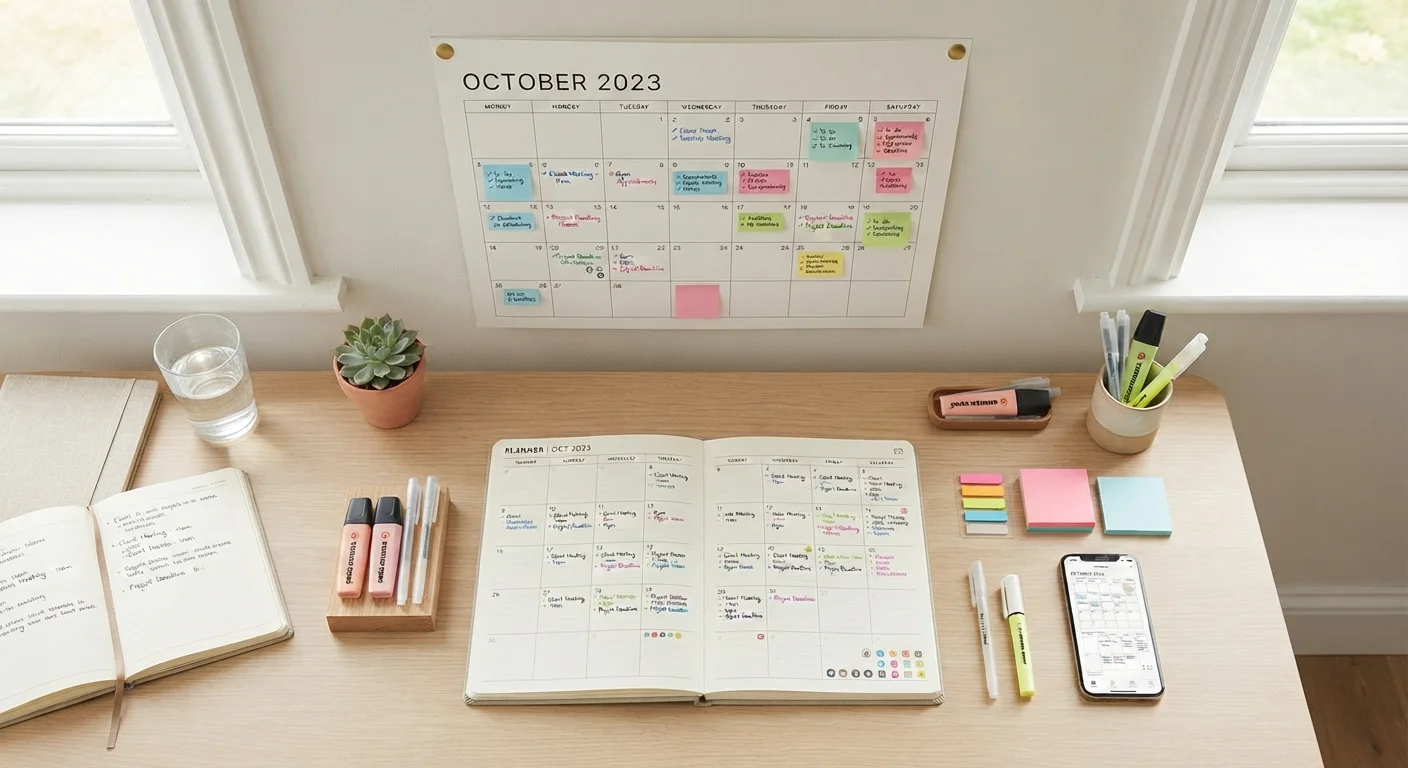
Plot Each Item on a Monthly Calendar
With your timing research in hand, mark two dates for each item on your calendar: a target purchase window (the month or range of weeks when pricing tends to be favorable) and a decision deadline (the latest date you can still wait before the purchase becomes genuinely urgent).
Color-coding by category makes patterns visible at a glance - you may find several needs cluster in the same month, which is useful both for cash-flow planning and for building savings toward those expenses in advance.
Set Reminders 4-6 Weeks Before Each Target Window
A calendar entry alone won't prompt action. Set a reminder 4-6 weeks before each target purchase window to begin your pre-purchase research: confirm the item still meets your needs, check current pricing to establish a baseline, and note whether any model transitions are expected that might affect the picture.
This lead time also gives you the opportunity to assess whether your financial situation still supports the planned purchase - and to adjust timing if it doesn't. Research on list-based shopping consistently shows that advance planning reduces unplanned spending, which compounds the benefit of timing strategy.
Review and Update the Calendar Quarterly
Revisit the full calendar every three months. Archive completed purchases (they become useful data for future planning), update items where your needs or timeline have shifted, and add any new anticipated needs that have emerged. A quarterly cadence keeps the system current without becoming a burden.
Over time, you'll build a personal record of what you actually paid versus what the category's typical low-price window offered - a useful reference for future purchase planning cycles.
Maintaining the Calendar and Avoiding Common Pitfalls
A shopping calendar only works if it stays current. Review it at the start of each quarter, removing items you've already purchased and adding newly anticipated needs. Major life changes - a move, a new vehicle, a growing household - should trigger a full refresh.
The most common pitfall is over-rigidity. If a product you need is adequately priced today and your budget supports it, forcing a wait for a theoretically better window may not be worth the inconvenience. Timing strategy is a tool, not a rule. Similarly, a marked-down price on something you hadn't planned to buy is still an unplanned expense. Retail tactics that push shoppers toward bigger baskets are designed to override exactly this kind of planning discipline.
For large purchases specifically, timing is just one of several variables worth evaluating before committing. Our pre-purchase timing checklist for large household buys walks through the full set of conditions worth confirming before buying a major appliance, mattress, or piece of furniture.
Don't Let Strategy Create False Urgency
Knowing a sale window is approaching can itself create pressure to buy - even if the item isn't truly needed yet. A lower price on something you don't need is still money spent. Your calendar should reflect genuine needs with realistic timelines, not a schedule that finds reasons to make purchases.