

Key Takeaways
Summary
18 items · 15-30 minutes
Why You Need a Pre-Purchase Process
Major spending decisions - a new appliance, a vehicle, a piece of furniture, an annual subscription - share one thing in common: they're hard to undo. Yet most people invest less deliberate thought in a $500 purchase than they do in planning a weekend trip.
Consumer behavior research consistently shows that structured decision-making reduces post-purchase regret and overspending. The checklist below is designed to be format-agnostic - it works equally well whether you're buying online at midnight or walking a showroom floor. For a complementary framework that helps you categorise what you actually need versus what caught your eye, see our spending decisions framework.
Run through these items before any purchase where you'd feel the loss if you got it wrong.
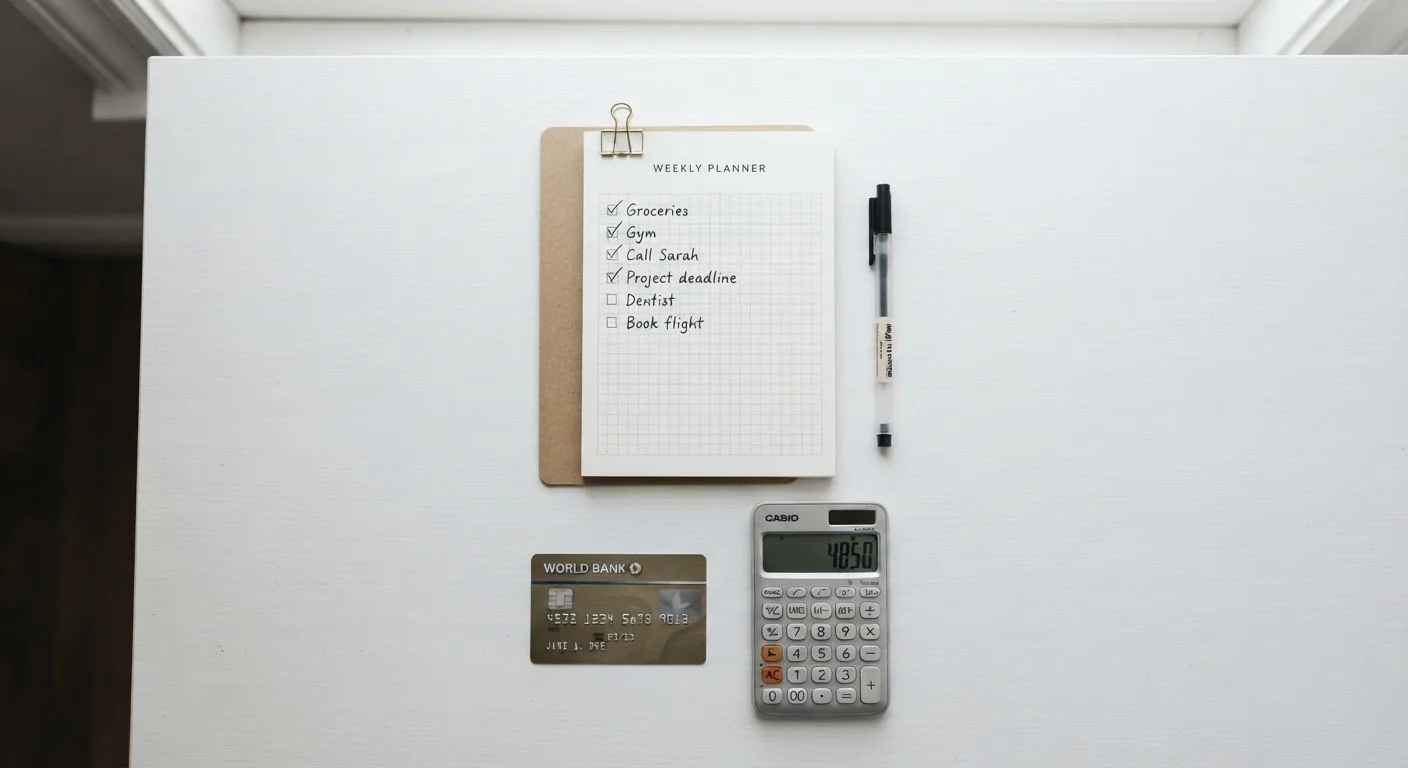
Pen and notepad (or notes app)
Write down your answers to checklist questions - externalising reasoning improves decision quality.
Basic calculator
Compute total cost of ownership including tax, delivery, and ongoing expenses.
Independent review sources
Consult review platforms, consumer advocacy sites, or editorial publications with no vendor affiliation.
Your current budget or spending tracker
Verify the purchase fits within existing financial commitments before proceeding.
The Pre-Purchase Checklist
Work through each group in order. The early questions are intentionally blunt - they exist to filter out purchases that shouldn't happen at all, before you spend time researching price and quality.
Need & Purpose
Budget & Full Cost
Research & Alternatives
Timing & Conditions
Financing Terms Can Obscure True Cost
Monthly payment framing is a well-documented technique that makes large purchases feel affordable by breaking the total into small units. Before agreeing to any financing arrangement, calculate the full repayment amount across the entire term, including interest. A purchase that fits your monthly budget may still represent a poor value when the total cost is visible. This checklist offers general guidance only - consult a financial professional for advice specific to your situation.
Using This Checklist in Practice
The value of any checklist is proportional to how honestly you answer it. A few practical notes on applying this one:
- Write your answers down. Externalising your reasoning - even in rough notes - exposes gaps in logic that feel invisible when you're thinking inside your head. Research on list-based shopping suggests structured pre-commitment consistently leads to better purchasing outcomes.
- The waiting period is non-negotiable for large amounts. Urgency is the most common lever used to bypass deliberate decision-making. If an offer genuinely expires, there will almost always be a comparable one later.
- Apply the same logic to category-specific decisions. For instance, if you're weighing an automotive expense, routine maintenance needs often deserve a line in your budget alongside a potential new purchase. Similarly, the pre-trip planning checklist applies this same framework to travel spending specifically.
- Revisit the budget section if your answer to any need or timing question changed. A purchase that was borderline affordable when you thought it was essential may not pass scrutiny when reclassified as a want.
Spending decisions compound over time. Building a habit of brief, structured review before major purchases is one of the more durable forms of ongoing financial discipline available to any household. This checklist is a starting point - not a guarantee of any outcome - and individual financial situations vary considerably.
This article is for general informational purposes only and does not constitute financial advice. For guidance specific to your circumstances, consult a qualified financial professional.