

Key Takeaways
Start here
Choosing the Right Spot
Next
Preparing Your Soil
Then
Selecting Crops for Beginners
When you're ready
Watering Wisely
Ongoing
Keeping the Garden Going
Choosing the Right Spot
Before buying a single seed, spend a few days observing your yard. Sunlight is the most critical factor: vegetables need a minimum of six hours of direct sun daily, and eight or more hours produces noticeably better yields for fruiting crops like tomatoes and peppers. Walk your yard at mid-morning, noon, and mid-afternoon to map which areas stay sunny longest.
Beyond light, consider these site factors:
- Level ground - Flat or gently sloped areas prevent water from running off before it soaks in.
- Proximity to water - Placing the garden close to an outdoor spigot makes consistent watering far easier.
- Good drainage - Avoid low spots where water pools after rain; soggy roots invite disease.
- Distance from large trees - Tree roots compete aggressively for water and nutrients, and canopy shade reduces sun hours.
If your yard has limited sunny ground, a raised bed lets you place growing space exactly where sun is best. If space is very tight, our guide to container gardening on a small patio or balcony covers how to grow vegetables in pots with great results.
Frost date
The average calendar date when temperatures in your area are last expected to drop to 32°F (0°C) in spring or first drop to that point in fall. Used to time when to plant cold-sensitive crops.
Soil pH
A measure of how acidic or alkaline your soil is, rated on a scale from 0-14. Most vegetables grow best in soil that falls between 6.0 and 7.0 on this scale.
Compost
Decomposed organic material - kitchen scraps, leaves, and plant waste - that is mixed into soil to improve its structure, drainage, and nutrient content.
Direct sow
Planting seeds directly into the ground or bed where they will grow to maturity, rather than starting them indoors and transplanting later.
Days to maturity
The approximate number of days from planting (or transplanting) until a crop is ready to harvest. Listed on seed packets to help with planting timing.
Mulch
A layer of material - straw, wood chips, shredded leaves - spread on the soil surface around plants to slow water evaporation, regulate soil temperature, and suppress weeds.
Preparing Your Soil
Healthy soil is the foundation every productive vegetable garden rests on. Most native yard soil benefits from organic matter before planting - it improves drainage in clay soils, helps sandy soils retain moisture, and feeds the microbes that make nutrients available to plant roots.
Start with a simple soil test. Many cooperative extension offices offer low-cost testing that tells you pH and nutrient levels. Most vegetables prefer a slightly acidic to neutral pH, roughly 6.0-7.0. If your pH is off, lime raises it and sulfur lowers it - follow test recommendations rather than guessing.
To work up a new bed:
- Clear the area of grass, weeds, and debris.
- Loosen the soil to a depth of about 12 inches using a garden fork or tiller.
- Spread 2-4 inches of compost across the surface and work it into the top 8-10 inches.
- Rake smooth and allow the bed to settle before planting.
Making your own compost is a cost-effective way to keep soil improving year after year. Our article on composting at home walks through the entire setup process.
Start Small to Build Momentum
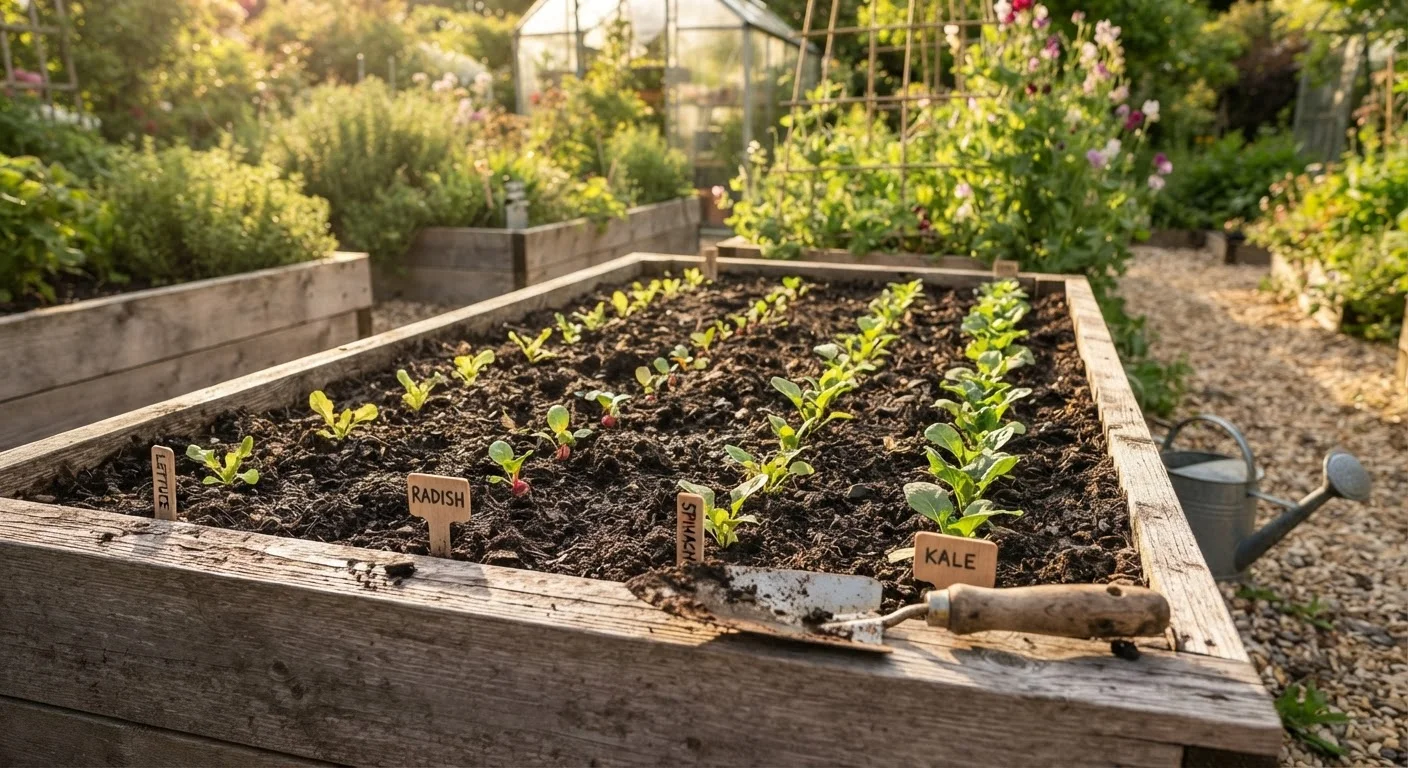
Resist the urge to turn over a large area in your first year. A 4×8-foot raised bed or a 10×10-foot in-ground plot gives you enough space to learn without overwhelming your time or budget. You can always expand once you've developed a reliable routine.
Selecting Crops for Beginners
One of the most common first-year mistakes is planting too wide a variety too soon. A focused selection of reliable crops builds skills faster and produces more satisfying harvests. Choose crops your household will actually eat - that keeps motivation high when weeding feels like a chore.
Reliable beginner crops by category:
| Category | Good Starter Crops | Typical Time to Harvest |
|---|---|---|
| Leafy greens | Lettuce, spinach, kale | 30-50 days |
| Root vegetables | Radishes, beets, carrots | 25-70 days |
| Legumes | Bush beans, snap peas | 50-65 days |
| Fruiting vegetables | Zucchini, cherry tomatoes | 50-75 days |
Pay attention to seed packets and plant tags - they list days to maturity and spacing requirements. Overcrowding is a frequent beginner error that leads to poor airflow and disease. Thinning seedlings feels wasteful at first, but it's necessary for healthy plants.
As you gain experience, you can layer in crops with longer growing windows or more specific care needs. The seasonal garden maintenance calendar is a useful companion for knowing when to plant, fertilize, and transition between seasons.
Watering Wisely
Water is where many new gardeners go wrong - typically by doing too much rather than too little. Overwatering deprives roots of oxygen and creates conditions for fungal disease and root rot. A consistent, moderate approach serves most vegetables far better than irregular heavy watering.
A general guideline: most vegetable gardens need about one inch of water per week, combining rainfall and irrigation. Check soil moisture by pushing a finger or a small stick two to three inches into the ground near plant roots. If the soil feels moist at that depth, hold off. If it's dry, it's time to water.
Practical tips for efficient watering:
- Water at the base of plants, not over foliage - wet leaves invite fungal problems.
- Water in the morning so any splash on leaves dries before evening.
- Drip irrigation or soaker hoses deliver water directly to roots and reduce evaporation.
- Mulch (straw, wood chips, or shredded leaves) applied around plants slows evaporation noticeably.
For a deeper look at recognizing and correcting watering problems, why overwatering kills more plants than drought explains the signs of water stress in both directions.
Overwatering Is a Common Beginner Mistake
Wilting plants don't always signal thirst - they can also signal root damage from too much water. Before watering, always check soil moisture a few inches below the surface rather than watering on a fixed daily schedule. Consistently soggy soil can cause root rot that is difficult to reverse once established.
Keeping the Garden Going
A vegetable garden is a living system that needs regular, modest attention rather than occasional bursts of heavy effort. Setting aside 15-20 minutes several times a week makes upkeep manageable and prevents small problems from becoming large ones.
Key ongoing tasks:
- Weeding - Pull weeds while they're small, before they compete seriously for nutrients and water. Mulch suppresses many weeds from germinating.
- Monitoring for pests - Check the undersides of leaves regularly. Catching pest populations early - aphids, caterpillars, squash bugs - makes control far simpler.
- Harvesting regularly - Many crops, including beans, zucchini, and cucumbers, produce more abundantly when harvested frequently. Leaving overripe fruit on the plant signals it to stop producing.
- Feeding the soil - A mid-season top-dressing of compost replenishes nutrients heavy feeders pull from the soil.
At the end of the season, don't skip cleanup. Removing spent plants and debris reduces disease and pest carryover into the following year. Use the spring garden readiness checklist to get your plot back in shape before the next growing season begins.
Starting small and learning consistently is the approach that produces lasting results. A well-tended 4×8-foot bed will teach you more - and feed you better - than a sprawling, neglected plot ever will.