

Key Takeaways
Why Too Much Water Is Deadlier Than Too Little
It seems counterintuitive - water is life, so how can more of it kill a plant? The answer lies underground, where roots don't just absorb moisture; they also need oxygen. When soil stays saturated for extended periods, air pockets in the root zone fill with water, essentially suffocating the roots. This oxygen deprivation is what triggers root rot, a fungal condition caused by pathogens that thrive in waterlogged conditions.
By contrast, most established plants are surprisingly resilient under drought stress. They have evolved mechanisms to conserve moisture - closing leaf pores, reducing growth, and drawing on stored reserves. A plant that wilts from underwatering will often bounce back within hours of a proper drink. A plant drowning in root rot rarely gets a second chance.
Understanding this fundamental difference in plant biology reframes how every gardener should think about the watering can. For a broader look at building good gardening habits from the ground up, starting a vegetable garden from scratch covers water management alongside other foundational skills.
#1
Leading cause of houseplant death
Horticultural educators consistently cite overwatering as the single most common reason houseplants fail in home settings.
~48 hrs
Time before root oxygen deprivation begins
Roots in waterlogged soil can begin experiencing harmful oxygen deprivation within one to two days, accelerating root rot conditions.
How to Spot Overwatering Before It's Too Late
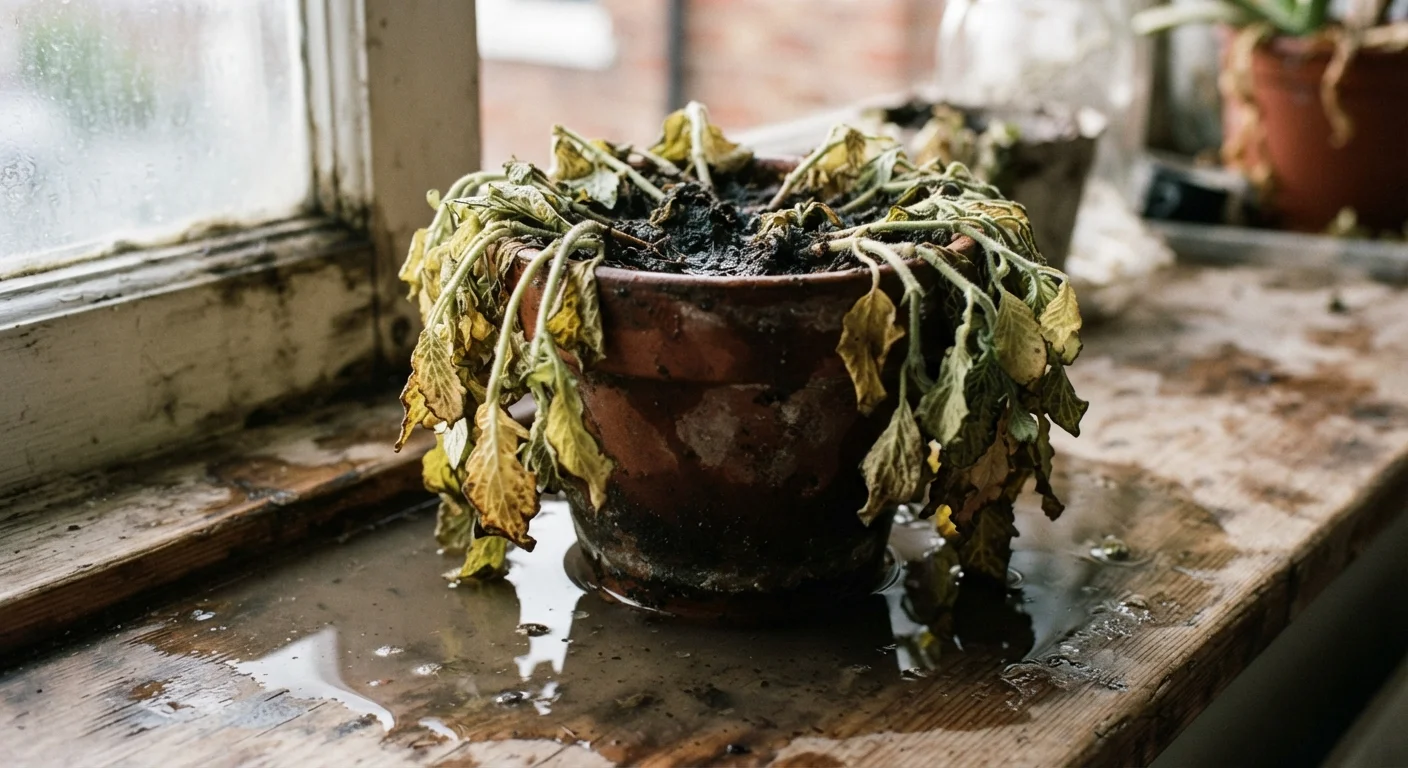
Catching overwatering early is the best way to save a struggling plant. The challenge is that the early signs are subtle and often misread. Look for these indicators:
- Yellowing leaves, particularly on lower or older growth, combined with soil that's still wet
- Soft, mushy stems near the soil line
- A musty or sour smell rising from the pot or planting bed
- Mold or algae growing on the soil surface
- Leaves that feel limp despite wet soil - a key distinction from drought wilt
If you gently unpot a plant and find roots that are brown, gray, or slimy rather than white and firm, root rot is already underway. Act quickly using the steps outlined in the callout above.
Root Rot Can Be Irreversible
Once root rot advances, affected roots cannot regenerate. If you suspect root rot, act immediately: remove the plant from its pot, trim blackened or mushy roots with sterilized scissors, and repot in fresh, well-draining soil. Waiting even a few extra days can mean the difference between saving and losing the plant.
The Five Mistakes That Lead to Overwatering
Overwatering rarely comes from carelessness - it usually comes from following oversimplified rules or misreading plant signals. The mistakes below account for the vast majority of overwatering cases, whether you're tending containers on a patio or managing an in-ground garden bed. If you garden in raised beds, drainage dynamics differ in important ways - raised beds vs. in-ground planting breaks down how each setup handles water retention.
Watering on a fixed schedule rather than checking actual soil moisture.
Why it happens: Gardeners often follow advice like 'water twice a week' without accounting for weather, humidity, season, or plant size - factors that dramatically change how fast soil dries.
Using pots without drainage holes or allowing plants to sit in standing water.
Why it happens: Decorative outer pots often lack drainage, and many people forget to empty the saucer after watering, leaving roots submerged.
Interpreting yellow or drooping leaves as a sign of underwatering and adding more water.
Why it happens: Drought stress and overwatering share surface-level symptoms - both can cause wilting and discoloration - so gardeners often reach for the watering can when the opposite response is needed.
Using heavy or compacted soil that retains too much moisture.
Why it happens: Many gardeners use whatever soil is on hand, not realizing that dense or clay-heavy mixes hold water far longer than roots can tolerate, especially in containers.
Watering the same amount regardless of the season or plant's growth stage.
Why it happens: Plants need significantly less water during dormancy, cloudy stretches, or cool months, but many gardeners maintain a summer-level watering habit year-round.
Schedules Without Soil Checks Are Dangerous
Watering every Monday regardless of conditions is one of the most common paths to plant loss. Seasonal temperature changes, humidity shifts, and plant growth stages all alter how quickly soil dries. Always check soil moisture at least two inches deep before adding water - a consistent schedule is no substitute for direct observation.
Building a Smarter Watering Routine
Sustainable watering isn't about watering less - it's about watering right. A few practical habits make a measurable difference:
- Check before you water. The finger-test or a moisture meter removes guesswork entirely.
- Water deeply but infrequently. Shallow, frequent watering keeps surface soil wet and encourages shallow root systems. Deep watering drives roots downward and allows topsoil to dry between sessions.
- Observe after rain. Skip scheduled waterings when your area has received meaningful rainfall. Many overwatered gardens are simply gardens that never account for precipitation.
- Adjust by season. Reduce frequency noticeably in fall and winter, and resume incrementally as temperatures rise.
For gardeners looking to reduce irrigation pressure even further, drought-tolerant landscaping principles offer an approach that makes overwatering structurally harder to do by design.