

Key Takeaways
Vehicle Maintenance Schedule
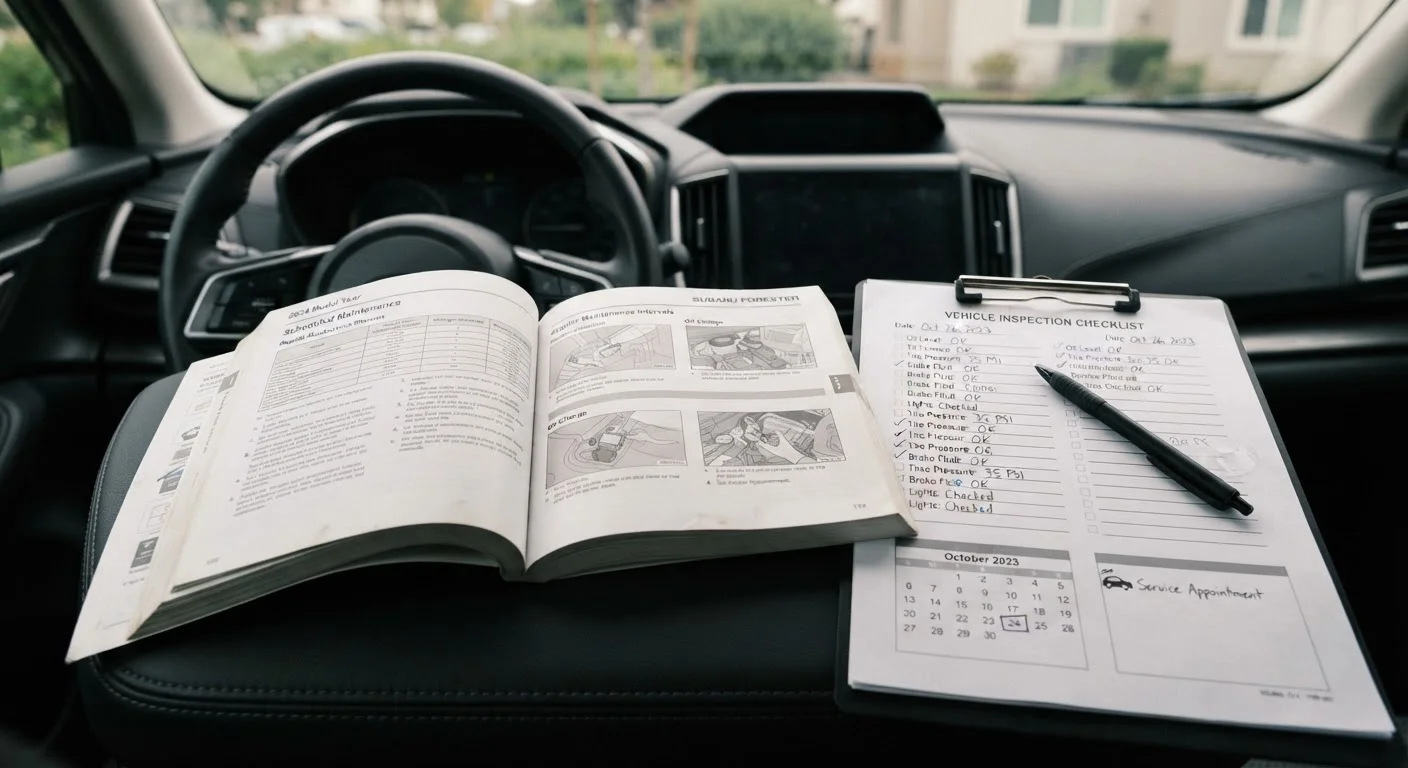
A vehicle maintenance schedule is the manufacturer's recommended timeline for inspecting, replacing, or servicing specific parts and fluids in your car. It's typically organized by mileage intervals - such as every 5,000, 30,000, or 60,000 miles - and sometimes by elapsed time. Following it helps prevent breakdowns, protects your engine, and can extend the overall life of your vehicle.
Schedules are divided into two categories in most owner's manuals: 'Normal' and 'Severe' service, with the latter applying to vehicles driven in stop-and-go traffic, extreme temperatures, or dusty conditions - all of which accelerate component wear.
Why the Maintenance Schedule Exists
Your car's maintenance schedule isn't arbitrary. Engineers design it based on how long specific components - fluids, filters, belts, and more - can perform safely under normal operating conditions before degrading. Think of it as an engineering-backed contract between you and your vehicle: follow it, and your car is far more likely to perform reliably over time.
The schedule lives in your owner's manual, organized by mileage milestones and sometimes time-based intervals. It covers everything from routine oil changes to less obvious services like coolant flushes and spark plug replacements. If you've never opened that section of your manual, this foundational guide for new drivers is a helpful starting point for understanding how it all fits together.
35%
Drivers who skip at least one recommended service annually
Industry surveys from automotive aftermarket associations have consistently found that a substantial portion of drivers fall behind on at least one manufacturer-recommended service each year.
2x
Potential repair cost multiplier from deferred maintenance
Consumer vehicle research suggests that neglected maintenance - particularly fluids and filters - can lead to repair bills significantly higher than the original service cost when components fail prematurely.
7,500-10,000 mi
Typical oil change interval for modern engines with synthetic oil
Many current vehicle manufacturers specify extended oil change intervals when full synthetic oil is used, as noted in their respective owner's manuals - well beyond the traditional 3,000-mile benchmark.
Breaking Down Common Mileage Milestones
Maintenance schedules are typically structured in tiers. Here's what most drivers can expect at common intervals - though your manual may differ:
- Every 5,000-10,000 miles: Oil and oil filter change (interval depends on oil type and engine specifications), tire rotation, and a visual inspection of lights and fluid levels.
- Every 15,000-30,000 miles: Air filter replacement, cabin air filter check, brake inspection, and battery condition check.
- Every 30,000-60,000 miles: Transmission fluid service (on many vehicles), coolant flush, spark plug replacement (varies widely by engine type), and fuel system inspection.
- Every 60,000-100,000 miles: Timing belt replacement if applicable (not all engines have one), power steering fluid flush, and a comprehensive brake system service including brake fluid.
These are general benchmarks. Your specific vehicle may have a different schedule based on engine design, transmission type, and intended use. Always verify with your manual. For a hands-on understanding of checking fluid conditions yourself, see this walkthrough of basic fluid checks.
Let Your Owner's Manual Be the Authority
Generic maintenance advice - including interval rules you see posted at quick-lube shops - may not match your vehicle's actual requirements. Pull out your owner's manual and find the scheduled maintenance section; it's specific to your engine, transmission, and operating environment. If you don't have a physical copy, most automakers offer downloadable versions on their official websites.
Mileage vs. Time: Which Trigger Wins?
Most maintenance intervals list both a mileage figure and a time period - for example, "every 7,500 miles or 12 months, whichever comes first." This dual trigger exists because vehicle components degrade through both use and age. Engine oil oxidizes and breaks down over time even if the car sits in a garage. Rubber seals, belts, and hoses stiffen with age regardless of how few miles they've traveled.
If you drive fewer miles than average - perhaps under 7,500 miles per year - time-based intervals become especially important. A car driven only occasionally still needs regular attention. Conversely, high-mileage drivers may hit the mileage threshold well before the time limit and should service accordingly.
Understanding this distinction also matters for keeping a high-mileage vehicle reliable, where both age and accumulated wear play a significant role in prioritizing services.
Normal vs. Severe Driving Conditions
One of the most overlooked sections of any owner's manual is the distinction between "Normal" and "Severe" service schedules. Many drivers assume they qualify for normal service - but the reality is that a significant portion of American drivers encounter conditions that actually fall under the severe category.
Severe service typically includes:
- Frequent short trips under five miles, especially in cold weather
- Extended idling or stop-and-go city driving
- Driving in extremely hot or cold climates
- Towing, hauling heavy loads, or driving on unpaved roads
- Mountainous or hilly terrain with frequent braking
If your daily commute involves a lot of stop-and-go traffic or you regularly drive in harsh conditions, your manufacturer likely recommends shorter intervals for key services. This isn't a sales tactic - it reflects genuine additional stress on engine components, brakes, and fluids. Seasonal driving conditions can also push your car into the severe service category depending on where you live.
Not Every Service Needs a Dealership
Many scheduled maintenance tasks - tire rotations, air filter swaps, fluid top-offs - can be handled by independent mechanics or even careful home mechanics. Dealership service departments are not required for routine maintenance as long as you keep accurate records. However, some complex or safety-critical tasks are best left to qualified professionals. This guide on DIY car maintenance boundaries can help you decide what's within reach.
Tracking Services and Staying Ahead
Knowing your schedule is only half the equation. Staying consistent requires actually recording what's been done and when. A simple maintenance log - even a handwritten one stored in your glove compartment - lets you see at a glance what's due, avoid duplicate services, and catch gaps before they become problems.
A service record also carries practical value beyond reliability. Well-documented maintenance history can support a vehicle's resale value by demonstrating that the car has been cared for responsibly. Learn what to include in a complete maintenance log and why consistent tracking pays off in the long run.
If a dashboard warning light illuminates between scheduled services, don't wait for your next milestone - address it promptly. Understanding what each warning light means helps you respond with the right level of urgency rather than guessing.