

| Total dashboard warning symbols | 50+ possible indicators across modern vehicles (Varies by make and model) |
| Color coding: Red lights | Stop or act immediately - safety-critical (Universal automotive convention) |
| Color coding: Amber/Yellow lights | Service needed soon - monitor and schedule repair (Universal automotive convention) |
| Color coding: Blue/Green lights | Informational - system is active (e.g., high beams) (Universal automotive convention) |
| TPMS required in US since | 2008 model year (NHTSA Federal Motor Vehicle Safety Standard 138) |
| OBD-II scan tools available at | Most auto parts stores, often at no charge for reading (Common retail practice) |
How to Read Any Warning Light Before You Know What It Means
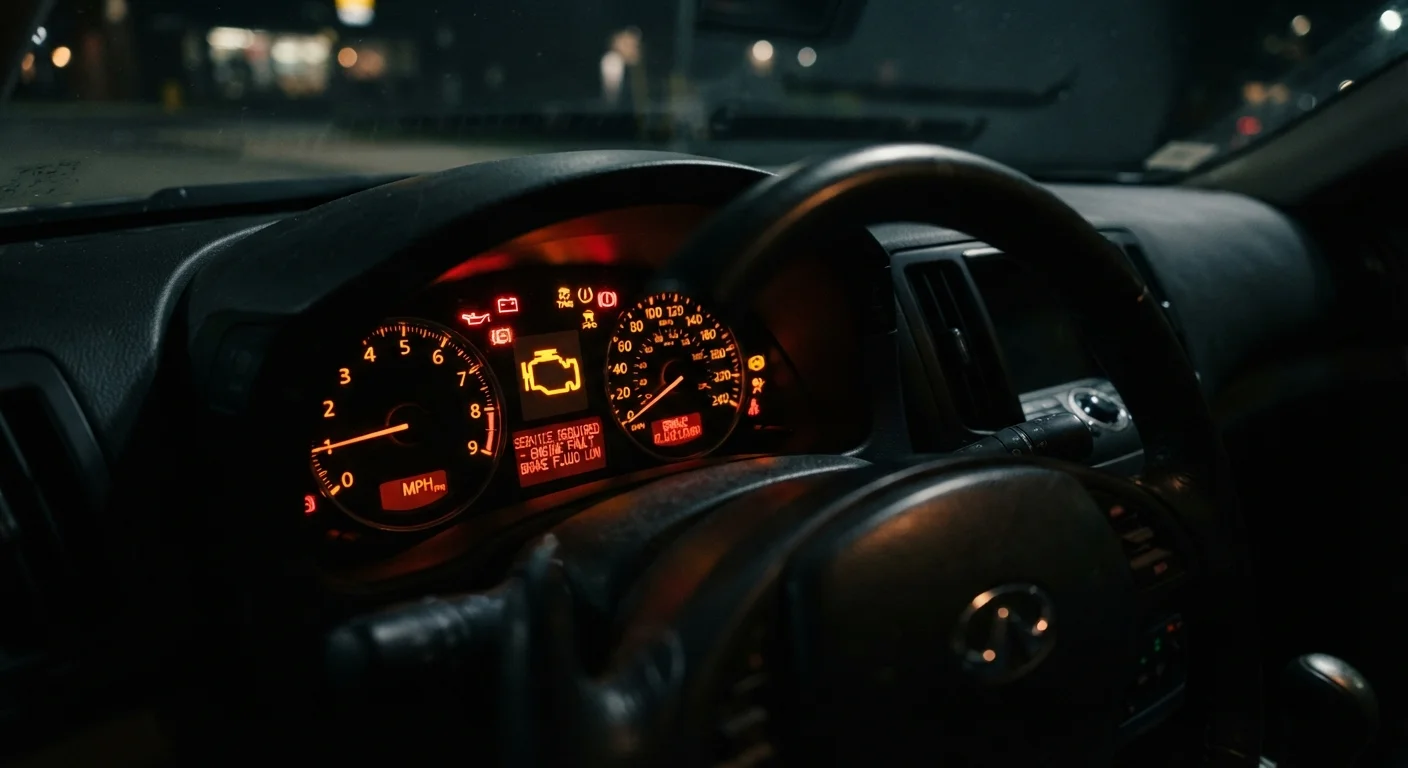
Every warning light on your dashboard carries two pieces of information before you even identify the symbol: its color and whether it is steady or flashing. Red lights demand immediate attention - pull over safely when it is safe to do so, or stop driving as soon as possible. Amber or yellow lights generally mean a system needs service within a reasonable timeframe, not necessarily right now. A flashing light of any color typically signals a more urgent version of that same fault.
With that framework in mind, here is a reference for the most common warning indicators and what level of response each one warrants.
| Total dashboard warning symbols | 50+ possible indicators across modern vehicles (Varies by make and model) |
| Color coding: Red lights | Stop or act immediately - safety-critical (Universal automotive convention) |
| Color coding: Amber/Yellow lights | Service needed soon - monitor and schedule repair (Universal automotive convention) |
| Color coding: Blue/Green lights | Informational - system is active (e.g., high beams) (Universal automotive convention) |
| TPMS required in US since | 2008 model year (NHTSA Federal Motor Vehicle Safety Standard 138) |
| OBD-II scan tools available at | Most auto parts stores, often at no charge for reading (Common retail practice) |
The Lights That Demand Immediate Attention (Red)
Oil Pressure Warning (red oil can): Stop driving as soon as it is safe. Low oil pressure can destroy an engine within minutes of continued operation. Check the oil level first - see how to check your engine oil safely. If the level is normal and the light remains on, do not restart the vehicle; have it towed for diagnosis.
Engine Temperature Warning (thermometer in liquid): Pull over safely and let the engine cool before opening the hood. Do not remove the radiator cap on a hot engine. An overheating engine can warp cylinder heads - a costly repair that is largely preventable by stopping promptly.
Battery / Charging Warning (battery icon): Your vehicle is running on reserve battery power alone. Turn off non-essential electrical loads (AC, heated seats, rear defroster) and drive directly to a repair facility. The engine may stall before you arrive if the alternator has failed completely.
Brake Warning Light: First check that your parking brake is fully released. If the light persists while driving, it may indicate low brake fluid or a hydraulic fault. Have the braking system inspected promptly. For more on what brake system symptoms can signal, see how to spot brake pad wear early.
Lights That Need Attention Soon (Amber / Yellow)
Check Engine Light (engine silhouette): A steady CEL means a fault has been logged - the car is still drivable but needs diagnosis. A flashing CEL typically indicates active engine misfires that can damage the catalytic converter; reduce speed and seek service promptly. An OBD-II scan tool can retrieve the stored fault code and narrow down the problem before you visit a mechanic.
TPMS (exclamation point inside a tire cross-section): One or more tires are significantly underinflated. Check all four tires with a calibrated gauge and inflate to the pressure listed on the driver's door jamb sticker - not the maximum stamped on the tire sidewall. Proper inflation supports fuel efficiency, handling, and tire longevity.
ABS Warning Light: Your standard braking still works, but the anti-lock feature may be unavailable. Schedule service; avoid situations requiring hard emergency stops until it is repaired.
Traction Control / Stability Control (car with skid lines): If this light flashes briefly during acceleration on a slippery surface, the system is working as designed. If it stays on, the system may be disabled - have it checked, especially before winter driving.
Your Owner's Manual Is the Definitive Source
Warning light icons are not fully standardized across manufacturers. While common symbols are widely shared, some automakers use proprietary indicators or assign slightly different meanings to familiar icons. Always cross-reference an unfamiliar light with your vehicle's owner's manual before drawing conclusions. If you no longer have the printed manual, most automakers provide a free digital version on their official website.
Understanding what each light signals is only part of the picture. For a full view of how these warning indicators connect to routine upkeep, your car's maintenance schedule explained walks through the service milestones that prevent many of these faults from developing in the first place.
What to Do When a Light Comes On
Note the conditions: Was the engine cold or hot? Did it appear suddenly or gradually? Were there any sounds, smells, or changes in how the car drove? This context helps a mechanic diagnose the fault faster and more accurately.
If you are not sure whether a light is serious, default to caution - especially on long trips. A quick pre-trip safety check can catch developing issues before a light appears. And if a light prompts a repair you are considering handling yourself, knowing where the DIY line is will help you assess what is safe to tackle at home versus what requires a qualified mechanic.
Check Engine Light (CEL)
A broad diagnostic indicator triggered by the vehicle's onboard diagnostics system (OBD-II) when it detects a fault in the engine, emissions, or related systems. It does not pinpoint a single problem - a mechanic's scan tool is needed to read the stored fault code.
TPMS
Tire Pressure Monitoring System. A federal safety requirement on all US passenger vehicles made after 2007 that alerts drivers when one or more tires drop significantly below the recommended inflation pressure.
OBD-II
On-Board Diagnostics, second generation. A standardized system built into all US cars and light trucks sold after 1996 that monitors engine and emissions performance and stores diagnostic trouble codes (DTCs) readable by a scan tool.
Oil Pressure Warning
A red indicator signaling that oil pressure in the engine has fallen below a safe operating threshold. Low oil pressure can mean insufficient oil level or a failing oil pump, and continued driving risks severe engine damage.
ABS Warning Light
Indicates a fault in the Anti-lock Braking System, which prevents wheel lockup during hard braking. Your standard brakes typically remain functional, but the ABS safety feature may be disabled until the fault is repaired.
Battery / Charging Warning
Signals that the vehicle's charging system is not maintaining the battery at the correct voltage. Common causes include a failing alternator, a worn drive belt, or a deteriorating battery.