

Key Takeaways
Why Maintenance Knowledge Matters From Day One
Most new drivers focus entirely on the mechanics of operating a car - steering, braking, signaling - which makes sense. But the vehicle itself needs regular attention to remain safe and reliable, and waiting until something breaks is almost always more expensive than preventing it in the first place.
Car maintenance doesn't require mechanical expertise. It requires consistency, basic observation skills, and knowing what to look for. Whether you're helping a new teen driver build lasting habits or navigating first-time ownership yourself, building maintenance awareness early pays dividends for years. A well-maintained car is also a safer car - many roadside failures, including brake fade and tire blowouts, are preventable with routine checks.
Start With Your Owner's Manual
Before watching videos or asking for advice online, open the glove box and read the maintenance section of your owner's manual. It contains model-specific intervals, fluid specifications, and warning light explanations that generic advice simply can't replicate. Many new drivers never open it - don't make that mistake.
Fluids: The Lifeline of Your Vehicle
Your car relies on several fluids to operate safely. Running low on any of them can cause damage ranging from minor inconvenience to permanent engine failure. The five you should monitor regularly are:
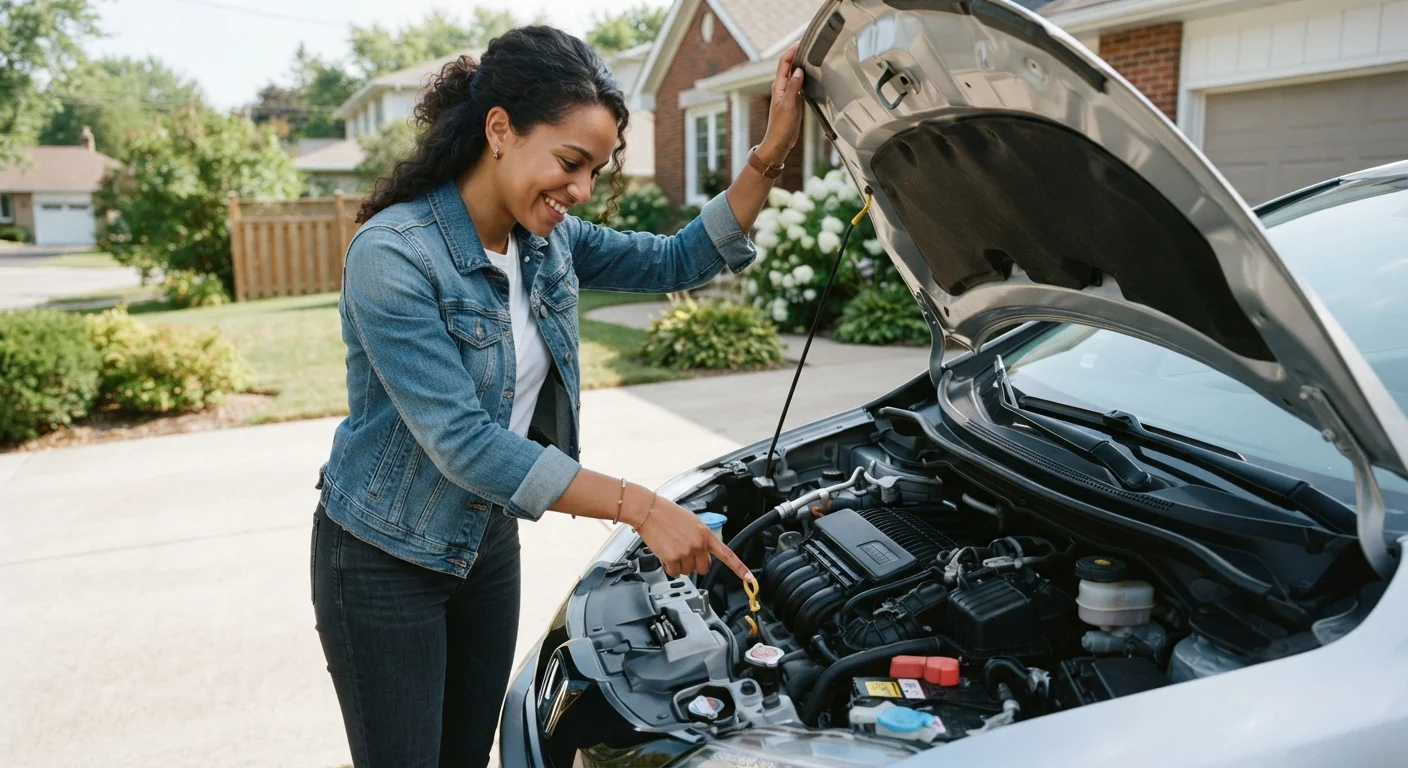
- Engine oil - lubricates moving engine parts and prevents overheating from friction. Check with the dipstick when the engine is cold. Oil should appear amber to brown; black, gritty oil signals it's overdue for a change.
- Coolant (antifreeze) - regulates engine temperature. Check the plastic reservoir under the hood; the level should sit between the MIN and MAX lines.
- Brake fluid - transfers force from your pedal to the brakes. A low or darkened level warrants a mechanic's inspection, as this directly affects stopping ability.
- Power steering fluid - if your car has hydraulic steering, this fluid keeps steering effort manageable. Many newer vehicles use electric power steering and don't require it.
- Windshield washer fluid - the only fluid safe to top off without professional help. Use a dedicated washer solution, not plain water, which can freeze and harbor bacteria.
Oil change intervals vary by vehicle and oil type. Consult your owner's manual rather than relying on the old rule of thumb; many modern engines with synthetic oil can go significantly longer between changes.
~20%
Fuel efficiency loss from under-inflated tires
The U.S. Department of Energy estimates that keeping tires properly inflated can improve gas mileage by up to 3%, while significant under-inflation compounds losses over time.
1 in 4
Vehicles on the road with low or dirty oil
Industry surveys by automotive service organizations have consistently found a large share of vehicles in service lanes are operating with oil that is overdue for a change or significantly low.
3-5 years
Typical car battery lifespan
Most vehicle manufacturers and battery producers cite this range as the standard service life under normal driving conditions.
Tires: What to Check and When
Tires are your car's only contact with the road, which makes their condition directly relevant to handling, braking distance, and fuel economy. Three things to monitor consistently:
Tire Pressure
Under-inflated tires wear unevenly, reduce fuel efficiency, and can overheat at highway speeds - a leading cause of blowouts. The correct pressure for your vehicle is listed on a sticker inside the driver's door jamb, not on the tire sidewall. Check pressure monthly with an inexpensive gauge, preferably when the tires are cold (not driven recently). For more on how driving choices affect your vehicle's efficiency, see the Fuel & Efficiency hub.
Tread Depth
Worn tread dramatically increases stopping distances, especially on wet roads. The penny test is a rough guide: insert a penny into the tread groove with Lincoln's head pointing down. If you can see the top of his head, the tread is likely too worn for safe use. For a more precise measurement, an inexpensive tread-depth gauge is worth keeping in your glove box.
Visual Inspection
Before driving, take a few seconds to walk around the car. Look for obvious flats, bulges on the sidewall (a sign of internal damage), or objects embedded in the tread. A slow leak caught early is a far cheaper fix than a blowout on the highway.
Understanding Your Dashboard Warning Lights
Modern vehicles use a color-coded system for dashboard alerts. Understanding the hierarchy prevents both unnecessary panic and dangerous inaction.
- Red lights - require immediate attention. Examples include the engine temperature warning, oil pressure light, and brake system alert. Pull over safely and consult your manual or a mechanic before continuing to drive.
- Yellow/amber lights - indicate something needs attention soon but is not an immediate emergency. The check engine light and tire pressure monitoring system (TPMS) light fall here. Schedule service within a few days.
- Green or blue lights - informational indicators, such as high beams active or turn signal engaged. No action needed beyond awareness.
Brake System Warnings Are Always Urgent
If your brake warning light illuminates - especially accompanied by a soft pedal, grinding noise, or pulling to one side - treat it as an immediate safety concern. Do not delay a brake inspection. Brake failure is one of the most serious mechanical risks a driver can face, and it is not a system to monitor casually over time.
Your owner's manual contains an illustrated guide to every warning light specific to your vehicle. Keep it in your glove box and reference it before guessing. Ignoring a red warning light, even briefly, can result in severe engine or brake system damage.
New drivers navigating unfamiliar road situations alongside maintenance concerns will find useful grounding in a complete introduction to safe road behavior.
Scheduled Maintenance: Following Your Owner's Manual
Every vehicle comes with a manufacturer-specified maintenance schedule covering oil changes, filter replacements, brake inspections, spark plugs, timing belts or chains, and more. This schedule - found in the owner's manual - is the most reliable source of guidance for your specific make, model, and engine type.
Common intervals to be aware of (though always verify against your manual):
- Engine air filter
- Typically inspected every 15,000-30,000 miles. A clogged filter reduces engine performance and fuel efficiency.
- Cabin air filter
- Usually every 15,000-25,000 miles. Affects the air quality inside the cabin and HVAC performance.
- Brake inspection
- At least annually, or when you notice squealing, grinding, or reduced stopping response. Brakes are safety-critical - leave this to a qualified mechanic.
- Battery check
- Most car batteries last 3-5 years. A free voltage test at many auto parts stores can flag a weakening battery before it leaves you stranded.
Always check your fluids and tire pressure when the vehicle has been sitting for at least two hours. Heat from driving expands fluids and air, giving you false high readings.
Cold measurements are more accurate and represent actual resting conditions, which is what dipstick and pressure gauge readings are calibrated for.
Take a photo of your odometer each time you perform or schedule a service. It creates an instant, dated record without any extra paperwork.
Odometer documentation is the most commonly requested proof during warranty claims and pre-sale inspections, and a phone photo is easy to retrieve and share.
Understanding which tasks are appropriate for careful DIY and which require professional handling is its own subject. The DIY car maintenance guide covers exactly where that line falls.
Building a Maintenance Habit That Lasts
The best maintenance routine is one you actually follow. A few practical strategies help turn sporadic good intentions into consistent habits:
- Set calendar reminders tied to monthly mileage milestones rather than arbitrary dates. Many drivers tie fluid checks to the first of each month.
- Keep a service log - a simple notebook or spreadsheet noting the date, mileage, and work performed for every service. This record helps mechanics diagnose problems faster, supports warranty claims, and can meaningfully support resale value. Learn exactly what to track in the complete car maintenance record guide.
- Do a walk-around check before every drive. It takes under a minute and catches obvious issues - a flat tire, a broken light, a fluid puddle under the car - before they become road hazards.
Transmission type can also influence maintenance needs and driving behavior. If you're weighing those choices, the comparison of manual vs. automatic transmission offers an honest look at the tradeoffs. Safe driving habits and good maintenance are two sides of the same coin - together, they keep you and your passengers protected on every trip.