

Key Takeaways
Summary
18 items · 5-15 minutes
Why a Pre-Trip Check Belongs in Every Driver's Routine
Most vehicle breakdowns and many preventable accidents share a common thread: the warning signs were present before the driver left the driveway. A tire was already low. A brake light was already burned out. The windshield was already cracked at the edge of the driver's sightline. The problem wasn't sudden - it was unnoticed.
A structured pre-trip safety check takes five to fifteen minutes and costs nothing. It's not about being overly cautious; it's about making informed decisions before you're moving at 60 mph with no margin for error. The car maintenance fundamentals that prevent expensive shop visits start with what you can verify yourself, at home, before you turn the key.
This checklist is designed for everyday US drivers - whether you're commuting across town, running errands, or beginning a longer journey. For those preparing for a road trip specifically, our mechanical readiness checklist for long drives covers deeper vehicle systems worth inspecting before significant mileage.
Tire Pressure Gauge
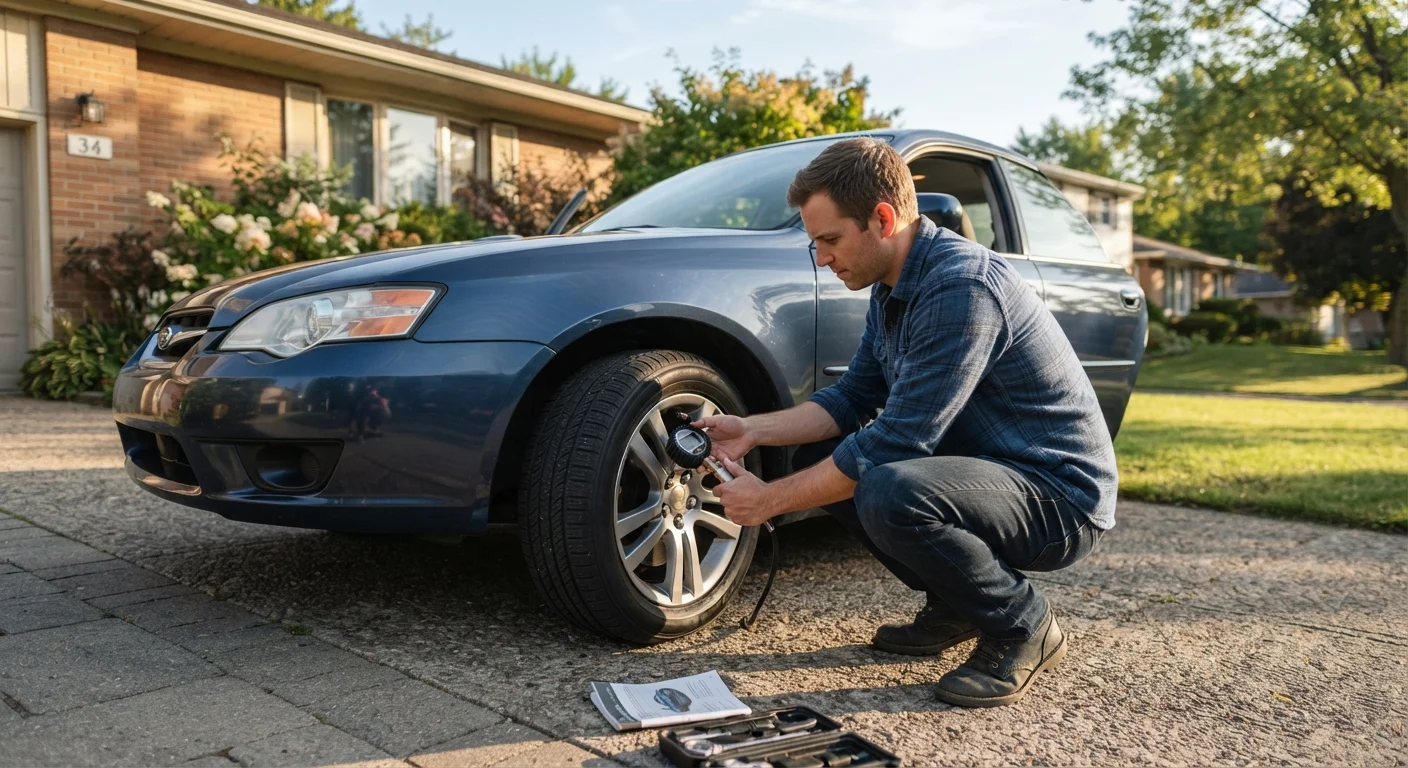
Accurately measure PSI in each tire and compare to the manufacturer's recommended level on your door jamb placard.
Penny (tread depth test)
A standard US penny inserted into tread grooves provides a quick visual indicator of whether tires have fallen below a safe tread depth.
Flashlight or Smartphone Torch
Useful for inspecting tires, undercarriage, and engine bay in low-light conditions, such as early morning or evening departures.
Windshield Scraper / Ice Brush
Removes ice, snow, and frost from all glass surfaces before driving, which is especially critical in winter months.
How to Use This Checklist
Work through the four groups in order: start outside the vehicle with the walk-around, move to lights and signals, then settle into the cabin for controls and dash checks, and finish with visibility. The sequence is intentional - issues found in earlier steps (a flat tire, a fluid leak) may change whether you drive at all.
You don't need to time yourself or rush. The goal is to build a habit that becomes second nature, the way checking your mirrors before changing lanes eventually stops feeling deliberate. A few of the items below require a second person to verify brake lights - if you drive alone regularly, a garage door or parked car behind you can serve as a reflective surface.
Seatbelts Save Lives - Every Occupant, Every Trip
According to the National Highway Traffic Safety Administration (NHTSA), seatbelts are among the most effective safety features in any vehicle. Make it a firm rule: no one in the vehicle moves until every occupant is buckled. This applies to rear-seat passengers too - an unbelted rear occupant becomes a serious hazard to everyone in the vehicle during a crash.
If your vehicle's dashboard lights concern you, our guide to dashboard warning lights explains what each indicator signals and how urgently to respond.
Exterior Walk-Around
Lights and Signals
Interior and Controls
Visibility and Weather Readiness
Weather Conditions Add Extra Steps
Rain, snow, and ice demand additional attention before you leave. Cold weather drops tire pressure (roughly 1 PSI for every 10°F drop in temperature), so tires that were properly inflated in warmer conditions may read low on a cold morning. Winter driving also taxes wiper blades, washer fluid, and lighting in ways that dry-season driving does not.
Our seasonal safe driving guide covers the in-motion adjustments you'll need once you're on the road. The pre-trip visibility items in the checklist above are your first line of defense before you reach those conditions.
Don't Drive on a TPMS Warning Light
The Tire Pressure Monitoring System (TPMS) light - a horseshoe shape with an exclamation mark - means at least one tire is significantly under-inflated. Driving on a seriously underinflated tire increases blowout risk and reduces braking effectiveness. Pull over safely, check your pressures with a gauge, and inflate to the door-jamb specification before continuing. To learn more about what warning lights mean, see our dashboard warning lights guide.
Partial Visibility Is Not Acceptable
Driving with a partially defrosted or fogged windshield - even just a porthole-sized cleared area - significantly narrows your field of view and reaction time. In many US states, operating a vehicle with an obstructed windshield is a ticketable offense. Always clear all glass surfaces completely before moving the vehicle, and use your defroster to prevent re-fogging during the drive.
For drivers focused on efficiency alongside safety, the fuel efficiency prep checklist pairs well with this guide - properly inflated tires and a well-maintained vehicle also help you get more miles per gallon.
This article is for general informational purposes. Always consult a qualified mechanic if you're uncertain about your vehicle's safety or condition before driving.