

Key Takeaways
The Maintenance Gap Most Drivers Don't Notice
Oil changes get done. Tire pressure gets checked. But a whole category of maintenance tasks lives in the background - services with no dashboard light, no obvious symptom, and no urgent deadline until the day everything goes wrong at once.
These are the jobs that mechanics see deferred the most: services that feel optional when the car is running fine, but turn out to be essential once a breakdown forces the issue. Understanding what they are - and roughly when they matter - helps drivers stay ahead of problems rather than react to them.
As you review this list, keep in mind that service intervals vary significantly by vehicle make, model, driving conditions, and climate. Always cross-reference your owner's manual and, when in doubt, ask a trusted mechanic. For a broader look at how deferred service compounds over time, see why skipping small services leads to big repair bills.
Coolant System Flush
Coolant (also called antifreeze) does double duty: it keeps the engine from overheating in summer and from freezing in winter. Over time, however, the fluid degrades - it becomes acidic and loses its ability to transfer heat efficiently. A coolant flush removes old, contaminated fluid and replaces it with fresh coolant, protecting the radiator, water pump, and engine seals from corrosion damage.
Most vehicles benefit from a coolant flush every 30,000 to 50,000 miles, though some modern formulas extend that interval. Check your owner's manual for the specification. Warning signs of degraded coolant include a sweet burning smell, unexplained temperature gauge spikes, or visible rust-colored fluid. For a deeper look at fluid maintenance, this walkthrough of basic fluid checks is a useful starting point.
Degraded coolant turns acidic, quietly corroding the radiator and water pump from the inside out.
Serpentine Belt Inspection and Replacement
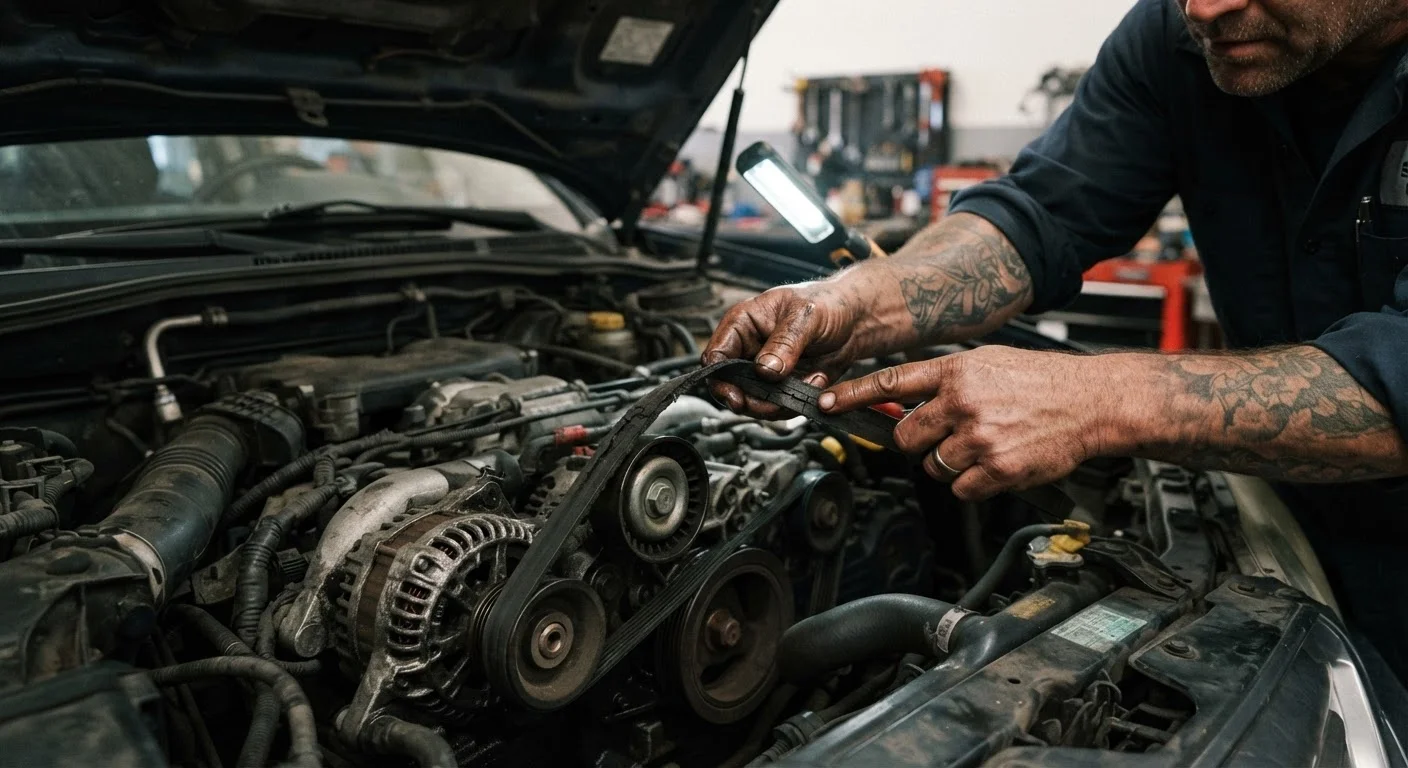
The serpentine belt is a single continuous belt that drives multiple engine accessories simultaneously - the alternator, power steering pump, air conditioning compressor, and often the water pump. When it fails, it doesn't fail gradually: it usually snaps, and the car stops running almost immediately.
Belts typically last between 60,000 and 100,000 miles, but heat, age, and oil contamination can accelerate wear. During any under-hood inspection, look for cracking, fraying, or glazing on the belt surface. Because replacement requires accessing components close together under tension, many drivers prefer to have a mechanic handle this one - particularly if the water pump is driven by the same belt.
A serpentine belt failure doesn't give much warning - it snaps, and the car stops soon after.
Cabin Air Filter Replacement
The cabin air filter cleans the air flowing through your vehicle's heating and air conditioning system before it reaches the passenger compartment. A clogged filter reduces airflow noticeably, forces the blower motor to work harder, and - in severe cases - allows dust, pollen, and debris to circulate inside the cabin.
Replacement is typically recommended every 15,000 to 25,000 miles, but dusty driving environments can shorten that interval considerably. Symptoms of a dirty cabin filter include reduced airflow even at high fan settings, musty odors from the vents, and increased allergy symptoms in the car. This is one of the more accessible DIY tasks on this list - the filter is often reachable behind the glove box without tools. See our plain-language guide to all three vehicle filters for details.
A clogged cabin filter forces the blower motor to work harder and fills the passenger cabin with unfiltered air.
Brake Fluid Change
Brake fluid is hygroscopic, meaning it absorbs moisture from the air over time. As water content rises, the fluid's boiling point drops - a condition that can cause brake fade under heavy use, where the pedal feels soft or unresponsive during repeated hard stops. This is a real safety concern, particularly in hilly terrain or during highway driving.
Many manufacturers recommend a brake fluid change every two to three years regardless of mileage. A mechanic can test fluid moisture content with an inexpensive tester. Because the brake system is safety-critical, this is a job to have professionally done unless you have confirmed experience working with hydraulic brake systems.
Moisture-contaminated brake fluid can cause brake fade - a soft, unresponsive pedal under hard use.
Transmission Fluid Service
Transmission fluid lubricates the complex set of gears and clutch packs inside an automatic or manual transmission. Over time and with heat cycling, it breaks down and loses its protective properties. Neglected fluid can cause sluggish gear changes, slipping, or - in severe cases - costly internal damage.
Service intervals vary widely: some manufacturers specify a change every 30,000 miles under severe driving conditions, while others suggest longer intervals under normal use. Check your manual for the exact specification and fluid type, as using the wrong fluid can cause damage. Symptoms of degraded transmission fluid include delayed engagement when shifting into drive or reverse, rough gear changes, or a burnt smell.
Transmission fluid breakdown is invisible until it causes sluggish shifts or internal damage that requires a full rebuild.
Tire Rotation and Alignment Check
Tires wear unevenly depending on their position - front tires typically wear faster due to steering forces. Regular rotation moves tires between positions to distribute wear more evenly, extending the usable life of the full set. Alignment, by contrast, adjusts the angle at which tires contact the road; a misaligned vehicle pulls to one side and accelerates wear on specific tires.
Rotation is commonly recommended every 5,000 to 7,500 miles. Alignment should be checked annually and after any significant impact - hitting a large pothole or curb is a common cause of misalignment. Our article on tire rotation, balance, and alignment explains exactly what each service does and when your vehicle needs it.
Regular tire rotation can meaningfully extend the life of your full set - alignment keeps wear from compounding.
Battery Terminal Cleaning
Battery terminals corrode gradually over time, forming a white or bluish crust that increases electrical resistance and reduces the battery's ability to deliver current. Mild corrosion can cause slow cranking or intermittent electrical issues long before the battery fails outright. It also masks the actual condition of the battery posts, making it harder to identify whether the battery itself needs replacement.
Cleaning terminals is a low-cost task that requires a wire brush, baking soda solution, and basic safety precautions - gloves and eye protection are essential since battery acid residue is caustic. Inspect terminals whenever the hood is open and address buildup before it progresses. If cranking has felt sluggish, have the battery load-tested at the same time.
Terminal corrosion often creates electrical trouble long before a battery failure is obvious.
Spark Plug Inspection and Replacement
Spark plugs ignite the air-fuel mixture inside each cylinder. Worn plugs fire less reliably, leading to misfires that reduce fuel efficiency, cause rough idling, and - over time - stress the catalytic converter with unburned fuel. Modern iridium or platinum plugs can last 60,000 to 100,000 miles, but this varies by engine and driving style.
Symptoms of worn plugs include rough idle, reduced acceleration, noticeably lower fuel economy, and in some cases a check engine light for misfire codes. Replacement intervals and plug specifications are listed in the owner's manual. For vehicles with easy plug access, this is a manageable DIY task; engines with coil-on-plug designs or tight engine bays may require more effort and potentially professional assistance.
Worn spark plugs don't just hurt efficiency - unburned fuel from misfires can damage the catalytic converter.
Making These Tasks a Habit
None of the services on this list require a mechanical degree to understand - they just require awareness. The most effective habit is simple: keep a maintenance log. Recording dates, mileage, and what was done at each service visit creates an instant reference that prevents tasks from slipping through the cracks. Tracking your vehicle's service history can also support resale value and help a mechanic diagnose problems faster.
For tasks you're considering handling yourself, it's worth knowing which ones carry genuine risk if done incorrectly. Our guide on DIY car maintenance and where the line is breaks down the difference between beginner-friendly jobs and those better left to a professional.
Use Your Owner's Manual as a Starting Point
Manufacturer-specified service intervals are the most reliable baseline for your specific vehicle. Generic mileage recommendations online are useful context, but they don't account for your engine design, fluid specifications, or warranty requirements. If you've purchased a used vehicle without a service history, a trusted mechanic can often assess the current condition of fluids and components and help you establish a realistic maintenance schedule going forward.