

Key Takeaways
The Real Cost of Putting Off Routine Service
Routine maintenance items - oil changes, filter swaps, tire rotations - can feel like recurring expenses that are easy to postpone when money or time is tight. But deferred services don't simply delay the cost; they multiply it. Each skipped task puts additional stress on connected systems, and that stress compounds quietly until a minor issue becomes a major failure.
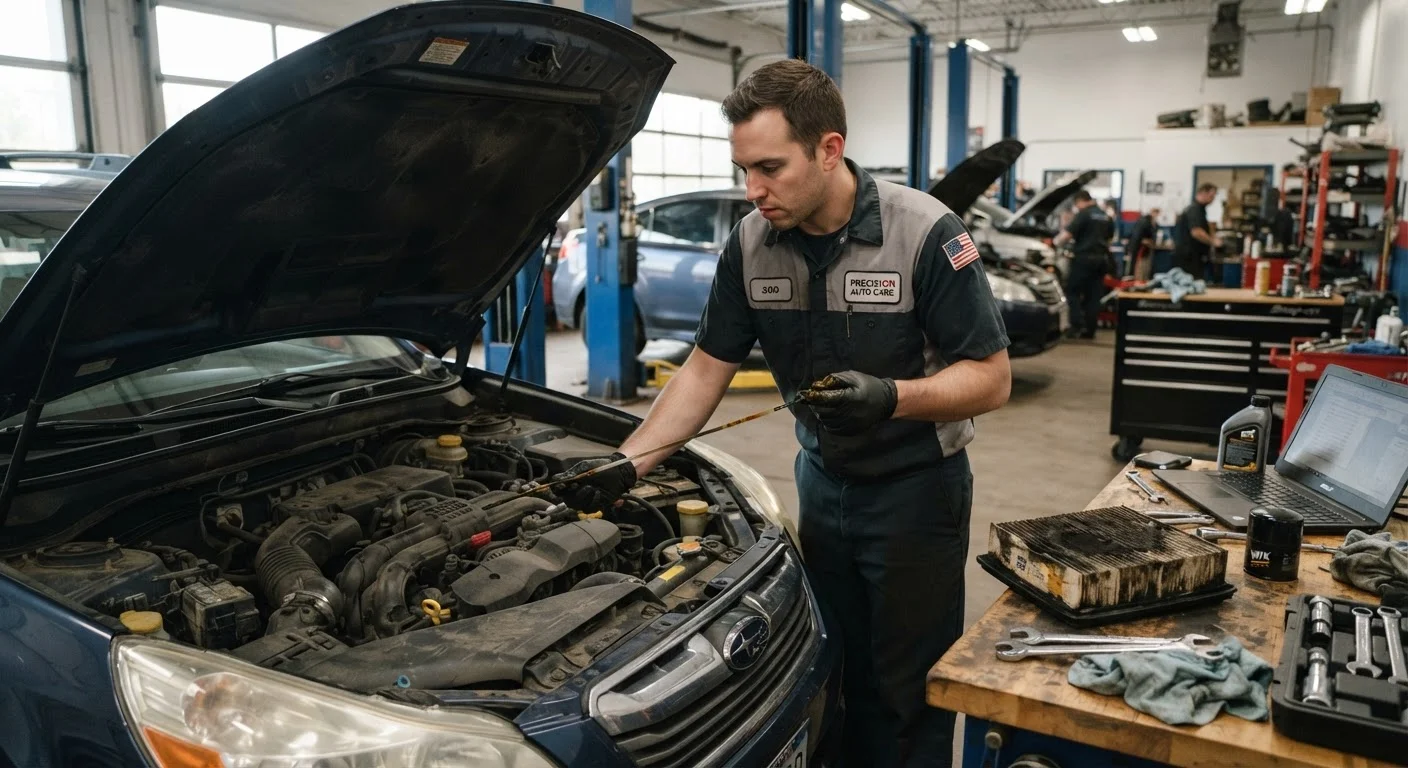
Understanding why small services matter helps make the case for staying on schedule. Your engine oil, for example, does far more than lubricate - it carries heat away from internal components and suspends contaminants until they're trapped by the filter. Once the oil degrades or the filter clogs, those contaminants circulate freely, abrading metal surfaces with every revolution. See our maintenance schedule guide for a full breakdown of what each interval actually protects.
Engine Damage from Skipped Oil Changes Is Often Irreversible
Once engine oil breaks down and sludge accumulates, internal components - bearings, camshafts, and cylinder walls - can suffer permanent scoring. Rebuilding or replacing an engine typically costs several thousand dollars, far exceeding years of routine oil change expenses. If your oil change interval is overdue by more than 50%, have your oil and filter changed promptly and ask a qualified mechanic to inspect for early signs of sludge buildup.
Common Mistakes That Turn Small Costs Into Large Bills
The pattern is consistent across vehicle types and driving habits: the services that seem optional are usually the ones that protect the most expensive components. Below are the most frequent maintenance mistakes drivers make - and what each one typically leads to if left unaddressed.
Delaying oil and filter changes beyond the manufacturer's recommended interval.
Why it happens: Drivers often assume modern synthetic oils last indefinitely, or they postpone the appointment due to cost or scheduling conflicts.
Ignoring clogged cabin and engine air filters until symptoms appear.
Why it happens: Filters are out of sight, so they stay out of mind. Many drivers only learn their filter is clogged when fuel economy drops noticeably or the cabin starts smelling musty.
Skipping tire rotations and pressure checks, then being surprised by premature tire failure.
Why it happens: Tire rotation feels like a minor, optional step - especially when the tires still look fine from a quick glance.
Neglecting coolant flushes until overheating becomes a recurring problem.
Why it happens: Coolant degradation is invisible; the fluid may still look green or orange even when it has lost its corrosion inhibitors and pH balance.
Postponing brake fluid changes until brake performance becomes noticeably spongy.
Why it happens: Brake fluid absorbs moisture over time, but the degradation is gradual and invisible, so drivers rarely connect a soft pedal to fluid quality.
For drivers managing an older or higher-mileage vehicle, the stakes are even higher. Our guide on keeping a high-mileage car reliable explains how to prioritize services when the budget is limited and the vehicle has more miles on the clock.
~$150
Typical oil change cost vs. engine repair
Industry estimates from repair shops consistently show that engine repairs from sludge damage often run $3,000-$8,000 or more - compared to a routine oil change averaging well under $150.
10-25%
Fuel economy loss from a clogged air filter
The U.S. Department of Energy has noted that a severely restricted engine air filter can reduce fuel economy measurably on older carbureted engines; modern fuel-injected engines compensate differently but still suffer performance losses.
Building a Habit That Protects Your Vehicle - and Your Wallet
The most effective maintenance strategy isn't complicated: follow your owner's manual, keep a simple log, and treat scheduled services as non-negotiable. If you're new to car ownership and unsure where to begin, Car Maintenance from Scratch is a useful starting point that covers terminology, routines, and habits in plain language.
There are also tasks that fall outside the standard checklist that drivers commonly overlook - coolant flushes, serpentine belts, and cabin filters among them. Our article on eight overlooked maintenance tasks covers these specifically. Staying informed about the full scope of your vehicle's needs is the most reliable way to avoid the kind of compounding repair bills that could otherwise be prevented for a fraction of the cost.
Don't Ignore Warning Lights Related to Maintenance
Dashboard indicators like the oil pressure light, check engine light, or tire pressure warning are not suggestions - they signal that a system needs immediate attention. Continuing to drive while ignoring these warnings can accelerate component failure and may void warranty coverage. Pull over safely and consult a qualified mechanic before driving further if an oil pressure or engine temperature warning illuminates.
Keeping up with maintenance also supports better fuel economy - a direct saving at the pump. For more ways to reduce fuel costs, explore the Fuel & Efficiency hub for practical, actionable guidance.