

Key Takeaways
Clearance Pricing
Clearance pricing is a systematic process retailers use to reduce the price of inventory they need to move out - typically to make room for new merchandise, end a season, or correct overstocking. Prices are lowered in planned stages, often at set intervals, until the item sells or gets liquidated. The goal is recovery of some value rather than holding unsold goods.
In retail operations, this process is often called a "markdown cadence" - a scheduled sequence of price reductions governed by inventory turnover targets and margin thresholds set by a retailer's merchandising team.
Why Clearance Exists: The Retailer's Inventory Problem
Clearance pricing isn't generosity - it's inventory math. Every item sitting unsold on a shelf has a cost: the space it occupies, the capital tied up in it, and the opportunity cost of not stocking something that would sell at full margin. When a product stops moving at its regular price, retailers face a straightforward choice: reduce the price or absorb the loss of holding dead stock.
The pressure to clear inventory is especially acute around seasonal transitions. A retailer can't profitably store summer furniture through winter or carry winter coats into spring. The markdown process is the mechanism that converts slow-moving inventory back into cash - even if that cash is significantly less than the original retail price.
Understanding this dynamic reframes how you should think about clearance sections. The discounts are driven by the retailer's operational needs, not by a desire to deliver value to shoppers. That distinction matters when you're deciding whether the price on the tag is actually a deal. For broader context on what separates a genuine discount from a pricing tactic, see The Real Difference Between a Sale Price and a Good Price.
The Markdown Cadence: How Price Reductions Are Staged
Most major retailers don't slash prices to their lowest point on day one of clearance. Instead, they follow a structured markdown cadence - a pre-planned schedule of progressive price reductions applied at intervals until the item sells or stock runs out.
A typical sequence might look like this: an item enters clearance at 25-30% off its original retail price. If it doesn't sell within a set window - often one to three weeks - the system flags it for the next markdown, dropping it to 40-50% off. Further reductions follow on the same schedule until the item reaches a threshold markdown (sometimes 70% or more), after which remaining units may be pulled and sold to liquidators or donated.
30-70%+
Typical clearance discount range across markdown stages
Retail industry practice generally shows early clearance markdowns starting around 25-30% off, with final-stage reductions reaching 70% or more before liquidation.
1-4 weeks
Common interval between markdown stages
Most large-format retailers schedule markdown reviews on a weekly to monthly basis, with apparel and seasonal categories typically cycling faster than durable goods.
~30%
Estimated share of retail inventory typically sold below cost
Industry estimates suggest a meaningful portion of retail goods are ultimately sold at or below cost through clearance and liquidation channels to avoid holding excess stock.
This cadence is often managed by automated inventory software rather than individual store employees. The system tracks sell-through rates and triggers markdowns based on predetermined rules - which is why you'll sometimes notice prices on clearance items change on predictable days of the week. Because clearance items are not restocked, each markdown stage reduces the available selection. Waiting for the deepest discount means accepting the risk that the item - or your size or preferred variant - will already be gone.
This is fundamentally different from standard seasonal sales, which are temporary promotions on items that remain in regular inventory. To understand how retail pricing cycles align with the calendar more broadly, The Retail Calendar: Which Months Bring Genuine Price Drops by Category offers a useful month-by-month reference.
Reading Clearance Tags and What They Signal
Clearance tags carry more information than most shoppers extract from them. Beyond the marked price, they often signal where an item sits in the markdown cycle - if you know what to look for.
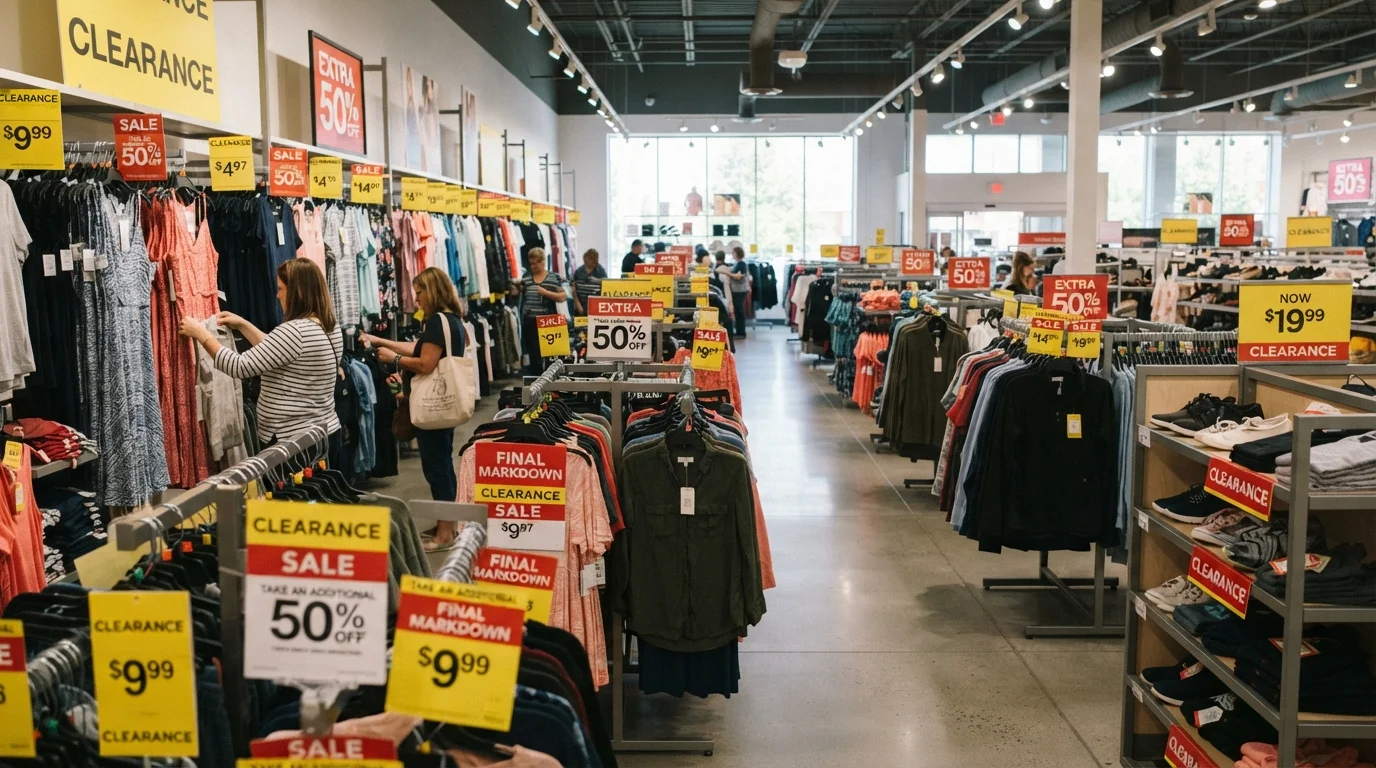
Color-coded tags are one common system. Some retailers rotate tag colors with each markdown round, so a yellow tag might indicate first markdown, orange second, and red a final reduction. The meaning varies by retailer, but if you shop a particular store regularly, you can often decode the pattern over time.
Percentage-off stickers layered over an original price tag are another signal. Multiple stickers stacked on top of each other indicate the item has already cycled through earlier markdowns - meaning it's closer to the end of the clearance cycle and less likely to be reduced further before stock runs out.
It also helps to distinguish clearance items from open-box or refurbished merchandise, which carry different considerations. Clearance, Open-Box, and Refurbished: A Plain-Language Guide to Secondary Market Terms explains the distinctions clearly.
Timing Your Purchase: The Price-Risk Tradeoff
The central tension in clearance shopping is straightforward: the longer you wait, the lower the price - but the lower the odds the item is still available. There's no universally correct answer to when to buy, but framing it as a tradeoff helps you make a conscious decision rather than an impulsive one.
If the item is something you need and would buy at full price anyway, an early clearance markdown (25-40% off) may already represent a meaningful reduction worth taking. If it's something you'd only buy at a steep discount and you have flexibility on getting that specific item, waiting for deeper markdowns can make sense - provided you're genuinely willing to walk away if stock runs out.
One practical approach: note the current price, check back in one to two weeks, and compare. If the price dropped, you have evidence the markdown cycle is still active. If it didn't, either the cadence for that item is slower or you're close to a floor price. This observation-based approach works better than guessing.
Clearance pricing also interacts with broader seasonal dynamics. Knowing when retailers typically cycle inventory for a given category can sharpen your timing - a topic explored in depth at Why the Same Item Costs Different Prices at Different Times of Year.