

Key Takeaways
Option A
Sale Price
The marked-down number retailers want you to focus on.
Best for: Shoppers who already track baseline prices and can verify the markdown against a real reference point.
Option B
Good Price
The price that genuinely reflects fair market value for what you need.
Best for: Value-driven buyers who prioritize actual purchasing power over the optics of a discount.
If you want to take a promoted discount at face value
Sale Price
A sale price is quick and accessible, but only delivers value if you've already verified the reference price is accurate and the discount is meaningful.
If you want to ensure you're spending wisely regardless of marketing
Good Price
A good price is determined by comparing across channels, checking price history, and accounting for total cost - not by how large the discount badge is.
If you're shopping during major sale events like holiday weekends
Good Price
Sale events drive urgency, but not all categories deliver real reductions. Anchoring to a good price protects you from manufactured excitement.
How Sale Prices Are Constructed
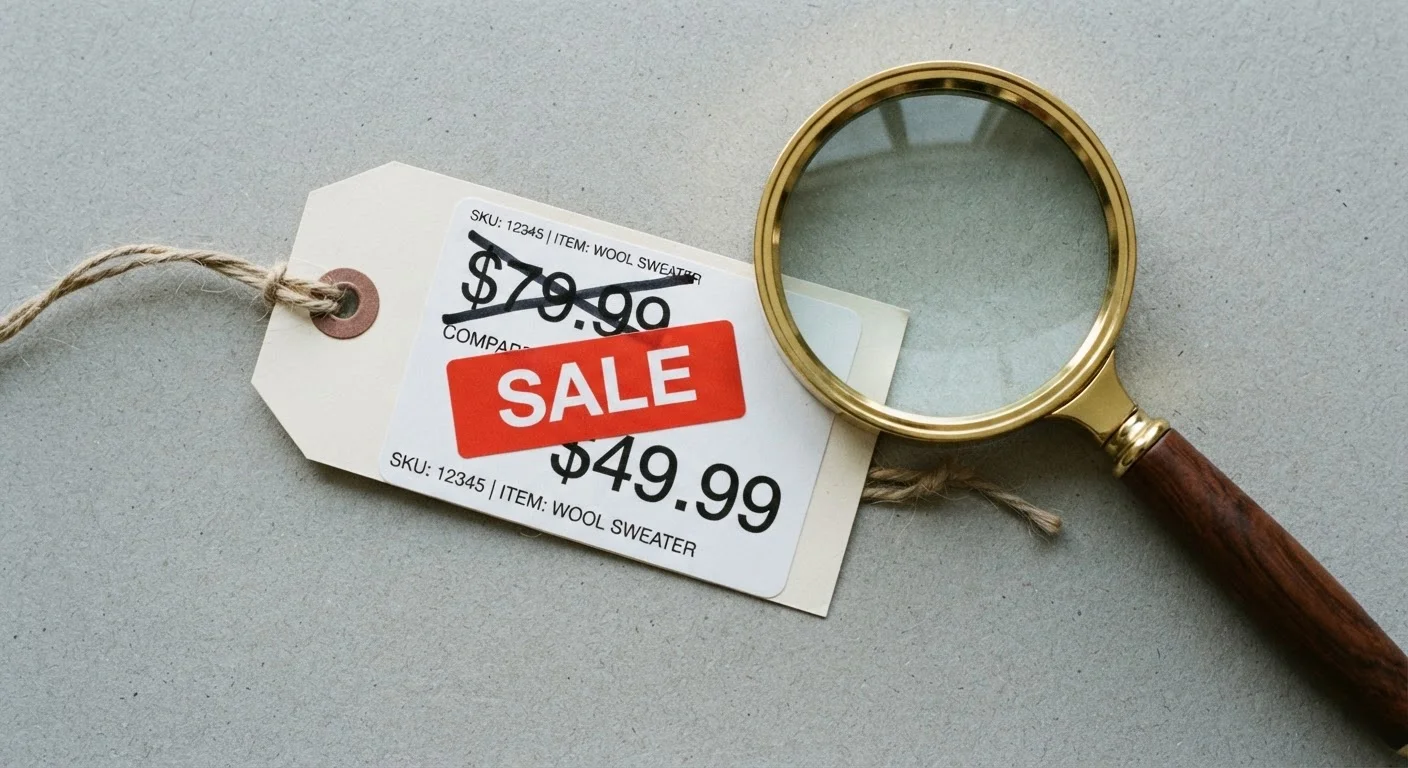
A sale price is always presented relative to something else - typically a "regular" or "original" price shown crossed out above it. That reference point does most of the psychological work. The larger the gap between the two numbers, the more savings the shopper perceives. Retailers call this reference price anchoring, and it is a well-documented feature of modern retail pricing strategy.
The problem is that reference prices are not always reliable benchmarks. In some cases, items are offered at a higher "regular" price for only a brief period before being discounted, which can make the markdown look steeper than it actually is. The US Federal Trade Commission has published guidance noting that advertised price comparisons must reflect prices at which goods were genuinely offered for sale - but enforcement is uneven, and shoppers cannot always verify compliance on their own.
This is not to say all sale prices are misleading. Many are straightforward reductions from a stable everyday price. The point is that a discount badge alone cannot tell you which situation you're in. See which categories actually deliver real discounts during sale events for a more grounded look at how this plays out seasonally.
| Criterion | Sale Price | Good Price |
|---|---|---|
| Defined by | The retailer's pricing presentation | Market-wide comparison and price history |
| Reference point | Crossed-out "original" price (may be inflated) | Typical actual selling price across channels |
| Urgency factor | Often tied to limited-time framing | Not dependent on promotional timing |
| Verification required | Yes - reference price must be checked | Yes - cross-channel research needed |
| Reliability as a savings signal | Variable - depends on reference accuracy | Higher - grounded in real market data |
| Best used when | You've already tracked the item's price history | You can compare total cost across options |
What Makes a Price Actually Good
A good price is not defined by a percentage off - it's defined by how the final number compares to what you'd pay through other legitimate channels for the same or equivalent item. That means doing a bit of homework before the moment of purchase.
Several practical signals indicate you're looking at a genuinely competitive price:
- Price history: Browser extensions and price-tracking tools record historical selling prices for many products, making it easier to see whether today's "sale" price is actually below the norm or just dressed up as one.
- Cross-channel comparison: The same item often varies in price across formats. Comparing prices across channels and formats requires accounting for total cost, including shipping, membership fees, and return policies.
- Competitive alternatives: If similar products from different sources are priced lower without any promotional framing, the sale price isn't setting the standard - the market is.
~37%
Products with inflated reference prices
A 2016 study published in the Journal of Marketing Research found that roughly 37% of "sale" reference prices examined did not reflect prices at which items had been genuinely offered.
3-4x
Price variation across retail channels
Consumer research has documented that identical products can vary in effective price by a factor of three to four when total costs, including shipping and fees, are included.
It's also worth noting that a higher sticker price doesn't automatically signal better value. Premium pricing doesn't always reflect real quality differences, and the same logic applies in reverse: a low sale price doesn't guarantee a bargain if the baseline was inflated or the item doesn't meet your actual needs.
Putting It Together: A Framework for Smarter Decisions
Treating every sale as a potential deal - and every non-sale price as a missed opportunity - is a pattern that serves retailers more than shoppers. A more durable approach separates the signal from the noise by asking a consistent set of questions before any purchase:
- What is this item's typical selling price? Not the crossed-out reference, but the price it actually trades at most of the time.
- Is the total cost competitive? Factor in fees, required accessories, and return friction. Online prices aren't always lower than in-store once those elements are included.
- Does this price reflect a real reduction, or a pricing presentation? Clearance and markdown cycles follow patterns worth understanding - how retailers structure clearance markdowns can help you time purchases more strategically.
- Do I need this item now, or is urgency being manufactured? Time pressure is a core element of promotional pricing. Recognizing it is half the battle.
The Deals & Timing hub covers how these principles apply across specific categories and seasons. The consistent theme: a good price rewards preparation, not impulse.