

Key Takeaways
Seasonal Retail Pricing
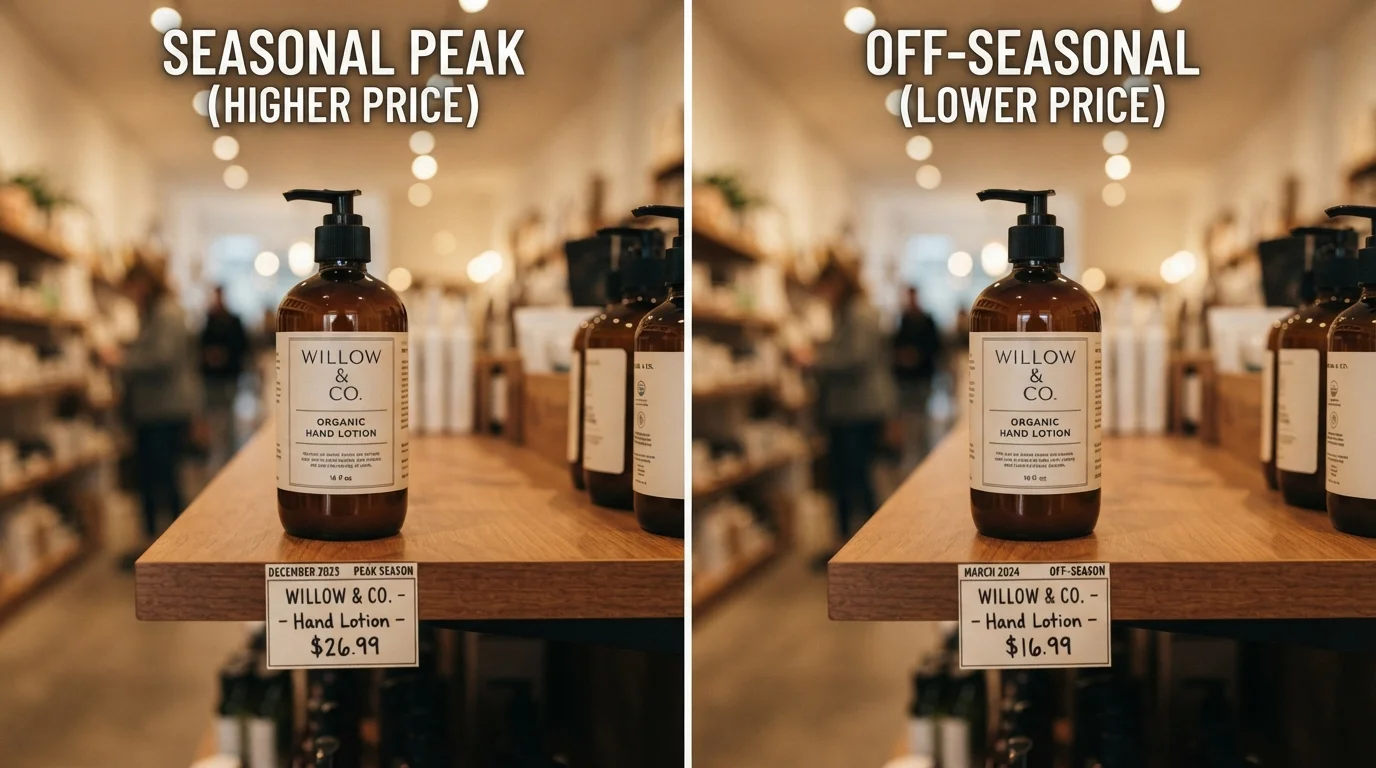
Seasonal retail pricing refers to the predictable rise and fall of product prices throughout the year based on demand cycles, inventory patterns, and retailer strategy. The same item can carry a noticeably different price tag in January versus July - not because the product changed, but because the market conditions around it did. Understanding this pattern helps shoppers make more informed decisions about when to purchase.
Retailers use demand elasticity modeling and historical sales data to set dynamic pricing strategies, adjusting margins by season to optimize revenue per unit sold.
The Core Mechanism: Supply, Demand, and Inventory Pressure
Retail prices are not set once and forgotten. They reflect a continuous negotiation between what consumers want, how much of it exists, and what retailers need to accomplish financially. Three forces drive most of the predictable price variation you see across the calendar year.
Demand peaks pull prices up. When many people want the same thing at the same time - space heaters in November, sunscreen in June, toys in December - retailers recognize that buyers are less likely to walk away over price. Margins expand when demand is inelastic.
Inventory pressure pushes prices down. After a demand peak passes, retailers are left holding stock they paid to acquire and store. Carrying excess inventory has a real cost, so clearance pricing is a business necessity, not generosity. The deeper the overstock, the more aggressive the discount.
Supplier contracts shape the floor. Retailers negotiate purchase costs with manufacturers months in advance. When a model year ends or a product line refreshes, those older units must move - often at prices below what was charged during peak season.
~30%
Typical seasonal price swing on apparel
Industry pricing analyses consistently show apparel prices fluctuate 25-35% between peak in-season pricing and end-of-season clearance markdowns.
2-4x
Price update frequency for major online retailers
Research into e-commerce pricing behavior has found large online retailers update prices on popular items multiple times per day, reflecting real-time supply and demand signals.
6-8 weeks
Typical post-peak clearance window
Retail inventory managers generally aim to clear seasonal overstock within six to eight weeks after peak demand ends, which is when the steepest discounts tend to appear.
The Retailer's Calendar Is Not the Consumer's Calendar
Shoppers tend to think of sales as events tied to their own calendar - back-to-school, Black Friday, Valentine's Day. But from a retailer's perspective, these promotional moments are inventory management tools as much as they are marketing events.
A furniture retailer runs a "President's Day sale" not because of any connection to the holiday, but because January and February are traditionally slow months for furniture sales. The promotion serves to smooth out revenue across what would otherwise be a dead quarter. Understanding this reframes what a "sale" actually is: a retailer solving an inventory or revenue problem.
Similarly, appliance prices often dip in September and October not because of a consumer event, but because new model-year appliances arrive in showrooms and last year's models need floor space. The markdown reflects a product lifecycle event, not a gift-giving occasion.
For a category-by-category view of when prices historically drop, see the retail calendar breakdown covering the full year.
“A sale is fundamentally a retailer communicating that the cost of holding inventory exceeds the benefit of waiting for a full-price buyer. Shoppers who understand that dynamic shop from a position of strength.”
— Consumer pricing researcher, Academic specialist in retail economics and consumer behavior
Dynamic Pricing: When the Forces Operate in Real Time
Beyond seasonal patterns, many retailers - particularly online - use algorithmic pricing that adjusts in near real time. Prices shift based on competitor pricing feeds, current inventory levels, and even how many people are viewing a product page simultaneously.
This means a laptop priced at $749 on a Monday morning might show $779 by Friday afternoon if stock drops or competitor inventory tightens. The same unit, the same seller - different price, different day.
Dynamic pricing is most aggressive in categories like consumer electronics, airline tickets, and hotel bookings, but it has spread into everyday retail. It rewards shoppers who check prices across time rather than assuming today's price is representative.
Price tracking tools let you build a baseline understanding of what an item typically costs, making it far easier to distinguish a genuine low from a manufactured urgency.
It's also worth noting that the channel you shop through affects what pricing dynamics apply. Online prices aren't always lower than in-store - shipping costs, dynamic algorithms, and platform fees all factor into the final number.
Putting It Into Practice
None of this means you need to track prices obsessively or wait indefinitely for a better deal. But a few durable principles apply across most categories:
- Buy off-cycle when possible. Winter clothing purchased in February, patio furniture in September, and holiday décor in January consistently trade at lower price points than during their peak seasons.
- Treat promotional events as one data point, not the final word. A "sale" price should be compared against the item's price history, not just the retailer's reference price.
- Recognize when urgency is manufactured. Not every timing rule consumers follow holds up under scrutiny - deal-timing myths are worth understanding before making assumptions about when to act.
- Compare across formats. Comparing prices across channels and formats helps you avoid mistaking a format-specific price difference for a genuine discount.
Retail pricing follows patterns because it's driven by predictable business forces. Knowing those forces doesn't give you perfect timing, but it does give you a more accurate lens for evaluating what you're actually seeing when a price tag changes.