

Key Takeaways
Unit Price
A unit price is the cost of a product broken down to a standard measurement - such as per ounce, per count, per square foot, or per fluid ounce. It lets you compare products of different sizes or brands on the same footing, regardless of package size or promotional presentation. Instead of asking "which package costs less?", unit pricing answers the more useful question: "which option costs less per unit of what I'm actually getting?"
In many US states, retailers are legally required to display unit prices on shelf tags for covered grocery and drug items, though the specific regulations vary by jurisdiction.
What the Sticker Price Doesn't Tell You
Walk down any grocery aisle and you'll see shelf tags with a bold price front and center. That number - $4.99, $7.49, $12.00 - is engineered to be the thing you notice. What it doesn't show you is whether that price is actually a good deal relative to other options on the same shelf.
Package sizes vary deliberately. A 16-oz jar and a 20-oz jar of the same product can sit side by side at prices that look close, but have meaningfully different costs per ounce. Without doing the math, it's nearly impossible to tell which one stretches your dollar further. Unit pricing does that math for you - and once you know how to read it, comparison shopping becomes significantly faster and more reliable.
Packaging and positioning routinely inflate prices on functionally identical products. Unit pricing cuts through that by standardizing the comparison.
How to Read a Unit Price Label
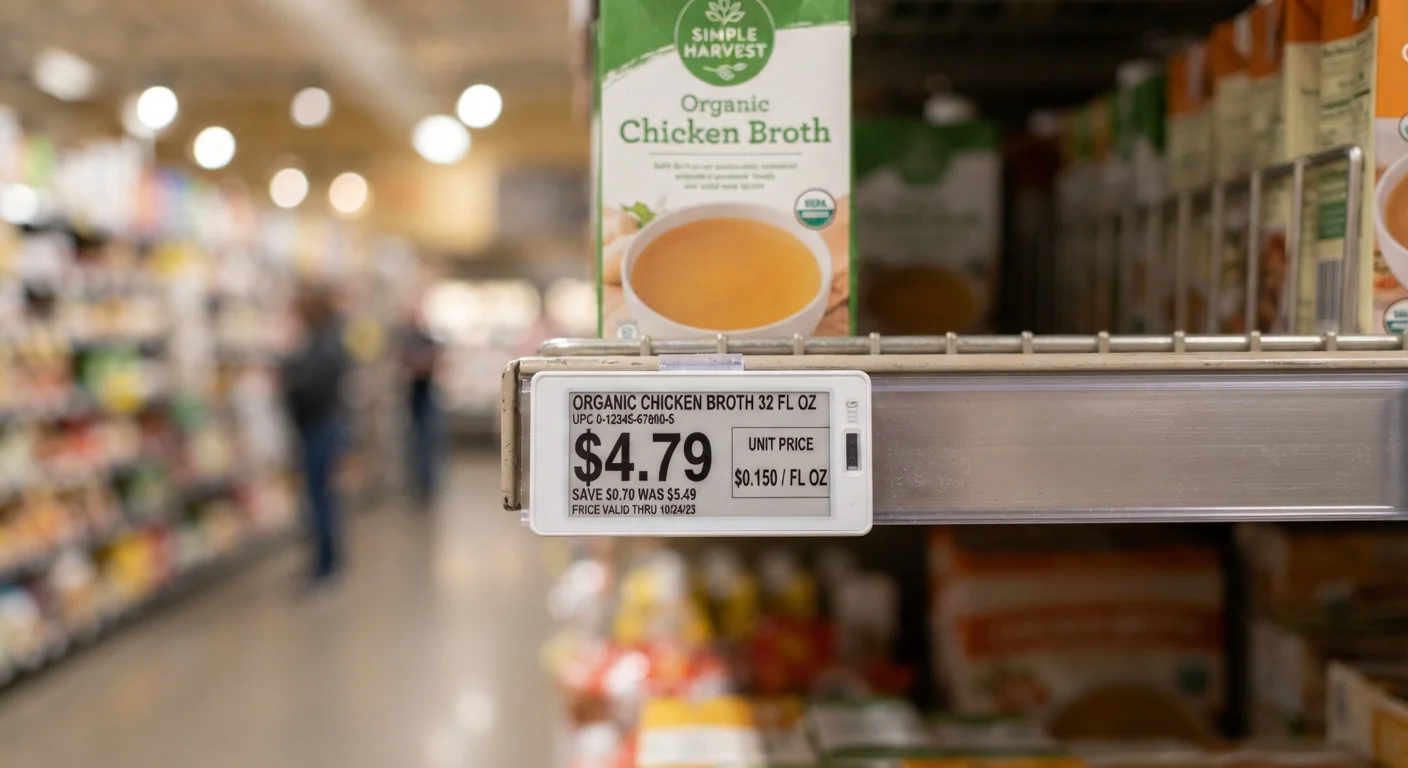
Most shelf tags in US grocery and drug stores include two prices: the total retail price and the unit price. The unit price is typically displayed in smaller print, often in the upper-left corner of the tag, and expressed as something like $0.37/oz or $0.09/count.
The key elements to pay attention to:
- The unit measurement used - ounces, fluid ounces, pounds, square feet, count, or other standard measures.
- Consistency across tags - most retailers use the same unit for an entire product category, but exceptions happen.
- The number itself - lower is better, all else being equal.
Where unit pricing gets tricky is when two competing products use different base measurements. One paper towel brand might display price per square foot while another shows price per sheet. In those cases, you'll need to do a quick conversion to make a fair comparison - a phone calculator takes about ten seconds.
32+
US states with unit pricing laws for grocery retailers
According to the National Conference of State Legislatures, more than 30 states have enacted some form of unit pricing requirement, though coverage and enforcement vary considerably.
~30%
Potential savings identified through unit price comparison
Consumer research has consistently found that shoppers who habitually compare unit prices can identify savings opportunities of 20-30% within the same product category, though actual results depend on the specific items and stores.
It's also worth noting that store-brand and private-label products almost always appear on the same shelf with unit prices displayed, making direct comparisons against name brands straightforward.
When Bulk Buys and Sales Change the Equation
The widespread assumption that larger packages always win on unit price is understandable - but it's not reliably true. Several factors can flip the math:
- Promotional pricing on smaller sizes can temporarily make a mid-size package cheaper per unit than the economy size.
- Store brand competition sometimes means a standard-size store brand undercuts a bulk-size name brand on unit price.
- Multi-buy offers ("2 for $5") are only a deal if the per-unit price actually beats the regular shelf price of a competitor - check before assuming.
Clearance markdowns follow their own logic and can occasionally make discontinued sizes surprisingly competitive on a unit basis - but only if you do the check.
Verify the unit before comparing
Before concluding one product is cheaper per unit, confirm both shelf tags use the same base measurement. Paper products especially can switch between price per sheet, per square foot, and per roll on adjacent tags. Taking five seconds to verify the unit prevents a misleading comparison.
For a broader method of comparing costs across channels and formats, see these habits for like-for-like price comparison.
Unit Pricing Beyond the Grocery Store
Unit pricing isn't limited to food. The same logic applies to cleaning supplies, personal care products, batteries, light bulbs, and any consumable sold by weight, volume, or count. Hardware stores often display price per linear foot for lumber and molding. Online marketplaces may show price per tablet for vitamins or price per roll for paper products.
The challenge with online shopping is inconsistency. Some platforms display unit prices clearly; others bury the quantity details or omit unit pricing entirely. In those cases, you'll need to calculate it manually: divide the listed price by the total quantity or weight in the product description. Shipping costs and membership fees are separate variables that also affect the true per-unit cost when buying online - factor those in before concluding a deal is genuinely cheaper.
For a structured approach to comparing prices across retail channels, this guide to effective price-checking covers the full methodology.
Unit pricing rules vary by state and store type
Not every retailer is legally required to display unit prices, and the categories covered differ by state. Warehouse clubs, dollar stores, and some specialty retailers may not show unit pricing at all. When a shelf tag omits unit pricing, divide the retail price by the package quantity or net weight listed on the product to calculate it yourself.