

Key Takeaways
How Identical Products End Up at Different Price Points
The gap between two functionally equivalent products rarely comes from what's inside them. It comes from everything built around them: brand equity, packaging investment, advertising spend, and the shelf position a retailer assigns based on margin agreements. Understanding these mechanisms is the first step toward paying for substance rather than presentation.
Manufacturers and retailers use several overlapping strategies to justify price differences that the product itself doesn't support. Recognizing these strategies - not as cynical manipulation, but as standard commercial practice - allows shoppers to make deliberate rather than reactive choices. The broader landscape of retail tactics extends well beyond pricing alone, but pricing is where the impact is most immediate and measurable.
Brand Name Is Not a Quality Guarantee
Regulatory standards for many product categories - including over-the-counter medications, certain foods, and household chemicals - require that generic and brand-name versions meet the same specifications. Paying more for the brand label does not automatically mean a safer or more effective product. Always compare active ingredients, concentrations, and certifications before assuming the premium option is superior.
The Mistakes That Cost Shoppers the Most
Most overpayment on identical products isn't the result of being uninformed - it's the result of mental shortcuts that work well enough in most situations but break down in a retail environment designed to exploit them. The following mistakes are the most common and the most correctable.
Assuming a higher price signals higher quality without checking the underlying specs.
Why it happens: Price-quality associations are deeply ingrained - most shoppers have been conditioned to treat cost as a reliable quality signal, especially for health, food, or technical products.
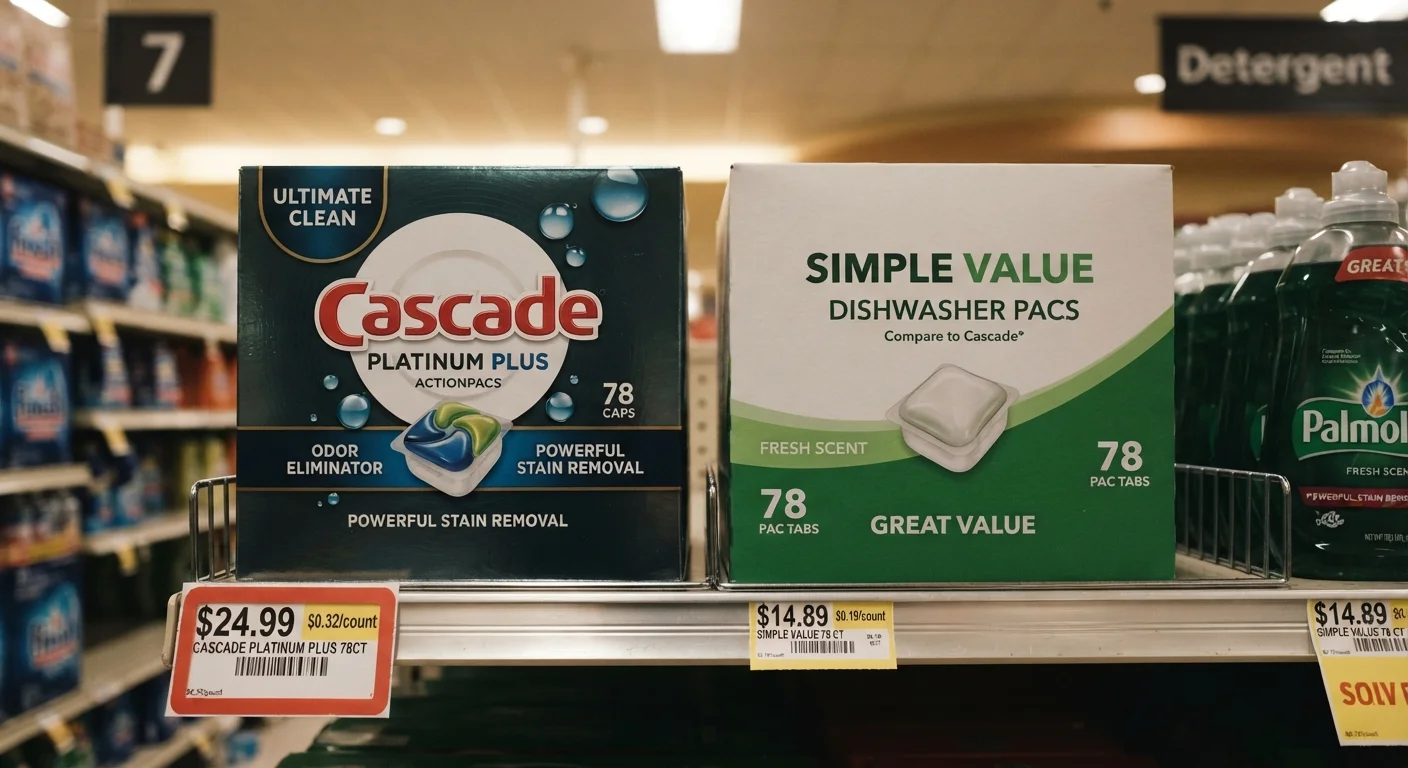
Skipping the unit price and comparing only sticker prices across sizes or formats.
Why it happens: Sticker prices are prominent; unit prices are small, inconsistently formatted, and easy to overlook under time pressure.
Letting shelf placement determine which product gets picked up first and purchased by default.
Why it happens: Eye-level and end-cap positions are sold or allocated to higher-margin products. Shoppers naturally reach for whatever is most visible and accessible.
Anchoring to an inflated "original" or "was" price and treating a modest discount as a deal.
Why it happens: The first price a shopper sees becomes a mental reference point. A "was $40, now $28" framing feels like savings even if $28 is the item's ordinary market price elsewhere.
Trusting packaging design as a proxy for product quality or origin.
Why it happens: Premium materials, muted color palettes, and minimal design cues trigger associations with craftsmanship and exclusivity - associations that retailers and brands deliberately engineer.
Ignoring store-brand or generic options without a specific reason to do so.
Why it happens: Historical perceptions of generic products as inferior linger even when product standards have improved significantly or where regulatory parity exists.
~25-30%
Typical price premium for name-brand vs. store-brand equivalents
Consumer research across grocery and household categories consistently finds store-brand products priced 25-30% below comparable national-brand items with similar or identical formulations.
~1 in 3
Shoppers who regularly compare unit prices before buying
Surveys by consumer advocacy groups suggest fewer than a third of shoppers habitually use unit pricing when making purchase decisions, leaving the majority exposed to format-driven price distortions.
Note that price comparisons across channels add another layer of complexity. What looks like a lower online price may carry shipping or handling costs that close the gap - a dynamic explored in our guide to hidden costs in online shopping.
Building a Practical Comparison Habit
The goal isn't to become a compulsive price researcher - it's to build a short checklist that takes under a minute per product category and prevents the most common overpayments. A few consistent practices make an outsized difference.
"Premium" Labels Can Be Purely Cosmetic
Terms like "artisan," "professional grade," or "advanced formula" are largely unregulated marketing language, not verified quality claims. A product carrying these terms may differ from a generic alternative only in packaging design or advertising spend. Treat such descriptors as prompts to investigate further, not as evidence of superior performance.
- Match specifications, not names. For medications, check active ingredients and dosages. For cleaning products, check the active chemical and concentration. For food staples, compare the nutrition panel and ingredient list.
- Use unit prices as your baseline. The unit price on the shelf tag normalizes cost across sizes and formats - it's the only figure that allows a genuine comparison.
- Cross-check at least one other channel. Comparing prices across channels takes a few seconds on a phone and frequently reveals that the "deal" in front of you is ordinary pricing elsewhere.
- Apply the premium test. If you can articulate a specific, verified reason the branded product outperforms the generic - not a feeling, a documented difference - that's a valid reason to pay more. If you can't, the premium is likely cosmetic.
Paying for quality is reasonable; paying for the packaging of quality is optional. The distinction is almost always visible in the product data - it just takes a moment to look.