

Key Takeaways
Where the Myth Comes From
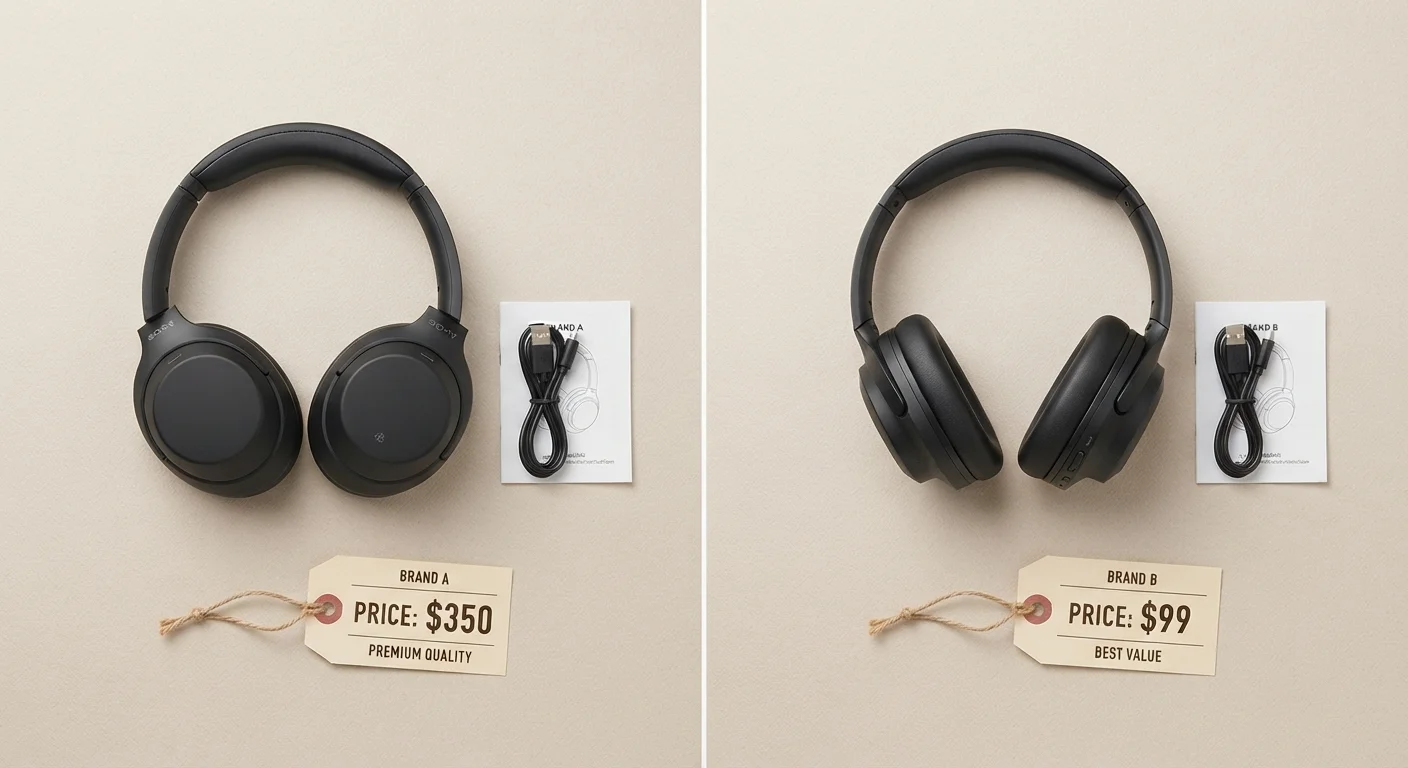
The belief that a higher price signals better quality is deeply intuitive. It is baked into everyday language - we talk about getting what we pay for, and "cheap" carries a double meaning that equates low cost with low value. Retailers and marketers have long understood this cognitive shortcut, sometimes using it deliberately to position products.
Behavioral economists call this the price-quality heuristic: when people lack other information, they use price as a proxy for quality. Research has confirmed the effect is real - a product perceived as expensive is often rated as better-performing, even in blind tests where it is physically identical to a cheaper alternative. This is not irrationality so much as an adaptive shortcut that misfires in a modern retail environment engineered to exploit it.
Understanding where the shortcut breaks down is the foundation of smarter purchasing. As we explore in our breakdown of sale prices vs. good prices, pricing signals in retail often reflect strategy more than substance.
Myth
A product that costs more is made better and will last longer - price is a reliable shortcut to quality.
Fact
Price reflects many factors unrelated to quality, including marketing spend, brand equity, retailer margin, and market positioning.
Manufacturing cost is only one input into a retail price. A product's final price also absorbs distribution costs, advertising budgets, packaging design, celebrity endorsements, and the brand's desired margin. Two products built to the same specification can carry prices that differ by 50% or more because of these non-production factors. Studies in behavioral economics show that when consumers are told a product is expensive, they often rate it more favorably - even when given something physically identical to a cheaper version.
Myth
Store-brand and generic products are lower quality than name brands because they cost less.
Fact
Many store-brand products are manufactured in the same facilities as name-brand equivalents, sometimes to identical or near-identical specifications.
Contract manufacturing is widespread in consumer goods. A single factory may produce the same product for multiple labels at different price points. This is particularly well-documented in over-the-counter medications, where active ingredients and dosages are regulated and standardized - meaning a generic ibuprofen at half the price of a brand-name version is clinically equivalent. In grocery categories, independent taste and performance testing organizations have found store brands competitive or superior to premium alternatives across a broad range of product types.
Myth
Premium-priced personal care products - skincare, shampoo, supplements - contain superior ingredients that deliver better results.
Fact
In personal care, price often tracks with fragrance, packaging aesthetics, and brand positioning rather than active-ingredient concentration or efficacy.
Cosmetic and personal care formulations are required to list ingredients by concentration, meaning consumers can compare what is actually in competing products. Dermatologists and independent researchers have consistently noted that commodity active ingredients - such as retinoids, hyaluronic acid, or niacinamide - perform based on their concentration and formulation stability, not the prestige of the label. Luxury packaging and elegant texture can elevate the experience without changing clinical outcomes. For supplements, neither premium price nor attractive branding substitutes for third-party purity and potency testing.
Myth
If a sale brings a premium product down to the same price as a cheaper one, the premium product is always the smarter buy.
Fact
A discounted price on a premium product is only a better deal if the premium product's quality advantage is real and relevant to your actual use case.
Sale events can make expensive products look like obvious wins when placed next to their original prices, but the comparison that matters is to alternatives at the same price point - not to the item's own inflated anchor price. If the performance difference between a premium and mid-tier product is marginal in practice, paying the same discounted price for either still means you are evaluating the right variable: utility per dollar, not prestige per dollar. Understanding the difference between a sale price and a genuinely good price is a foundational shopping skill.
What the Evidence Actually Shows
The relationship between price and quality has been studied across a wide range of consumer categories, and the findings are notably inconsistent. In some categories - certain medical devices, safety equipment, and durable tools - higher price does tend to track with better materials or engineering. In many everyday categories, the correlation weakens or disappears entirely.
~32%
Price premium absorbed by branding and marketing
Research on consumer packaged goods has estimated that roughly a third of the price gap between national brands and store equivalents reflects brand investment rather than product differences.
73%
Categories where store brands matched or beat name brands in blind tests
Consumer testing organizations conducting blind product evaluations across multiple grocery and household categories have found store-brand parity or superiority in the majority of tested segments.
Store-brand groceries illustrate the gap clearly. Consumer research organizations that conduct blind taste and performance testing have repeatedly found that private-label products match or outperform name-brand equivalents in categories from canned goods to pain relievers. The price difference between those products frequently reflects advertising spend and brand equity rather than formulation differences. Our piece on grocery spending myths covers this dynamic in detail.
Similarly, retail pricing is not static or purely cost-based. Dynamic pricing, channel-specific markups, and anchor pricing all mean the same item can appear at different prices in ways that have no bearing on what is inside the box. Online vs. in-store pricing is one area where these distortions are especially visible.
Premium Pricing Can Create a Blind Spot
When shoppers assume a high price guarantees quality, they may skip the due diligence that would reveal a product's actual performance. This is especially consequential for safety-adjacent purchases - such as children's products or electrical equipment - where independent testing and certification standards are a more reliable guide than price alone. Always check whether a credible third party has verified the claims a price implies.
Applying This Knowledge Without Overcorrecting
Rejecting the price-quality assumption wholesale is just as much an error as accepting it blindly. The more productive approach is to understand which categories reward spending more and which do not.
Categories where higher prices tend to reflect meaningful differences include: safety-critical equipment (helmets, car seats, electrical components), professional-grade tools used intensively, and some footwear where construction quality affects longevity and injury risk. Categories where the correlation is weak or unreliable include: most packaged foods, many personal care products, basic apparel, and common household supplies.
Third-party testing - from consumer advocacy organizations, independent lab reviews, and professional trade publications - provides a more reliable signal than price alone. When testing data is available, it is almost always a better guide than the price tag. And as we note in our coverage of deal-timing myths, the conditions around a purchase matter as much as the sticker.
One practical frame: before assuming a premium product justifies its price, ask whether the price difference traces back to manufacturing, materials, or verified performance - or to brand positioning, packaging, and advertising. That distinction, applied consistently, closes the gap between what things cost and what they are worth.
This article is for general informational purposes only and does not constitute financial or purchasing advice tailored to individual circumstances.