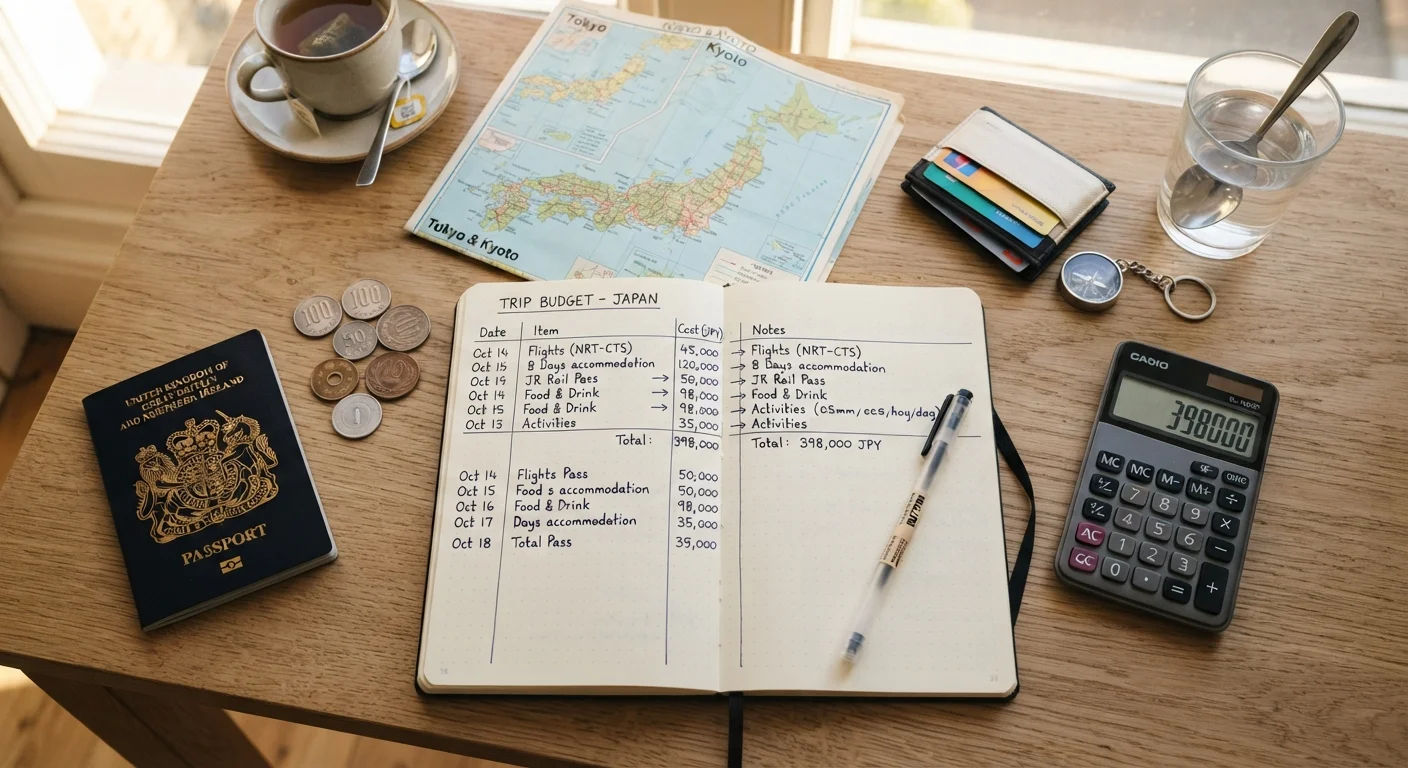
Booking flights and lodging early-or strategically late-can meaningfully reduce your largest trip costs.
Travel insurance is worth evaluating for every trip; skipping it is a financial risk, not a guaranteed saving.
Daily spending caps only work when you've researched real local costs before you leave.
Carry-on-only travel eliminates checked bag fees, which can add $60-$100 or more round-trip on many carriers.
Notifying your bank and understanding your card's foreign transaction fees prevents costly surprises abroad.
A small cash emergency fund set aside before departure acts as your last-resort budget buffer.
45–90 min
Summary
28 items · 45-90 minutes
Why Budget Travelers Need a Pre-Trip Checklist
Most travel overspending doesn't happen on the ground - it happens in the weeks before departure, when small decisions pile up unexamined. A missed fee here, an unresearched transport option there, and suddenly you're $200 over budget before you've left the airport. This checklist is designed to close those gaps systematically.
It's built for travelers who want to make deliberate choices at every stage: flights, lodging, insurance, local transport, and daily spending. Work through it at least two to three weeks before departure so you have time to act on what you find. For a deeper look at structuring your finances around the whole trip, see our day-by-day travel budget guide.
Flights & Getting There
Compare total ticket cost including all fees (seat selection, carry-on, checked bags) before committing to any fare.Must
Check whether flying into a nearby secondary airport saves money after accounting for ground transport to your destination.Should
Confirm baggage policy and fees for your specific fare class - policies vary even within the same airline.Must
Set a price-drop alert for your route if departure is more than three weeks out, so you can rebook if the fare falls significantly.Nice to have
Lodging
Calculate nightly cost including all taxes and fees - resort fees and booking platform charges often add 15-25% to the listed rate.Must
Verify the lodging's location relative to your planned activities to avoid costly daily transport back and forth.Should
Check cancellation and refund policy before booking - free cancellation options protect your flexibility without added cost.Must
Consider whether properties with a kitchen or kitchenette could reduce your food spending enough to justify a slightly higher nightly rate.Should
Travel Insurance
Review what your existing credit card and health insurance cover for trip cancellation and medical emergencies abroad before purchasing a separate policy.Must
Evaluate whether trip cost, destination risk level, and health factors justify purchasing a standalone travel insurance policy.Should
Read the exclusions section of any policy carefully - pre-existing condition clauses and activity exclusions are common sources of denied claims.Must
Local Transport
Research airport-to-accommodation transport options and their real costs (shuttle, transit, rideshare, taxi) before arrival.Must
Determine whether a transit pass, day pass, or pay-as-you-go card offers better value for your planned daily movement.Should
Check whether renting a car is necessary or whether public transit and walking cover your itinerary adequately.Should
Download offline maps for your destination to avoid data charges and navigation errors that lead to expensive detours.Should
Banking & Money
Notify your bank and credit card issuers of your travel dates and destination to prevent fraud blocks on your accounts.Must
Identify which cards charge foreign transaction fees (typically 1-3%) and plan to use fee-free alternatives where possible.Must
Locate in-network ATMs at your destination or identify banks with fee reimbursement to avoid per-withdrawal charges.Should
Set aside a small cash emergency reserve - separate from your main travel budget - that you commit not to touch except in a genuine emergency.Should
Daily Spending Plan
Research realistic daily costs for food, transport, and activities at your destination using recent traveler reports or destination-specific resources.Must
Set a daily spending cap for discretionary categories (dining out, entertainment, souvenirs) and write it down.Must
Identify two or three free or low-cost activities at your destination so you have built-in options that don't strain the budget.Should
Plan your food strategy: which meals will you self-cater, which will you eat out, and what's a reasonable per-meal spend for the destination?Should
Build a 10-15% buffer into your total trip budget to absorb unexpected costs without derailing the trip.Must
Documents & Entry Requirements
Confirm your passport is valid for at least six months beyond your return date - many countries require this margin.Must
Verify current visa requirements and processing times for your destination through official government sources.Must
Check entry, health, and safety requirements - including any vaccination documentation needed - and verify these details close to departure since rules can change.Must
Tools That Make the Process Faster
You don't need specialized software, but a few practical tools make this checklist far easier to work through accurately. Before you start, gather the following.
Required
Spreadsheet or budgeting app
Track all trip costs in one place - flights, lodging, daily spending - so you can see the real total before committing.
Required
Your bank and credit card apps
Check foreign transaction fees, set travel notifications, and confirm available credit or debit balance before departure.
Optional
Offline maps app (e.g. Maps.me or Google Maps offline)
Download destination maps in advance to navigate without data charges while traveling.
Required
Official government travel portal (travel.state.gov for US travelers)
Verify current visa requirements, travel advisories, and entry conditions for your destination country.
Optional
Destination travel forums or recent traveler reports
Get realistic, current cost estimates for food, transport, and activities that published guides often lag on.
If you're planning international travel, also check our international travel quick reference for entry requirements, adapter standards, and documentation essentials.
Common Pitfalls That Quietly Wreck Travel Budgets
Even careful planners can miss a few categories that reliably cause overspending. Pay particular attention to these areas as you run through the checklist.
Resort Fees and Platform Charges Add Up Fast
A hotel listed at $89/night can cost $130+ after mandatory resort fees, taxes, and booking platform service charges. Always click through to the total price - including all fees - before comparing lodging options. The cheapest headline rate is rarely the cheapest actual cost.
Airport Transport Costs Are Frequently Underestimated
Rideshare surge pricing at airports, especially during peak arrival times, can run two to three times the standard fare. Research the fixed-rate shuttle, transit, or taxi options before you land so you're not making a rushed, expensive decision in the arrivals hall.
Food Spending Is the Most Common Budget Leak
Meals add up faster than most travelers expect, particularly in tourist-heavy areas where even 'local' restaurants price for visitors. Planning which meals to self-cater - even just breakfasts from a grocery store - can meaningfully reduce daily food spend without sacrificing the experience. See our guide to eating well on the road for practical strategies.
Packing is another underrated budget lever. Travelers who check bags on budget carriers often pay more in fees than they saved on the base fare. Our carry-on packing guide shows how to fit a week of clothes into one bag - a straightforward way to cut a real cost. For the broader picture of what first-time budget travelers should know, the first-time budget traveler guide is worth reading before you finalize any booking.
Always Verify Entry Requirements Before Departure
Visa rules, vaccination requirements, and health documentation can change on short notice. Do not rely on information that is more than a few weeks old. Check official government sources - for US travelers, travel.state.gov is the authoritative starting point - and re-verify close to your departure date. Our entry and safety requirements checklist walks through what to confirm and where.
Travel Smarter Editorial Team is the collective byline for our editorial team and contributor network. Articles published under this byline or an editorial pen name are researched, written, and reviewed according to our editorial standards for clarity, consistency, and independence before publication.
Disclaimer: The content provided on our blog site traverses numerous categories, offering readers valuable and practical information. Readers can use the editorial team’s research and data to gain more insights into their topics of interest. However, they are requested not to treat the articles as conclusive. The website team cannot be held responsible for differences in data or inaccuracies found across other platforms. Please also note that the site might also miss out on various schemes and offers available that the readers may find more beneficial than the ones we cover.