

Key Takeaways
Start here
Is a Rabbit the Right Pet for You?
Next
Housing and Environment Basics
Then
Feeding Your Rabbit Correctly
When you're ready
Health, Grooming, and Veterinary Care
Going further
Handling, Behavior, and Enrichment
Is a Rabbit the Right Pet for You?
Rabbits are often seen as low-maintenance starter pets, but that impression can mislead new owners. A healthy domestic rabbit commonly lives 8 to 12 years, requires daily feeding, cleaning, and interaction, and needs veterinary care from a specialist in exotic animals. Before bringing one home, it helps to read a thorough overview - see our complete rabbit care overview for the full picture.
If you're weighing rabbits against other small pets, comparing rabbits and guinea pigs side by side can clarify which animal fits your household. Also review our small pet preparation checklist to make sure your home and schedule are ready before your rabbit arrives.
Exotic animal vet
A veterinarian with specialized training or experience treating non-traditional pets such as rabbits, birds, and reptiles. Not all general-practice vets are equipped to care for rabbits.
GI stasis
A potentially life-threatening condition where a rabbit's digestive system slows down or stops moving. It is one of the most common medical emergencies in pet rabbits and requires immediate veterinary attention.
Cecotropes
Soft, nutrient-rich droppings that rabbits produce and eat directly from their hindquarters. This is a normal and essential part of rabbit digestion, not a sign of illness.
Spay / neuter
Surgical procedures to remove reproductive organs. In rabbits, spaying females significantly reduces the risk of uterine cancer, while neutering males can reduce territorial and hormonal behaviors.
Hay-based diet
A feeding approach that makes unlimited grass hay the central component of a rabbit's daily food intake, supporting dental wear and healthy gut motility.
Rabbit-proofing
The process of making a space safe for a free-roaming rabbit by covering electrical cords, removing toxic plants, and blocking access to areas where chewing or injury could occur.
Housing and Environment Basics
One of the most common mistakes new rabbit owners make is underestimating the space a rabbit needs. Traditional small cages sold in pet stores are rarely large enough for a rabbit to move, stretch, and stand upright comfortably. Most rabbit welfare organizations recommend a minimum of 8 square feet of enclosure space combined with at least 24 square feet of daily exercise area - though bigger is always better.
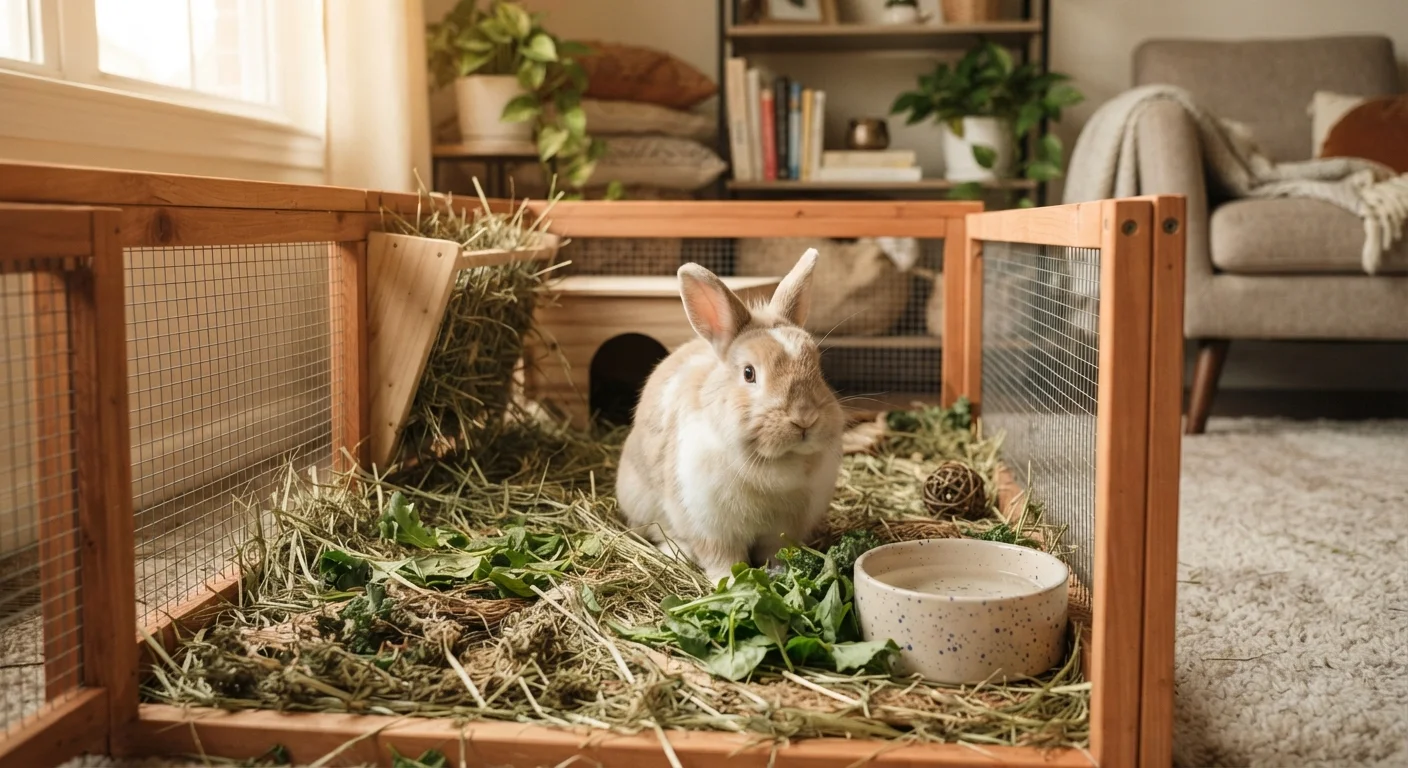
Many owners find that a large exercise pen set up in a rabbit-proofed room works well. Rabbits chew electrical cords, baseboards, and houseplants, so the environment must be made safe before your rabbit has free access. For detailed guidance on setting up a safe indoor space, see our guide to creating a rabbit-safe indoor habitat.
Flooring matters too. Rabbits should not stand on wire-bottomed surfaces for extended periods, as this can cause painful foot injuries. Solid flooring with soft bedding or mats is far more comfortable and safer.
Give Your Rabbit Room to Roam Daily
Even the most spacious enclosure benefits from daily exercise time outside its walls. Many rabbit owners designate a single rabbit-proofed room where their pet can run, jump, and explore freely each day. This time outside the pen is important for both physical fitness and mental stimulation.
Feeding Your Rabbit Correctly
Nutrition is one of the most critical factors in rabbit health, and the basics are straightforward once you understand why each component matters.
- Hay: Unlimited grass hay - timothy hay is widely used for adult rabbits - should make up roughly 80% of the diet. It supports healthy digestion and wears down continuously growing teeth, preventing serious dental problems.
- Leafy greens: A daily serving of fresh leafy greens adds variety and hydration. Romaine lettuce, cilantro, and parsley are common choices. Introduce new greens gradually to avoid digestive upset.
- Pellets: High-fiber pellets provide concentrated nutrition but should be given in measured amounts. Excessive pellets can lead to obesity and reduce the hay consumption that keeps the gut healthy.
- Water: Fresh water should be available at all times, either in a heavy ceramic bowl or a sipper bottle.
Foods to avoid include iceberg lettuce, high-sugar fruits in large quantities, starchy vegetables, and any processed human food. Muesli-style seed mixes marketed for rabbits are generally considered poor nutritional choices by veterinary professionals.
Some Common Foods Are Dangerous for Rabbits
Several foods that seem harmless can cause serious harm to rabbits. Onions, garlic, avocado, chocolate, and rhubarb are toxic and should never be offered. Even 'rabbit-safe' fruits should be given only as occasional small treats due to their sugar content. When in doubt about a new food, consult your veterinarian before offering it.
Health, Grooming, and Veterinary Care
Finding a veterinarian who has experience with rabbits before you bring your pet home is essential. Rabbits are considered exotic animals in most veterinary practices, meaning not every general practitioner is equipped to treat them. Search for a vet with exotic animal or small mammal experience.
A wellness visit shortly after adoption allows a professional to assess your rabbit's overall health and discuss spaying or neutering. Spaying female rabbits is especially important: unspayed females have a high lifetime risk of uterine cancer. Neutering males reduces hormonal aggression and spraying behavior.
Grooming needs vary by coat type. Short-haired rabbits need brushing once or twice a week; long-haired breeds such as Angoras require daily grooming to prevent mats. Nails grow continuously and need trimming every 6 to 8 weeks. Rabbits should never be bathed - they can go into shock from the stress and cold.
Watch for warning signs that warrant prompt veterinary attention: changes in eating or droppings, labored breathing, head tilt, or any sudden shift in behavior. Rabbits instinctively hide illness, so even subtle changes deserve attention.
This article is for general informational purposes only and is not a substitute for professional veterinary advice. Always consult a qualified veterinarian for guidance specific to your rabbit's health.
Handling, Behavior, and Enrichment
Rabbits are prey animals, which means they are naturally cautious and can be easily startled. Being picked up incorrectly is one of the leading causes of spinal injury in domestic rabbits - a rabbit kicking against an unsecured grip can fracture its own spine. Always support the hindquarters fully when lifting, and keep handling sessions low to the ground when possible.
Most rabbits are not naturally cuddly but can become comfortable with gentle, consistent interaction over time. Let your rabbit approach you on its own terms, offering treats and sitting quietly at their level. Over weeks, many rabbits become affectionate and engaged companions.
Enrichment is not optional. Rabbits are intelligent and curious, and boredom can lead to destructive behavior or stress. Tunnels, cardboard boxes, untreated willow toys, and foraging opportunities all promote mental engagement. Regular supervised free-roaming time outside the enclosure is also important for physical and psychological wellbeing.
Rabbits communicate through body language: a flopped-over relaxed posture signals contentment, while thumping hind feet signals alarm. Learning to read these signals helps you build a stronger, more trusting relationship with your pet.