

Key Takeaways
Understanding What Rabbits Actually Need
Rabbits are often perceived as low-maintenance starter pets, but that impression does not reflect reality. They are intelligent, socially complex animals with specific dietary, environmental, and medical requirements that differ substantially from cats or dogs. Understanding this upfront helps owners provide genuinely good care rather than care that merely keeps a rabbit alive.
Domesticated rabbits (Oryctolagus cuniculus) descended from wild European rabbits and retain many of those instincts - burrowing, foraging, vigilance, and the need for companionship. Meeting those instincts in a home environment requires deliberate planning. If you are still deciding whether a rabbit is right for you, our comparison of guinea pigs and rabbits lays out key differences side by side.
When selecting hay, prioritize freshness - it should smell sweet and green, not dusty or musty. Dust in hay is a common trigger for respiratory issues in rabbits.
Rabbit respiratory systems are sensitive, and poor-quality hay is a frequent but avoidable source of chronic irritation that can complicate overall health.
Observe your rabbit's litter box daily. Changes in dropping size, quantity, or consistency are often the earliest sign that something is off - long before other symptoms appear.
Because rabbits mask illness instinctively as prey animals, litter box monitoring is one of the most reliable tools an owner has for catching health changes early.
Diet and Nutrition Fundamentals
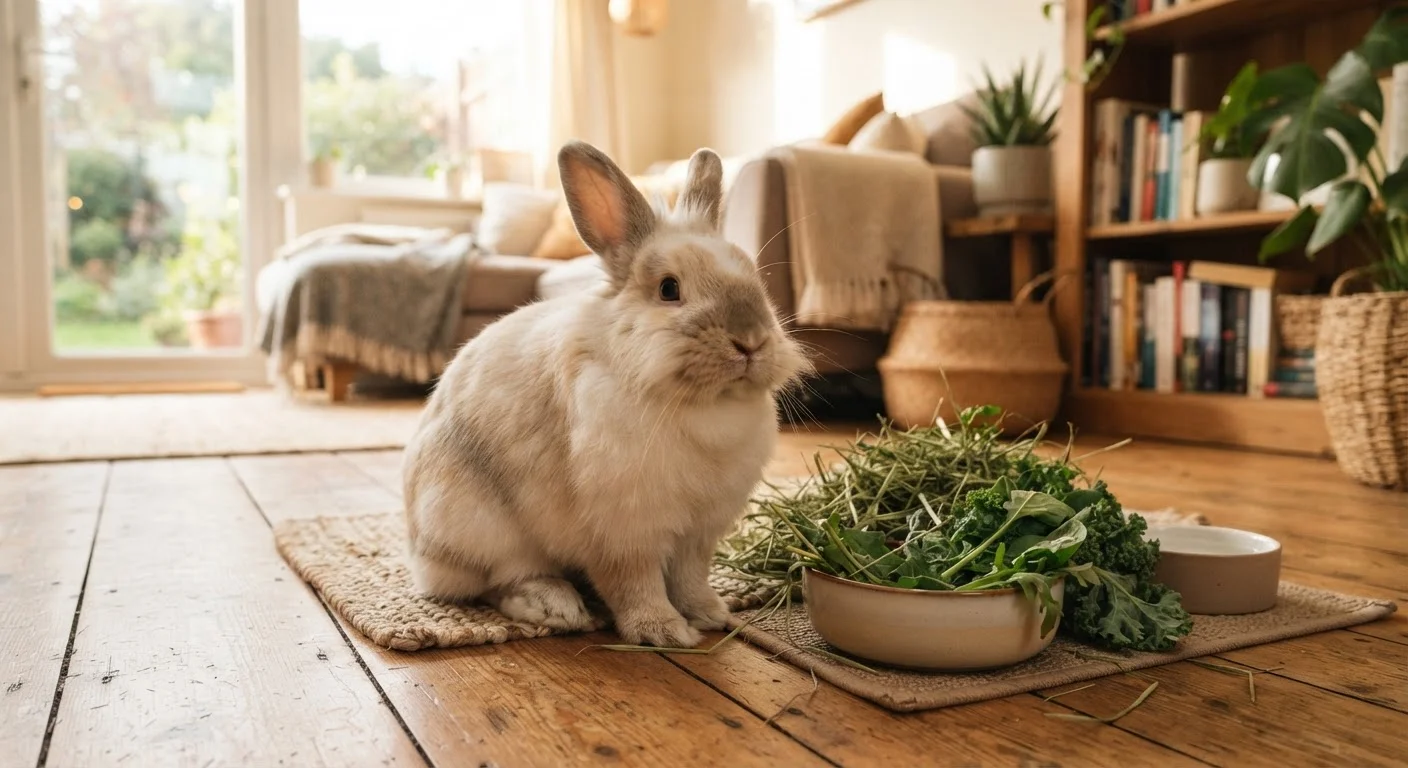
Nutrition is the single most controllable factor in a rabbit's long-term health. The foundation of every rabbit's diet should be unlimited timothy hay or other grass hays (such as orchard grass or meadow hay). Hay provides the fiber that keeps gut motility active and wears down continuously growing teeth - two processes that are inseparable from rabbit wellbeing.
- Hay: Should make up roughly 80% of daily intake. Adult rabbits do best on timothy or orchard grass hay; young rabbits under 7 months can have alfalfa hay, which is higher in calcium and protein.
- Fresh leafy greens: Offer a variety of rabbit-safe greens daily - romaine lettuce, cilantro, parsley, and arugula are commonly well-tolerated. Introduce new vegetables gradually to avoid digestive upset.
- Pellets: High-quality, plain timothy-based pellets can be offered in limited quantities (generally about ¼ cup per 5 lbs of body weight for adults). Pellets should supplement, not replace, hay.
- Water: Fresh water should always be available, either in a heavy ceramic bowl or a bottle - whichever the rabbit reliably uses.
GI Stasis Is a Veterinary Emergency
If your rabbit stops eating, stops producing droppings, or appears hunched and motionless, do not wait to see if it improves on its own. GI stasis can become fatal within 24-48 hours without treatment. Contact a rabbit-experienced veterinarian or emergency exotic animal clinic immediately.
Foods to avoid include iceberg lettuce, most fruits in quantity, starchy vegetables like potatoes, and anything sweetened or processed. Rabbits cannot vomit, so ingested toxins or gut blockages quickly become emergencies.
Housing and Environmental Enrichment
A rabbit's living space must be large enough to allow natural movement - at minimum four to six times the rabbit's body length in floor area when at rest. Wire-bottom cages are unsuitable because they can injure a rabbit's hocks; solid, easy-to-clean flooring with appropriate bedding is preferable.
Beyond the enclosure itself, rabbits need several hours of free-roaming time daily in a rabbit-proofed area. They will chew baseboards, electrical cords, and houseplants if given unsupervised access, so preparation matters. Our detailed guide on setting up a safe and enriching rabbit habitat indoors covers flooring, toxic plants, and hiding spots in depth.
Enrichment should address natural foraging and exploration behaviors: tunnels, cardboard boxes, willow chews, and foraging mats all provide mental stimulation. Boredom in rabbits can manifest as destructive behavior or lethargy - both signs that the environment needs more variety.
8-12 years
Typical domestic rabbit lifespan
With attentive care and regular veterinary support, many domestic rabbits reach or exceed this range.
80%
Portion of diet that should be hay
Veterinary guidance consistently identifies grass hay as the dietary cornerstone for adult rabbit digestive and dental health.
4+ hours
Daily free-roaming time recommended
Rabbit welfare organizations generally recommend a minimum of several hours outside the enclosure for exercise and mental stimulation each day.
Health Care and Veterinary Needs
Rabbits are considered exotic animals in veterinary practice, meaning not every general-practice vet has deep experience with them. Finding a rabbit-savvy veterinarian - often listed under exotic or small-mammal practitioners - before your rabbit needs urgent care is strongly recommended.
Key health areas to monitor:
- Dental health
- Rabbit teeth grow continuously throughout life. Insufficient hay consumption is the leading cause of dental malocclusion (misalignment), which causes pain, difficulty eating, and secondary infections. Annual dental checks are advisable.
- Gastrointestinal stasis
- GI stasis - when gut motility slows or stops - is a life-threatening condition that can develop within hours. Signs include a rabbit that stops eating, produces few or no droppings, and appears hunched or lethargic. This is a veterinary emergency.
- Spaying and neutering
- Unspayed female rabbits have a very high risk of uterine cancer by middle age, according to veterinary literature. Spaying significantly reduces this risk. Neutering males reduces territorial and hormonal behaviors. Both procedures should be performed by a rabbit-experienced vet.
This article provides general pet care information and is not a substitute for veterinary advice. Always consult a qualified veterinarian for your rabbit's specific health needs.
Socialization, Behavior, and Handling
Rabbits are prey animals, which fundamentally shapes how they communicate and interact. Being picked up feels threatening to many rabbits because it mimics being caught by a predator. Most rabbits prefer to interact at ground level and will approach humans on their own terms when trust is established.
Building that trust takes patience and consistency. Sit on the floor near the rabbit regularly, offer greens from your hand, and allow the rabbit to investigate you rather than reaching for them. Over time, many rabbits become quite affectionate - flopping beside their owner, grooming hands, or nudging for attention.
On companionship: most rabbits are happiest with a bonded companion of their own species. Solo rabbits can thrive with significant human interaction, but a properly bonded rabbit pair typically display lower stress and more confident behavior. Bonding requires gradual introduction in a neutral space and should never be rushed.
For anyone wondering how rabbit behavior compares to other small pets, our piece on understanding small pet behavior offers useful context on how prey-animal instincts shape daily activity.
Planning and Long-Term Commitment
Rabbits commonly live 8-12 years when well cared for, and some breeds exceed that range. That lifespan places rabbit ownership closer to cat or dog ownership in terms of commitment than many people initially expect. Before bringing a rabbit home, it is worth reviewing our small pet preparation checklist to confirm your home and schedule are genuinely ready.
Ongoing costs include hay (a consistent and significant expense), fresh vegetables, bedding, regular vet visits, and potential emergency care. A realistic overview of these expenses is available in our article on the hidden costs of owning a small pet. Budgeting for at least one annual wellness exam and an emergency fund for unexpected illness is a practical standard many experienced rabbit owners adopt.
Ultimately, rabbits reward attentive, informed owners with genuinely engaging companionship. They have distinct personalities, preferences, and moods that become clear over time. The investment in understanding their needs pays off in an animal that is calm, curious, and connected to the people in its household.