

Key Takeaways
Why Indoor Rabbit Environments Require Intentional Setup
Rabbits kept indoors face a different set of challenges than those kept in outdoor hutches, but indoor living - when properly arranged - offers significant advantages: protection from predators and weather, easier socialization, and closer monitoring of health. The tradeoff is that a typical home contains multiple hazards that are invisible to owners who haven't specifically considered rabbit behavior.
Rabbits chew constantly (it's how they wear down continuously growing teeth), dig, and explore low to the ground. They are also physiologically sensitive to temperature swings, respiratory irritants, and stress caused by perceived threats. Understanding these traits before setup prevents most common problems.
If you're still deciding whether a rabbit is the right pet for your household, comparing rabbits to guinea pigs can help clarify the space and commitment differences. For a broader view of ongoing rabbit care beyond the habitat itself, see our complete rabbit care overview.
Toxic Plants Must Be Removed First
Many common houseplants are poisonous to rabbits, including pothos, philodendron, aloe vera, lily species, and azalea. Before your rabbit has any access to a room, audit every plant and relocate or permanently remove any that are toxic. The House Rabbit Society maintains a widely referenced plant toxicity list you can use as a starting point. When in doubt, remove the plant entirely rather than assuming limited exposure is safe.
What You'll Need Before You Start
Gathering supplies before assembly saves time and avoids improvised shortcuts. The items below cover the minimum required for a safe, functional setup.
What you will need
Exercise pen or modular enclosure
Defines the rabbit's primary living area with enough space for movement, litter box, and enrichment items.
Non-slip floor mats or rugs
Provides secure traction for rabbit feet on hard flooring, reducing joint strain and injury risk.
Cord covers or split conduit
Protects exposed electrical cords from chewing, which is a life-threatening hazard for rabbits.
Hideout or enclosed shelter
Gives the rabbit a private retreat to reduce stress and replicate natural burrowing behavior.
Hay rack
Keeps hay - the most important part of a rabbit's diet - off the floor and accessible at all times.
Dig box (cardboard box filled with paper strips or soil)
Satisfies natural digging instincts and provides mental stimulation as an enrichment item.
Baby gate or pet gate
Sections off safe free-roam zones while blocking access to unreached or unsecured areas.
New rabbit owners should also review first-day rabbit care essentials to understand feeding, handling, and veterinary needs alongside the habitat requirements covered here.
Step-by-Step Setup Instructions
Follow these steps in order. Hazard removal always comes first - no enclosure should be assembled in a room that hasn't been cleared. Work through the steps at a pace that lets you be thorough rather than fast.
Audit and remove hazards from the room
Before any enclosure is assembled, walk the intended space at rabbit eye level - literally get low - and identify every potential danger. Remove or secure the following:
- Electrical cords: Rabbits chew instinctively; exposed wiring is a leading cause of serious injury. Run cords through split conduit, cover them with cord covers, or route them entirely out of reach.
- Toxic plants: Relocate any houseplants that are harmful to rabbits to rooms the rabbit will never access.
- Small objects: Rubber bands, batteries, and small plastics can be ingested. Clear the floor and lower shelves.
- Toxic cleaning products or air fresheners: Store these in closed cabinets; some aerosol sprays are hazardous to small animals.
Choose and configure the right enclosure
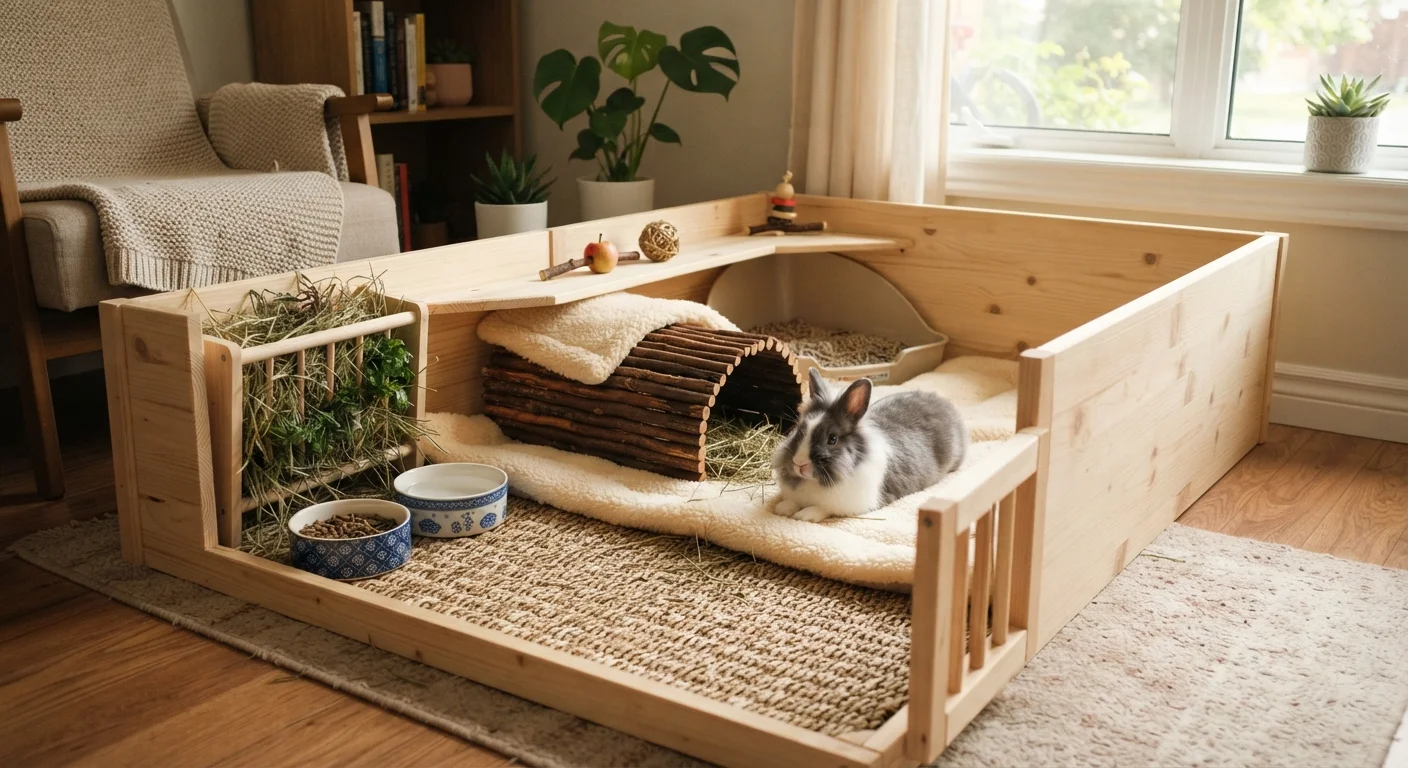
The enclosure is your rabbit's home base. The minimum recommended footprint for a single rabbit is roughly 8 square feet, though larger is always better - many rabbit welfare organizations suggest at least 12 square feet for a standard-sized breed. A modular exercise pen (also called an x-pen) is popular because it is affordable, adjustable, and easy to clean.
Key configuration points:
- The pen height should be at least 24 inches for small breeds and 36 inches for larger rabbits, to prevent jumping out.
- Include space inside for a litter box, hay rack, water source, food bowl, and at least one hiding spot - without overcrowding.
- Position the enclosure away from exterior walls in cold climates, direct air conditioning vents, and sunny windows that cause overheating. Rabbits are sensitive to temperatures above 75°F (24°C) and below 50°F (10°C).
Install safe, non-slip flooring
Hard flooring - tile, hardwood, laminate - is slippery and stressful for rabbit joints over time. Cover the enclosure floor and the free-roam area with non-slip rugs, interlocking foam mats, or fleece blankets. Avoid materials with loose loops that claws can catch in, and replace any floor covering that becomes frayed or heavily chewed.
If your enclosure has any mesh or wire panels on the bottom, cover them entirely with a solid board or mat before introducing your rabbit.
Set up hiding spots and enrichment
Rabbits are prey animals and need at least one enclosed hiding spot where they can retreat and feel secure. A simple wooden hideout box, a cardboard tunnel, or a covered shelter all work well. Make sure it has at least two openings so the rabbit never feels trapped inside.
Enrichment reduces boredom and stress. Rotate a selection of the following:
- Cardboard boxes to chew and rearrange
- Tunnels to run through
- A dig box filled with shredded paper or compressed soil
- Untreated willow or apple wood sticks for chewing
- Forage-style feeding - scatter a few leafy greens or herbs to encourage natural foraging behavior
For comparison, the same principles of environmental enrichment apply across species - see how environmental enrichment works for indoor cats to understand why mental stimulation matters for any confined pet.
Establish a daily free-roam routine
Even a well-designed enclosure is not a substitute for exercise. Rabbits should have a minimum of three to four hours of supervised free-roam time daily in a rabbit-proofed space. This supports healthy digestion, cardiovascular fitness, and mental wellbeing.
Use baby gates or pen extensions to define a safe free-roam zone. Supervise especially closely with a new rabbit until you have confirmed every hazard has been addressed. Over time, most rabbits become reliably predictable in their habits, making supervision easier.
Maintain the habitat with a consistent cleaning schedule
A clean habitat protects rabbit health. Spot-clean the litter box daily and replace litter fully every two to three days. Wipe food bowls and water bottles or crocks daily. Wash floor coverings weekly or when visibly soiled.
Use only rabbit-safe cleaning products - diluted white vinegar is effective for odor control and safe once dry. Avoid ammonia-based cleaners, bleach in poorly ventilated areas, and scented sprays near the living space.
Use Baby Gates to Expand Safe Zones Gradually
Rather than rabbit-proofing an entire home at once, use baby gates or exercise pen panels to expand your rabbit's free-roam area in stages. This lets you identify overlooked hazards - a hidden cord, a gap behind furniture - before they become a problem. It also helps a new rabbit build confidence in their environment at their own pace.
Wire-Bottom Cages Cause Serious Injury
Cages with wire or mesh floors are not appropriate for rabbits. They cause a painful condition called sore hocks - pressure sores on the hind feet - and can lead to broken toes. Always choose enclosures with solid flooring, or cover mesh surfaces completely with solid mats or panels before use.
Keeping the Habitat Safe as Your Home Changes
A rabbit habitat isn't a one-time project. New furniture can reveal hidden cords. Holiday plants like poinsettia, holly, and mistletoe are toxic and appear seasonally. Renovations bring dust, adhesives, and fumes that can harm small animals. Treat rabbit-proofing as an ongoing practice, not a completed task.
If you make changes to your home - new flooring, repainted walls, new houseplants - reassess the rabbit's environment as part of the process. The home improvement guides on this site frequently note when projects require ventilation or produce off-gassing; these same cautions apply doubly when small animals are present.
Similarly, if you grow herbs or edible plants indoors or in an adjoining outdoor space, be aware that some garden plants are toxic to rabbits. The garden and outdoors section can help you identify what you're growing and flag any species of concern before they end up within reach.
This article provides general information for educational purposes only and is not a substitute for advice from a qualified veterinarian. If your rabbit shows signs of illness or injury, consult a licensed veterinary professional promptly.