

Key Takeaways
Crepuscular / Nocturnal Behavior
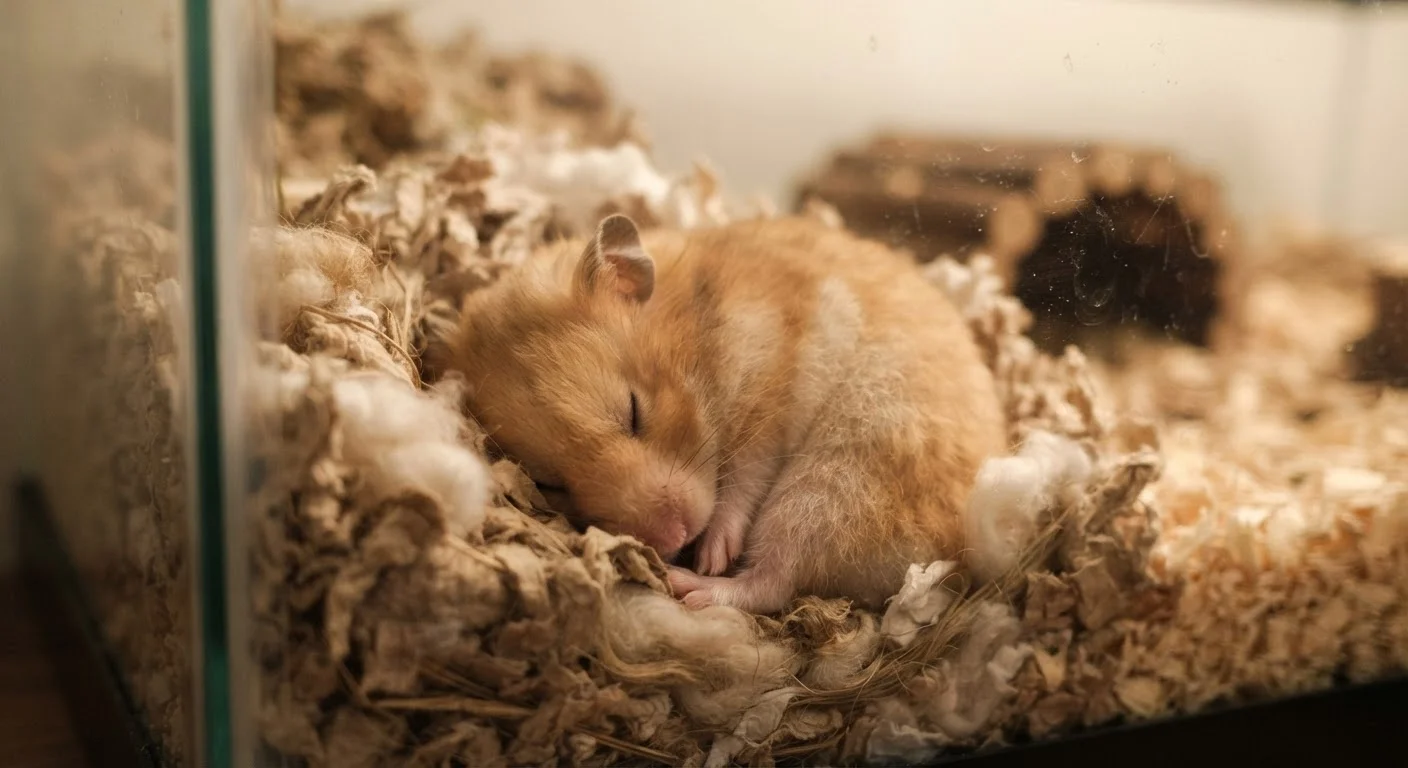
Hamsters are naturally crepuscular - most active around dawn and dusk - and many lean nocturnal, meaning they sleep during the day and become lively at night. This is a hardwired survival trait, not a sign of illness or laziness. Understanding this rhythm is the foundation of good hamster care.
Wild hamsters forage at low-light hours to avoid daytime predators. Domestication has not changed this internal clock, which is regulated by circadian rhythms tied to light exposure.
The Sleep Schedule That Confuses Most New Owners
You set up the cage, brought your hamster home, and now it seems to do nothing but sleep. This is one of the most common sources of worry for first-time owners - and one of the easiest to resolve once you understand hamster biology.
Hamsters are crepuscular animals, meaning their peak activity naturally falls around dusk and dawn. Many domestic hamsters skew further toward fully nocturnal patterns, especially Syrian hamsters (the large, solitary variety most commonly kept as pets). Their bodies are wired to sleep when it's light and forage when it's dark - a strategy wild hamsters evolved to avoid hawks, foxes, and other daytime predators.
This means that if you check on your hamster at 2 p.m., you are almost certainly looking at a sleeping animal behaving perfectly normally. Trying to interact with your hamster during the day by waking it regularly causes real stress. Chronic sleep disruption in hamsters has been associated with weakened immune response and shortened lifespan in research settings. The practical takeaway: schedule your handling and interaction for early evening, when your hamster is naturally alert.
Schedule Handling During Active Hours
The easiest way to bond with a hamster is to respect its schedule. Try interacting starting about 30 minutes after the lights in the room go off or around dusk. Your hamster will be alert, curious, and far more receptive to handling - and you'll avoid the stress and potential nips that come from waking a sleeping animal.
Burrowing, Hoarding, and Other Instinct-Driven Behaviors
Beyond sleep patterns, several hamster behaviors puzzle owners who interpret them through a human lens.
Burrowing and nesting
Hamsters dig extensive burrow systems in the wild - complex tunnels with separate chambers for sleeping, storing food, and waste. In captivity, burrowing into bedding is your hamster expressing that same drive. Providing at least 6 inches of loose substrate (paper-based bedding works well) allows them to engage this behavior. A hamster that has nowhere to burrow often shows signs of frustration such as repetitive bar-chewing or pacing.
Cheek-stuffing
Hamsters have large, elastic cheek pouches that extend back toward their shoulders. In the wild, they rapidly pack food into these pouches and carry it to a safe cache - sometimes transporting more than half their body weight. Your pet does exactly the same thing even when there's no predator threat, because the instinct is automatic. You may notice your hamster meticulously "unpacking" into a corner of the cage; that corner is its pantry. This is healthy behavior. Common small pet myths include the idea that cheek-stuffing signals hunger - it does not.
Wheel-running
Wild hamsters can travel several miles per night foraging. A wheel is not a toy so much as a necessity that lets your hamster meet this movement drive inside a cage. A wheel that is too small forces the spine to arch, which can cause musculoskeletal discomfort over time. Choose a solid-surface wheel with a diameter appropriate for your hamster's size - at least 8 inches for Syrian hamsters.
5-8 miles
Distance wild hamsters may travel nightly
Research on Syrian hamsters in natural habitats documents extensive nightly foraging ranges, underscoring why exercise and space matter in captivity.
~50% body weight
Food a hamster can carry in its cheek pouches
Studies of hamster cheek-pouch capacity show they can transport food approaching half their own body weight in a single trip back to their burrow.
2-3 years
Typical lifespan of a domestic hamster
Because hamsters live only a few years, behavioral and health changes can progress quickly - making early recognition of abnormal signs especially important.
Behavioral Changes That Actually Warrant Attention
Normal hamster behavior is predictable once you know the baseline. What matters clinically is deviation from that baseline - and new owners sometimes get this backwards, worrying about normal behaviors while missing genuine warning signs.
Pay attention if your hamster:
- Stops eating or dramatically reduces food intake for more than 24 hours
- Shows wet, matted fur around the tail - a hallmark sign of a bacterial infection commonly called "wet tail" that requires prompt veterinary care
- Loses noticeable weight (you can feel the spine and hip bones prominently)
- Remains completely inactive during its normal active hours
- Has labored, rapid, or audible breathing
One behavior that alarms many owners is torpor, sometimes called false hibernation. When ambient temperature drops significantly (roughly below 50°F / 10°C), hamsters can enter a cold-induced torpid state - lying still, breathing very slowly, feeling cool to the touch. Unlike true hibernation in wild species, this is not a healthy or intended state for domestic hamsters. Gradually warming the environment and the animal usually revives them, but a vet consultation is appropriate if the hamster doesn't recover within a few hours or seems unwell afterward.
For a broader look at health issues hamsters face, see our article on why hamsters get sick more often than owners expect.
This article provides general educational information about hamster behavior and is not a substitute for veterinary advice. If you are concerned about your hamster's health, consult a qualified exotic animal veterinarian.