

| Smallest common pet bird | Canary (4-5 inches) |
| Longest-lived commonly kept species | Cockatoo (up to 70 years in captivity) (Avian care literature) |
| Quietest large parrot | African Grey (moderate noise relative to size) |
| Best beginner parrot | Budgerigar or Cockatiel (manageable size, moderate needs) |
| Highest social demand | Cockatoo (requires hours of daily interaction) |
| Canary handling need | Low - thrives as an observed rather than handled companion |
How to Use This Reference
This overview is designed as a quick-lookup guide for prospective and current bird owners. Each species entry covers the traits most relevant to daily life: typical size, average lifespan, noise level, social requirements, and general handling temperament. These figures represent common ranges drawn from established avian care literature; individual birds will vary based on genetics, socialization, and environment.
Before bringing any bird home, review our preparation checklist to confirm your supplies and living space are ready. And if you're also comparing birds against other small pets, see which species tend to adapt well to apartment living for context.
This article is for general informational purposes only and does not substitute for guidance from a qualified avian veterinarian.
| Smallest common pet bird | Canary (4-5 inches) |
| Longest-lived commonly kept species | Cockatoo (up to 70 years in captivity) (Avian care literature) |
| Quietest large parrot | African Grey (moderate noise relative to size) |
| Best beginner parrot | Budgerigar or Cockatiel (manageable size, moderate needs) |
| Highest social demand | Cockatoo (requires hours of daily interaction) |
| Canary handling need | Low - thrives as an observed rather than handled companion |
Species Profiles at a Glance
Budgerigar (Parakeet)
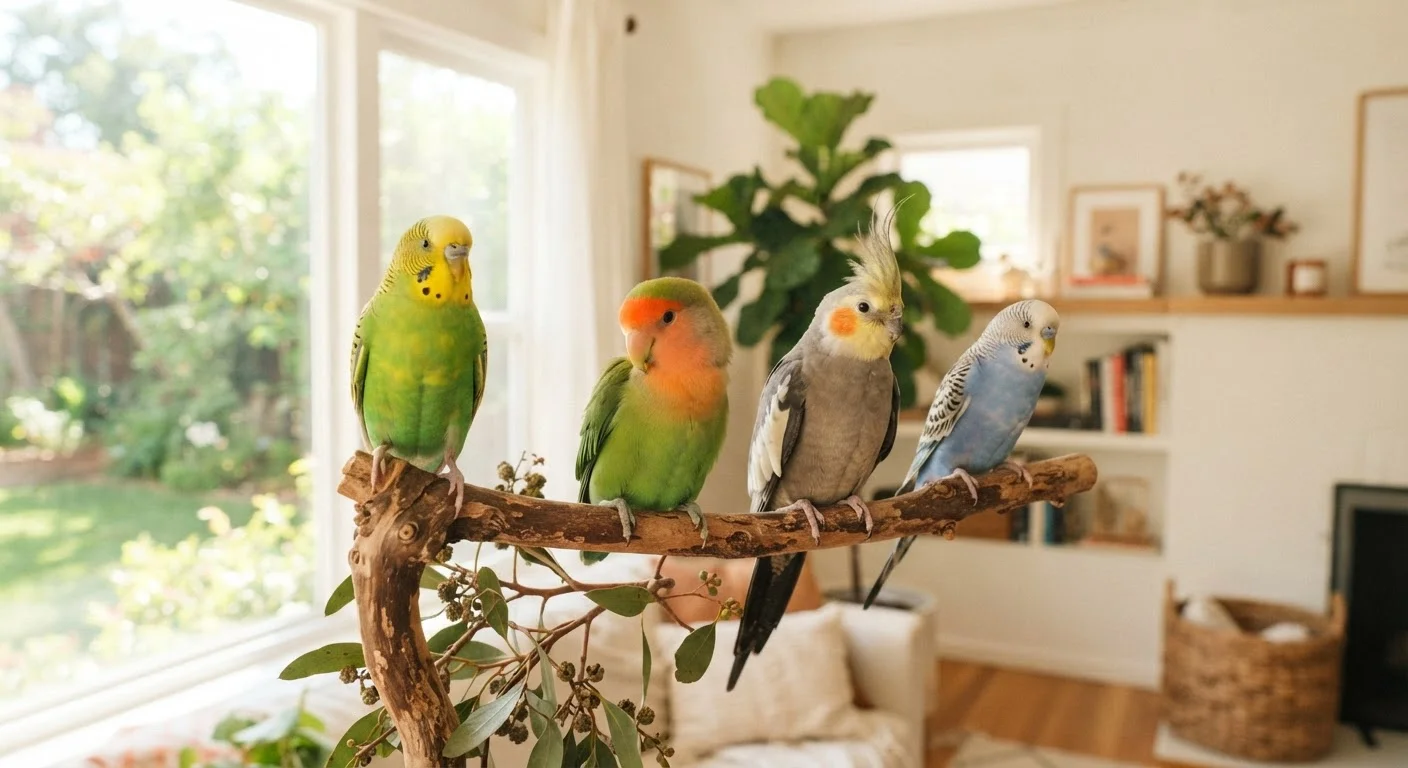
Budgerigars - commonly called budgies or parakeets - are among the most widely kept pet birds worldwide. They typically measure 6-8 inches in length and weigh under 1.5 oz. Noise level is moderate; budgies chirp and chatter frequently but rarely reach disruptive volumes. They are highly social and do best in pairs or with regular daily interaction. Well-cared-for budgies commonly live 7-12 years.
Cockatiel
Cockatiels are affectionate, medium-sized birds (11-13 inches) with a distinctive head crest that signals their mood. They are moderately vocal - males in particular whistle and mimic - but are generally manageable in apartment settings. Cockatiels bond strongly with their owners and benefit from at least 1-2 hours of supervised out-of-cage time daily. Typical lifespan is 15-20 years under good care.
Lovebird
Lovebirds are small (5-7 inches) but bold in personality. They form intense pair bonds - with another lovebird or a devoted human - and can become nippy if undertreated. Noise level is moderate to high relative to their size. Lifespan generally ranges from 10-15 years. A common misconception is that lovebirds must always be kept in pairs; a single bird given consistent human attention can thrive, though this requires real daily commitment.
Conure
Conures span a range of sizes (10-19 inches depending on species) and are known for being playful, curious, and loud. Sun conures in particular produce a piercing call that many neighbors will notice. Green cheek conures are a quieter alternative within the group. Social needs are high - conures typically require several hours of interaction and enrichment daily. Lifespan varies by species: green cheeks average 10-15 years; larger sun conures may reach 20-30 years.
Cockatoo
Cockatoos (12-24 inches) are intelligent, emotionally complex birds with demanding social and enrichment needs. They bond intensely with their owners and are prone to behavioral problems - feather destructive behavior, screaming, aggression - if deprived of adequate stimulation. Noise level is high. Lifespan is substantial: many species live 40-70 years in captivity, making cockatoo ownership a multi-decade commitment that requires careful planning. Understand the long-term financial picture before committing to a large parrot.
African Grey Parrot
African grey parrots (12-14 inches) are widely regarded as among the most cognitively capable of all parrots, demonstrating advanced problem-solving and a large spoken vocabulary in many individuals. Their social and intellectual needs are correspondingly high; boredom and neglect produce significant psychological stress. Noise level is moderate compared to many large parrots. Lifespan typically ranges 40-60 years in captivity. African greys are best suited to experienced owners.
Canary
Canaries are small finch-family birds (4-5 inches) prized for their song. Unlike parrots, canaries are content as solo birds and do not require extensive handling; they are better appreciated as observed companions than interactive pets. Male canaries sing most actively. Lifespan averages 8-12 years. Their diet and nutritional needs are often misunderstood - see what belongs in a pet bird's bowl for feeding guidance.
Avian
Relating to birds. 'Avian veterinarian' refers to a vet with specialized training in bird health and medicine.
Pair bond
A strong social attachment formed between two animals - or between a bird and its human owner - that influences behavior, stress levels, and wellbeing.
Feather destructive behavior
A behavioral condition in which a bird pulls out, chews, or damages its own feathers, often associated with stress, boredom, or inadequate socialization. Also called feather plucking.
Enrichment
Activities, objects, and environmental complexity that stimulate a bird's natural behaviors - foraging, problem-solving, play - and support psychological health.
Flock animal
A species that naturally lives in groups and therefore has strong social needs in captivity. Most parrot species are flock animals and may experience distress when kept in isolation.
Zoonotic disease
An illness transmissible between animals and humans. Some birds can carry psittacosis (Chlamydia psittaci), which is why hygiene and regular vet care are important for bird owners.