

Key Takeaways
Why Apartment Suitability Isn't Just About Size
When people picture an apartment-friendly pet, they often default to something small and quiet. But species that seem low-maintenance can have surprising needs - some hamsters, for instance, run several miles on a wheel each night, while certain parrots need as much social interaction as a dog. Choosing wisely means thinking beyond square footage.
The pets listed below tend to adapt reasonably well to apartment living because they combine manageable space requirements, tolerable noise levels, and care routines that don't demand outdoor access. That said, every animal still needs mental stimulation, appropriate housing, and regular health monitoring. Before committing, it's worth reviewing a preparation checklist for new small pet owners to make sure your home is truly ready.
Also worth noting: building policies vary widely. Always confirm what your lease permits before bringing any animal home.
Guinea Pigs
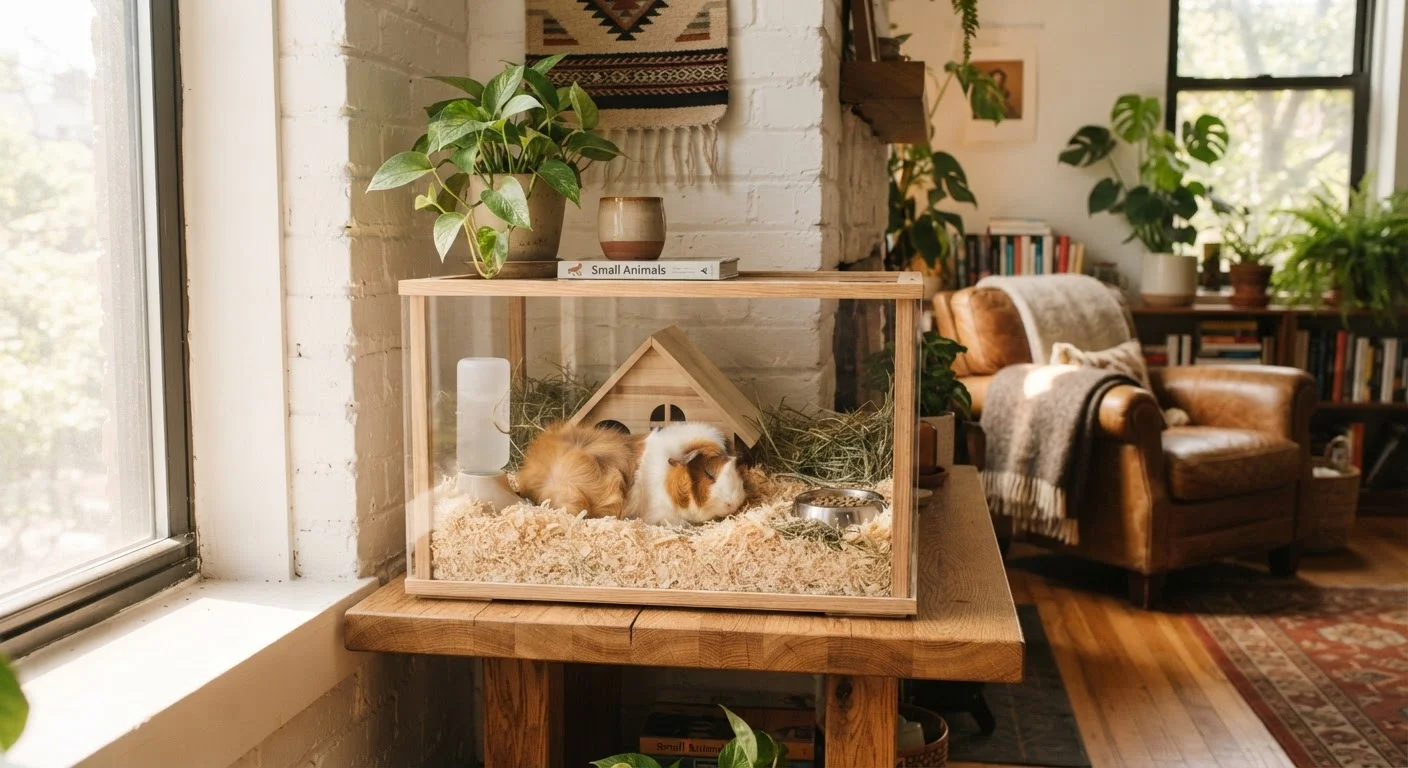
Guinea pigs are gentle, social animals that communicate through soft vocalizations - quiet enough for most apartment buildings. They don't require outdoor exercise and are active during the day, which makes their behavior easy to observe and manage. Their housing footprint is modest, though they do need a larger enclosure than is often sold in pet stores; veterinary and animal welfare guidelines generally suggest a minimum of 7-8 square feet of floor space per pair.
Critically, guinea pigs are social animals that typically fare better in bonded pairs. A single guinea pig can experience loneliness and stress. If you're adopting one, strongly consider adopting two.
Guinea pigs thrive in pairs and need more space than most starter cages provide.
Budgerigars (Budgies)
Budgerigars - commonly called budgies or parakeets - are among the most popular pet birds worldwide, and for good reason. They're small, relatively quiet compared to larger parrots, and can be quite interactive with their owners. Unlike larger parrot species, budgies don't produce the loud, penetrating calls that can strain relationships with neighbors.
They do need daily out-of-cage flight time in a bird-safe room and thrive with mental enrichment like foraging toys and social interaction. For a broader look at how budgies compare to other species, see this overview of commonly kept pet bird species.
Budgies offer real interactivity with lower noise output than most larger parrot species.
Syrian Hamsters
Syrian hamsters are solitary animals - unlike guinea pigs, they should not be housed together - and they're content in a single, well-equipped enclosure. Their primary activity window is overnight, which suits owners who are away during the day. They require a large, deep enclosure with ample burrowing substrate and an appropriately sized wheel (typically at least 10-11 inches in diameter) to meet their exercise needs.
Because they're active at night, placement of their habitat matters: a bedroom may not be ideal if wheel noise disrupts your sleep. A living room corner often works better.
Syrian hamsters are solitary and nocturnal - habitat placement matters for your sleep quality.
Leopard Geckos
For those open to reptiles, leopard geckos are considered one of the more manageable lizard species for indoor living. They're silent, contained entirely within their enclosure, and have relatively straightforward care requirements compared to many other reptiles. A 20-gallon enclosure is commonly cited as a minimum for one adult, and they need appropriate temperature gradients and UVB lighting.
Their dietary needs - typically live or frozen-thawed insects - are the main adjustment for new reptile owners. Sourcing feeder insects regularly is a practical consideration before committing to this species.
Leopard geckos are silent and self-contained, but feeder insect sourcing requires planning.
Aquarium Fish
A well-maintained freshwater aquarium can fit naturally into apartment living. Fish produce no noise (the filter hum is minimal), don't require interaction, and won't trigger pet-policy disputes in most buildings. Common beginner-friendly species such as bettas, tetras, and rasboras can thrive in appropriately sized, cycled tanks with stable water parameters.
The learning curve involves water chemistry - ammonia, nitrite, and nitrate levels need to be monitored, especially in new tanks undergoing the nitrogen cycle. An uncycled tank is a leading cause of early fish loss. Investing in a reliable water testing kit before fish arrive is genuinely important.
Fish require no interaction or outdoor access, but water quality management is non-negotiable.
Rats
Domestic rats are frequently underestimated as pets. They're highly intelligent, can learn their names, and form genuine bonds with their owners through consistent, gentle handling - see guidance on handling small pets without causing stress for techniques that build trust rather than anxiety. Rats are social animals that do best in same-sex pairs or small groups.
Their enclosure needs good vertical space for climbing rather than just floor area, and they benefit from daily out-of-enclosure supervised playtime. Rats have a relatively short lifespan of roughly two to three years, which is an emotional reality prospective owners should weigh thoughtfully.
Rats are social, intelligent pets that bond closely with owners through consistent, calm interaction.
Making Apartment Life Work for Your Small Pet
Even the most adaptable species will struggle if their environment is poorly set up. Cage size, ventilation, enrichment toys, and social interaction all affect a small pet's stress levels and longevity. Many new owners underestimate how much these animals cost to care for properly - the ongoing costs of small pet ownership include vet visits, quality food, and regular bedding changes that add up quickly.
It's also easy to carry misconceptions into pet ownership. For example, the idea that fish need no real care or that hamsters are fine in tiny cages can lead to real harm - common small pet myths debunked covers several of the most persistent ones. Approached thoughtfully, any of the pets on this list can be a genuinely rewarding companion in a compact living space.
This article is for general informational purposes only and does not constitute veterinary advice. Consult a licensed veterinarian for guidance specific to your pet's health and care.