

Key Takeaways
Why Bird Nutrition Is Trickier Than It Looks
Many first-time bird owners assume a bag of mixed seeds covers the basics. Unfortunately, that's one of the most widespread misconceptions in pet bird care. A seed-only diet is roughly as complete as feeding a person nothing but bread - it provides energy, but leaves critical nutritional gaps. Most companion birds, including budgerigars, cockatiels, conures, and parrots, require a varied, balanced diet to thrive over their often long lifespans.
The challenge is that birds are skilled at hiding illness. By the time a nutritional deficiency becomes visible - dull feathers, lethargy, softened beak - it may have been developing for months. This makes proactive, informed feeding far more valuable than reactive correction. If you've noticed confusion around pet nutrition more broadly, our article on common nutrition reasoning errors offers useful framing that applies across species.
Species Variation Is Significant
Nutritional guidance for birds varies considerably depending on species. What's appropriate for a budgie may not suit a conure, lory, or toucan. General principles - like prioritizing pellets and avoiding toxic foods - apply broadly, but always verify specifics with an avian veterinarian familiar with your bird's species and individual history.
What Should Form the Foundation of a Bird's Diet
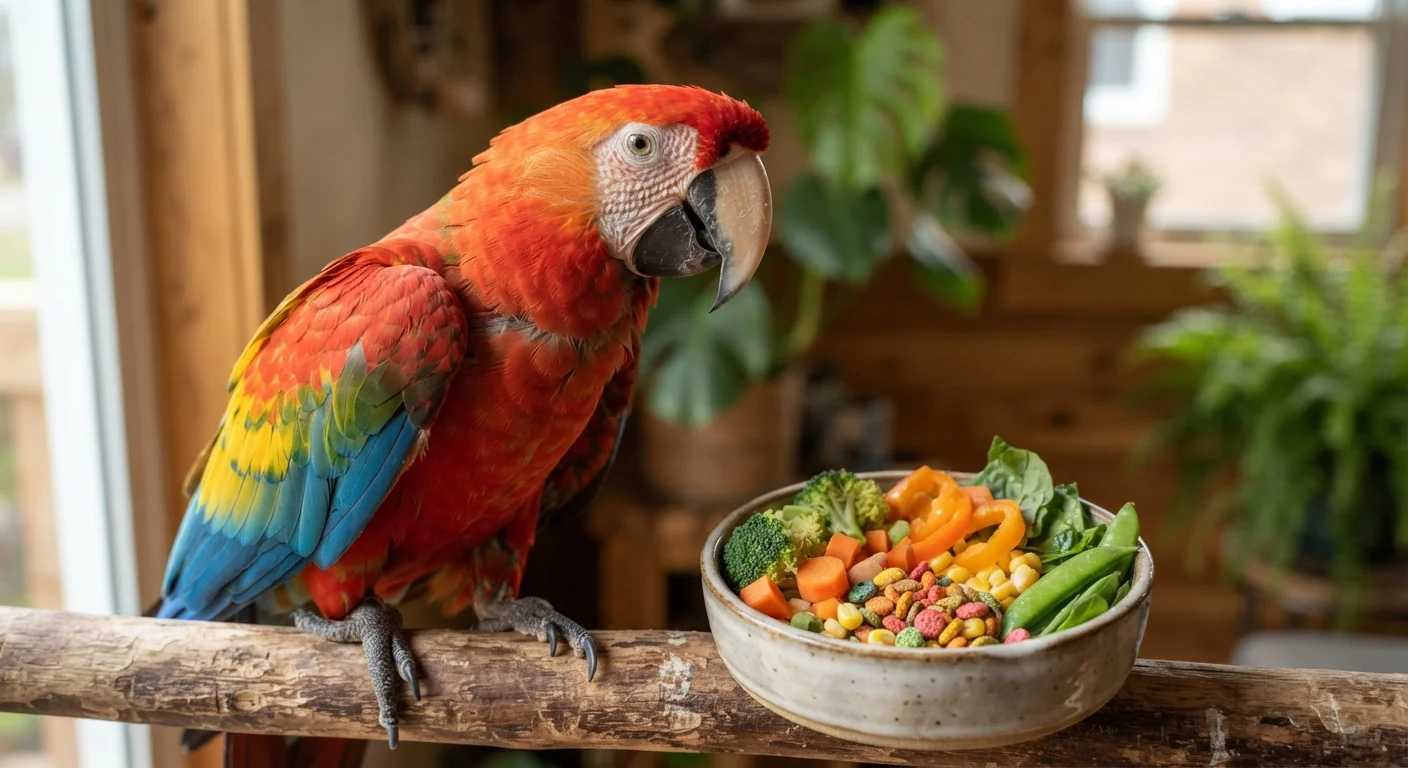
Avian veterinarians generally recommend that formulated pellets - not seeds - make up the largest portion of most pet birds' diets, often cited as roughly 60-70% of daily intake, though the ideal ratio varies by species. Pellets are nutritionally complete and reduce the risk of selective eating, which birds are prone to when given a loose seed mix.
Make formulated pellets the dietary foundation rather than seeds.
Pellets are designed to deliver complete, balanced nutrition in every bite, preventing the selective eating that often leads to deficiencies with loose seed mixes. A seed-heavy diet is one of the most common underlying causes of vitamin A deficiency in pet birds.
Introduce new foods gradually and repeatedly, even if initially rejected.
Birds are often neophobic - instinctively wary of unfamiliar foods - which means a food rejected today may be accepted after multiple calm exposures. Persistence without force is key to broadening a bird's palate.
Remove uneaten fresh food within two to four hours.
Fresh produce left in a warm cage deteriorates quickly and can harbor bacteria or mold that cause serious gastrointestinal illness. Birds nibble throughout the day, but fresh food offered in small, frequent portions is safer than leaving large amounts out.
Provide clean, fresh water daily and clean the water dish thoroughly.
Birds often drop food into their water, creating ideal conditions for bacterial growth within hours. Contaminated water is a frequently overlooked source of illness in pet birds.
Keep a written record of what your bird eats and any behavioral changes.
Birds conceal illness effectively, so tracking appetite, droppings, and behavior over time helps identify subtle changes that may signal nutritional problems or health issues before they become serious.
It's also worth noting that not all seeds are equal. Hemp, flax, and certain sprouted seeds carry more nutritional value than standard millet-heavy mixes. Seeds can still play a role as enrichment or training rewards, but they work best as a supplement rather than a staple. If you're navigating similar label-reading challenges for other pets, see our guide to reading pet food labels for transferable skills.
Safe Fresh Foods and How to Offer Them
Fresh vegetables are a valuable addition to a bird's diet and provide vitamins, antioxidants, and behavioral enrichment. Dark leafy greens such as kale, romaine, and Swiss chard are generally well tolerated. Carrots, bell peppers, broccoli, and squash are other commonly accepted options. Offering variety also encourages natural foraging behavior, which supports mental health.
Fruit can be included but should be offered in small amounts due to its natural sugar content. Berries, apple slices (seeds removed), papaya, and melon are popular choices. Always wash produce thoroughly and remove any pits or seeds from stone fruits, which can contain harmful compounds.
Cooked grains and legumes - plain brown rice, quinoa, or lentils - can add protein variety, especially for larger parrot species. Avoid seasoning of any kind; salt, spices, and oils are harmful to birds. Fresh food should be removed from the cage within a few hours to prevent bacterial growth.
Foods That Must Never Enter the Bowl
Some human foods are directly toxic to birds, and the consequences of accidental ingestion can be severe or fatal. Every bird owner should know this list:
- Avocado: Contains persin, a compound toxic to most bird species, causing respiratory distress and heart failure.
- Chocolate and caffeine: Both affect the nervous system and cardiovascular function; even small amounts can be dangerous.
- Onion and garlic: Can cause hemolytic anemia by damaging red blood cells.
- Alcohol: Even trace exposure is harmful to birds' smaller, more sensitive systems.
- Fruit pits and apple seeds: Contain cyanogenic compounds; always core apples and remove pits before offering stone fruits.
- Xylitol: This artificial sweetener, found in many sugar-free products, is toxic to birds as well as dogs.
- Mushrooms: Some varieties are toxic, and the risk isn't always easy to assess; it's safest to avoid them entirely.
- Raw dried beans: Contain hemagglutinin, which is harmful if uncooked; only thoroughly cooked legumes are safe.
If you suspect your bird has eaten something toxic, contact an avian veterinarian immediately. Time matters in these situations. This is an area where well-meaning but incorrect advice can cause real harm - the kind of small pet myths that persist despite being dangerous.
Tailoring Diet to Your Bird's Species and Life Stage
Nutritional needs are not uniform across bird species. A cockatiel has different requirements than a macaw, and both differ significantly from a canary or a lory. Lories, for instance, are nectar feeders that need specialized formulations, while larger parrots generally need more protein-dense foods. Breeding birds, young chicks being weaned, and elderly birds all have distinct requirements as well.
The most reliable approach is to establish a relationship with an avian veterinarian - a vet with specific training in bird medicine - who can assess your individual bird's weight, feather condition, droppings, and bloodwork. General guidance is a useful starting point, but it is not a substitute for professional evaluation. This article provides general nutritional education and is not a replacement for personalized veterinary advice.
This article is for general informational purposes only and does not constitute veterinary medical advice. Always consult a qualified avian veterinarian for guidance specific to your bird's health and nutritional needs.