

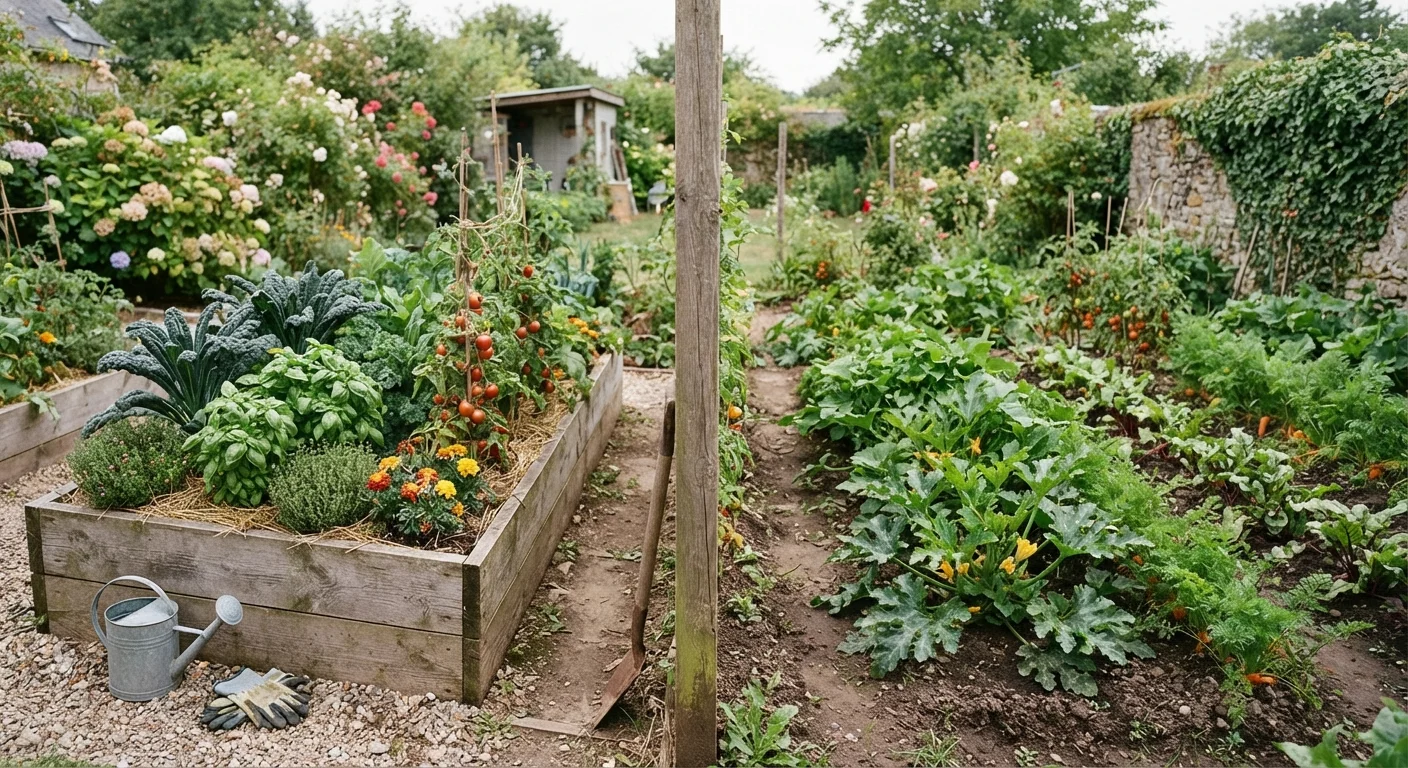
Key Takeaways
Option A
Raised Beds
The controlled, accessible growing environment.
Best for: Homeowners with poor native soil, drainage problems, physical limitations, or limited space who want precise soil management.
Option B
In-Ground Planting
The traditional, low-cost, large-scale approach.
Best for: Gardeners with healthy, workable native soil who want to grow across a wide area without significant upfront investment.
If your yard has clay, compacted, or contaminated soil
Raised Beds
Raised beds let you bypass problem soil entirely by filling with a custom mix, giving plants a clean, well-draining root zone from day one.
If you want to garden across a large area on a limited budget
In-Ground Planting
In-ground plots eliminate material costs for frames and fill soil, making them far more economical when covering significant square footage.
If you have mobility challenges or prefer less bending
Raised Beds
Beds built at 24-30 inches in height dramatically reduce strain on the back and knees, making gardening more accessible for a wider range of people.
If you're growing deep-rooted perennials or fruit trees
In-Ground Planting
Perennial plants and trees need unrestricted root depth that most raised beds can't provide; in-ground planting allows natural vertical and lateral expansion.
If you're gardening in a short growing season or cold climate
Raised Beds
The elevated soil mass warms several degrees faster than ground-level soil in spring, giving you an earlier planting window each year.
Understanding the Core Differences
Raised beds are contained structures - typically built from wood, metal, or composite materials - filled with a custom soil blend. In-ground planting means working directly with your existing yard soil, amended as needed. Both methods grow the same vegetables, flowers, and herbs, but they interact with your site conditions in fundamentally different ways.
The decision rarely comes down to personal preference alone. Factors like your native soil composition, yard drainage, available budget, and physical comfort all shape which approach will actually perform well over time. If you're just starting out, our guide to starting a vegetable garden from scratch walks through site selection and soil prep applicable to either method.
| Criterion | Raised Beds | In-Ground Planting |
|---|---|---|
| Upfront cost | Higher (materials + fill soil) | Lower (labor and amendments) |
| Soil control | Full - custom mix from the start | Gradual - improve over seasons |
| Drainage | Excellent by design | Depends on native soil type |
| Spring soil warm-up | Faster - several degrees warmer | Slower - larger thermal mass |
| Moisture retention | Dries out faster; more watering needed | Retains moisture longer at depth |
| Weed management | Lower pressure initially | Higher pressure, especially at edges |
| Scalability | Costly to expand significantly | Easy to expand with minimal cost |
| Accessibility | High - adjustable height possible | Standard - requires ground-level bending |
Soil Control and Drainage
One of the clearest advantages of raised beds is the ability to build your growing medium from scratch. A common starting blend of topsoil, compost, and a drainage material like coarse perlite gives roots an immediately hospitable environment - regardless of what sits beneath the frame. This matters enormously in yards with heavy clay, sandy, or historically troubled soil. For a closer look at how soil properties affect plant health, see our article on common garden soil myths that hurt your plants.
In-ground gardens depend on improving what's already there. This can be done effectively with repeated compost additions, cover cropping, and mulching, but it takes seasons - sometimes years - to transform poor native soil into a productive growing medium. That said, yards with loamy, well-draining native soil may actually outperform raised beds over time, since the larger soil volume retains moisture more evenly and requires less frequent irrigation during dry spells.
10°F
Warmer soil temp in raised beds vs. ground
University extension research generally finds raised bed soil can warm significantly faster in early spring, enabling earlier planting in cool-season climates.
2-3×
Yield increase per square foot in raised beds
Dense planting in optimized raised-bed soil is often cited as producing higher yields per square foot compared to conventionally tilled in-ground rows.
25-50%
More watering frequency typical for raised beds
Because raised beds drain freely and have less total soil volume, they often require more frequent irrigation than comparable in-ground plots, particularly in summer.
Upfront Cost vs. Long-Term Investment
Cost is where in-ground gardening holds a clear edge at scale. Preparing an in-ground bed primarily requires labor, compost, and basic tools. A raised bed, by contrast, requires framing material, hardware, and enough fill soil to reach a workable depth - typically 10-12 inches for most vegetables. For a modest 4×8-foot raised bed, fill soil alone can represent a meaningful expense, and that cost multiplies with each additional bed.
Over time, however, raised beds can reduce some costs. Better drainage lowers the chance of root rot and crop loss. Defined growing areas concentrate amendments where they're needed rather than across a broad footprint. And the physical separation from surrounding lawn reduces the labor spent managing grass encroachment.
Those planning a mixed garden featuring both short-season crops and returning perennials should also weigh how each method interacts with plant longevity. Our overview of perennials vs. annuals explores how plant type influences garden structure decisions.
Maintenance, Pests, and Weeds
Raised beds typically require less weeding early on, especially when filled with weed-seed-free soil mix. Over the years, weed pressure does increase as seeds blow in from surrounding areas, but the contained footprint keeps management more focused. Pest dynamics vary: raised beds often see fewer soil-dwelling pests like grubs and voles, though they can actually concentrate above-ground pests since plants are grouped densely in a smaller area.
In-ground gardens tend to see heavier weed competition, particularly along edges where lawn grasses creep in. A thick layer of organic mulch - 2 to 3 inches - helps suppress weeds while also improving moisture retention and soil temperature regulation. Both methods benefit from consistent mulching, though the in-ground approach may demand it more urgently to maintain productivity.
Gardeners with very limited outdoor space might also consider how raised beds compare to container options. Our container gardening guide for patios and balconies covers scenarios where neither raised beds nor in-ground plots are practical.