

Key Takeaways
Tire Rotation, Balance & Alignment
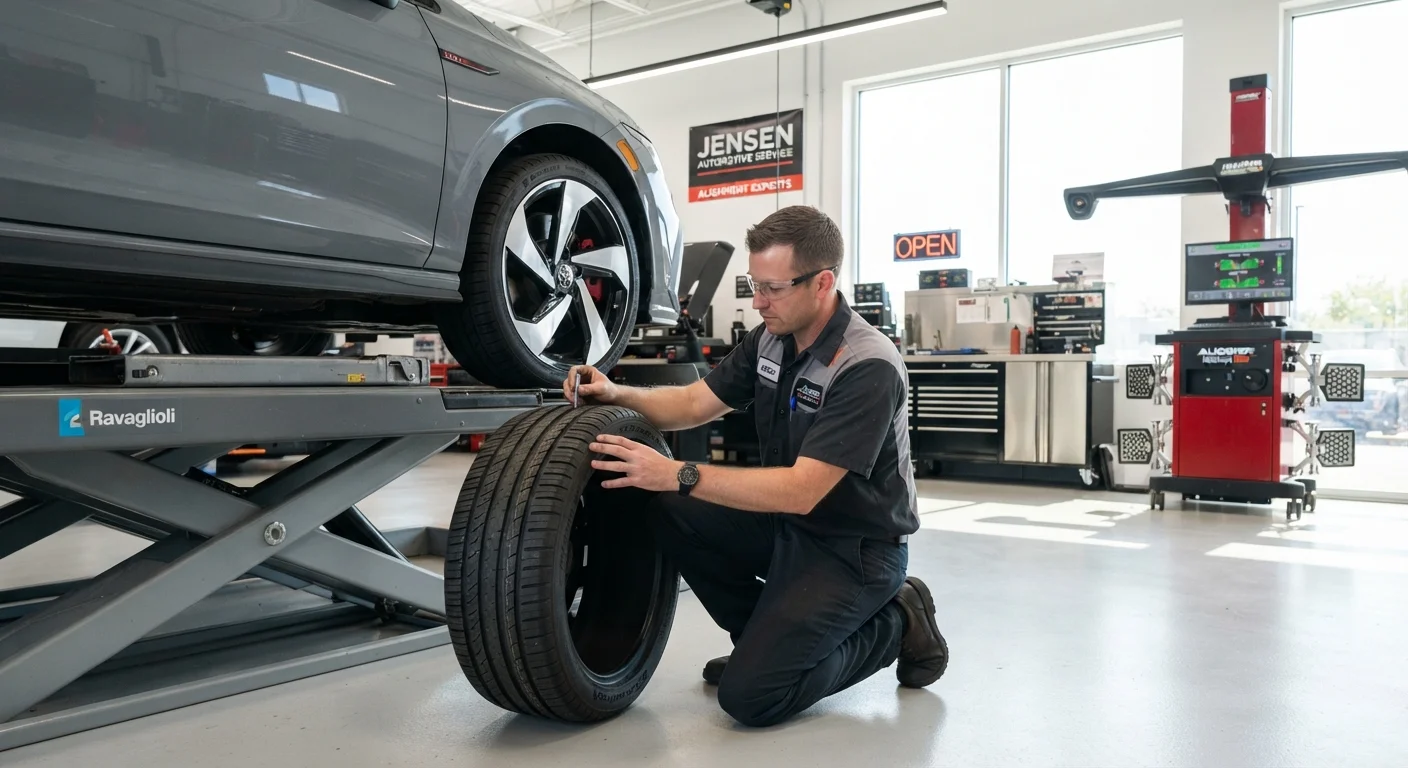
Tire rotation moves tires from one position on your car to another so they wear evenly. Wheel balancing corrects small weight imbalances in a tire-and-wheel assembly so the wheel spins smoothly. Wheel alignment adjusts the angles of your suspension so all four tires contact the road correctly. All three are separate services that protect different aspects of your tires and ride quality.
Alignment is measured in three angles - camber, caster, and toe - and is adjusted at the suspension level, not the tire itself.
Tire Rotation: Evening Out the Wear
Your four tires do not wear at the same rate. Front tires handle steering forces and, on front-wheel-drive vehicles, deliver power to the road - so they wear faster than the rear pair. Left and right tires also wear differently depending on the road crown and turning patterns typical in everyday driving.
Rotation solves this by periodically moving each tire to a different position - front to rear, side to side, or diagonally - following a pattern suited to your drivetrain. Over time, this evens out wear across all four tires so they reach the end of their usable life together rather than prematurely on just one axle.
The practical payoff is straightforward: tires that wear evenly last longer, which means fewer replacement cycles over the life of a vehicle. Consistent rotation is one of the simplest things a driver can do to get full value from a set of tires. For a broader look at how this fits into your overall service schedule, see Your Car's Maintenance Schedule, Explained.
Time Rotation With Oil Changes
A practical way to stay on top of rotation is to schedule it every other oil change if your vehicle is on a roughly 3,000- to 4,000-mile oil change interval, or at each change if you go longer between oil services. Many shops can perform both during the same visit, reducing the number of separate service appointments you need each year.
Wheel Balancing: Stopping the Shake
Even a perfectly round tire and rim combination has slight weight variations from manufacturing tolerances. When a wheel spins at highway speeds, these tiny imbalances can create a noticeable vibration felt through the steering wheel or seat. Wheel balancing addresses this directly.
During balancing, a technician mounts the wheel on a spin-balancing machine that identifies exactly where the weight is unevenly distributed. Small counterweights - typically clip-on or adhesive - are then attached to the rim to compensate. The result is a wheel that spins smoothly at any speed.
Balancing is needed when tires are first mounted and whenever a vibration develops during driving. Road impacts can knock weights loose or shift the balance point over time. Driving on an unbalanced tire accelerates tread wear in specific spots and puts stress on suspension components, so addressing vibration early is worthwhile.
~$200
Typical cost of a single replacement tire
General market estimates suggest passenger car tires commonly range from around $100 to $300 each depending on size and type, making tire longevity a meaningful financial factor.
Up to 20%
Potential tire life reduction from misalignment
Industry sources including tire manufacturers have cited improper alignment as a factor that can noticeably reduce usable tread life, though exact figures vary by severity.
5,000-7,500 mi
Common tire rotation interval
This range reflects typical manufacturer recommendations; always consult your vehicle's owner's manual for the specification that applies to your model.
Wheel Alignment: Correcting the Angles
Alignment is the most misunderstood of the three services because it doesn't involve the tire itself - it's an adjustment of your vehicle's suspension geometry. Specifically, it corrects three angles: toe (whether the fronts of the tires point inward or outward), camber (whether the tire leans toward or away from the vehicle when viewed from the front), and caster (the angle of the steering axis viewed from the side).
When these angles drift from the manufacturer's specification - as they naturally do from road impacts, worn suspension parts, or simply accumulated miles - tires scrub against the road at a slight angle instead of rolling straight. The consequences include uneven tire wear (often appearing as heavy wear on one edge), the car pulling to one side, and handling that feels vague or imprecise.
Alignment cannot be fixed by rotating tires or balancing wheels. It requires a dedicated alignment machine and, in many cases, adjustments to tie rods, control arm positions, or other suspension components. This is generally a job for a qualified alignment technician. Ignoring a misalignment will wear out a brand-new set of tires far sooner than expected - a costly outcome that's entirely preventable. For more on deferred maintenance costs, see Why Skipping Small Services Leads to Big Repair Bills.
“Alignment is really about protecting your investment. A misaligned vehicle will eat through a set of tires in a fraction of the normal time, and most drivers don't notice until the damage is already done.”
— Tire Industry Association, U.S. trade association representing tire professionals and educators
How the Three Services Work Together
Each service addresses a distinct problem, but they complement each other. A car that is properly aligned will get full benefit from a rotation schedule because the tires are already tracking correctly. Balanced wheels reduce the micro-vibrations that can accelerate tread wear and stress wheel bearings. And regular rotation gives you - and your mechanic - a recurring opportunity to spot alignment drift or balance issues before they become expensive.
Think of them as a system: rotation is the routine, balancing is the precision tune, and alignment is the geometry check. Doing one while neglecting the others leaves gaps in your tire care. New drivers and experienced ones alike benefit from understanding the difference, which is covered in more depth in Car Maintenance from Scratch.
If any of these three services has been skipped for a while, a combined check at your next tire service is a practical starting point. Your tires represent a significant investment - these relatively low-cost services help protect it.