

Key Takeaways
Why Food Spending Spirals and How to Stop It
Food is one of the most unpredictable line items in any travel budget. Unlike flights or lodging, meals happen three times a day with dozens of small decisions - each one carrying a cost. Travelers who don't plan for food specifically often end up eating at the nearest available option, which in tourist-heavy areas tends to be the priciest one.
The fix isn't deprivation. It's intentionality. A structured approach to eating on the road - knowing which meals to buy cheap and which to invest in - keeps spending predictable without turning every meal into a math problem. For a broader framework on managing daily travel costs, see how to build a day-by-day travel budget that accounts for real-life food variability.
Quick Wins You Can Act on Today
Before diving deep into strategy, here are a few immediately actionable moves that consistently make a measurable difference in food spending:
When a Sit-Down Restaurant Is Actually Worth It
Not every restaurant meal is a budget mistake. The question is timing and context. In many destinations, the midday meal - called a prix fixe, set lunch, or menú del día in parts of Europe and Latin America - delivers the full sit-down experience at a fraction of the dinner price. Ordering the same food at dinner from the same kitchen can cost 40-60% more.
Reserve sit-down meals for experiences with genuine culinary or cultural value: a regional dish you can't replicate elsewhere, a family-run spot recommended by locals, or a meal that anchors a day's worth of memories. Eating expensively out of convenience - at airport terminals, hotel lobbies, or main tourist squares - is where budgets quietly bleed. The Travel Hacks & Tips hub covers more strategies for making on-the-ground spending count.
Food Safety and Local Water Considerations
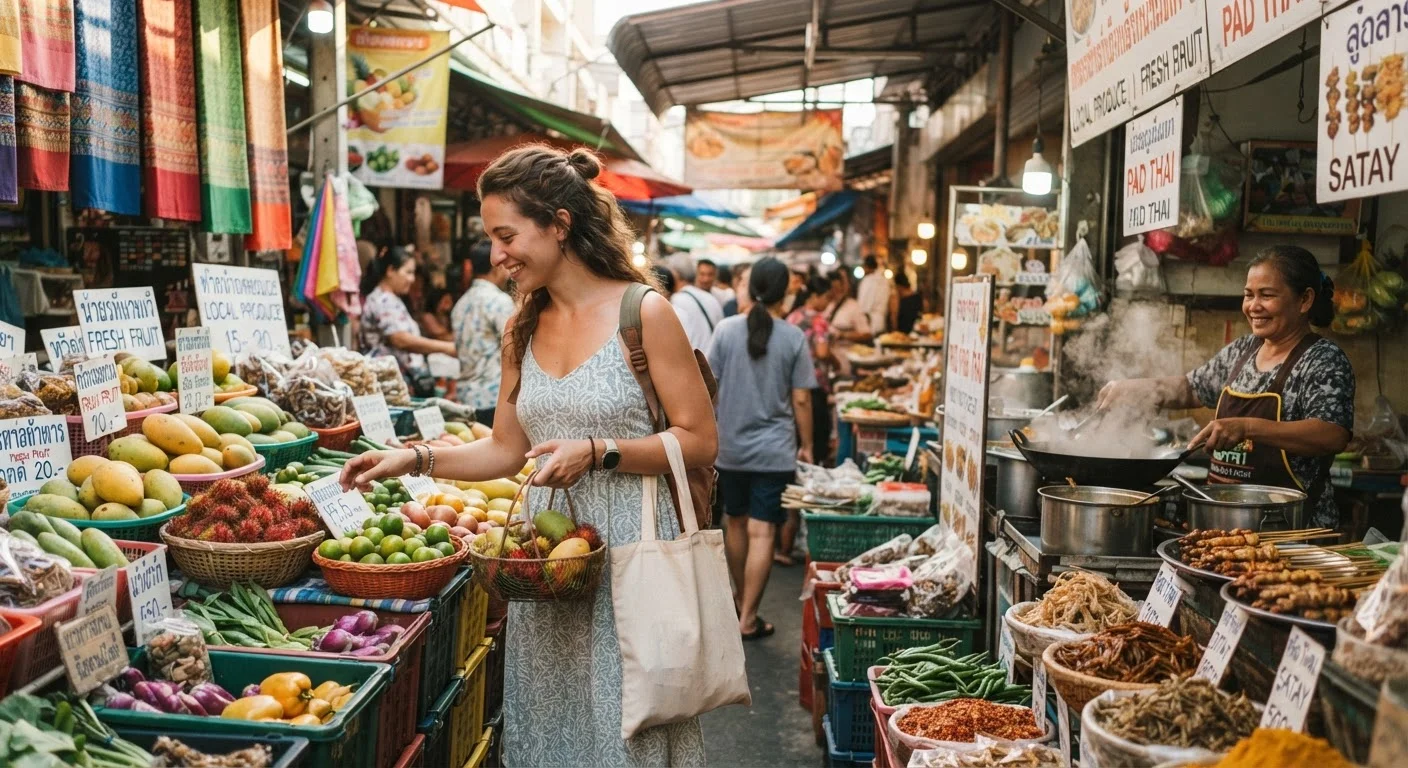
Street food and market meals are safe and excellent in most destinations, but food safety standards vary. When in doubt, choose vendors with high turnover, visible cooking, and lines of local customers - these are reliable signals of freshness. For destinations where tap water isn't recommended for drinking, factor the cost of safe water into your food budget. The US Centers for Disease Control and Prevention (CDC) and official government travel advisories are the authoritative sources for destination-specific food and water safety guidance.
Building Your On-the-Road Food System
The travelers who consistently eat well on a budget aren't just lucky - they have a repeatable system. A practical structure that works across destinations:
- Breakfast: Self-catered from a grocery store or market. Yogurt, fruit, bread, and local cheese cost a fraction of a café breakfast and are often higher quality.
- Lunch: The main meal of the day, either from a street food vendor, a local market stall, or a sit-down restaurant taking advantage of midday pricing.
- Dinner: Light and cheap - leftovers, a market visit, or simple prepared foods from a supermarket deli counter.
This structure naturally shifts spending toward midday, when prices are lower and energy needs are higher. It also reduces decision fatigue: when the framework is set, individual meal choices take seconds rather than minutes of hungry deliberation. Pair this habit with the broader pre-trip food planning steps outlined in the pre-trip planning checklist to arrive at your destination already set up for smart eating.
This article is for general informational purposes only and does not constitute financial or travel advice. Prices, availability, and conditions vary by destination and change over time. Always verify current local information before traveling.