

Key Takeaways
Why Small Pet Myths Are More Dangerous Than They Seem
Small pets are often marketed as low-maintenance starter animals, which sets up a false expectation from the beginning. When that narrative combines with persistent myths about what these animals need, the result is care that falls short - sometimes significantly. Unlike dogs or cats, small animals like hamsters, rabbits, guinea pigs, and fish are less likely to signal distress in ways owners immediately recognize.
Correcting these myths isn't about judgment - most owners who repeat them genuinely believe they're doing right by their pets. But understanding what the evidence actually shows can make a meaningful difference in an animal's quality of life. See our guide to handling small pets without stressing them out for more on reading your animal's cues correctly.
Myth
A small cage is fine for a hamster - they're tiny animals that don't need much space.
Fact
Hamsters in the wild can travel several miles per night. Undersized enclosures cause chronic stress and stereotypic behaviors like repetitive bar-chewing.
Many cages sold and labeled for hamsters fall well below the space recommendations from animal welfare researchers. Veterinary and behavioral guidelines from organizations such as the RSPCA and various exotic animal vet groups suggest a minimum of around 450 square inches of unbroken floor space for a Syrian hamster, though larger is generally better. A hamster that paces, chews bars obsessively, or over-grooms may be showing signs of a habitat-related welfare problem. Understanding hamster behavior can help you distinguish normal patterns from stress signals.
Myth
Goldfish only have a three-second memory, so they don't really experience their environment.
Fact
Research has shown goldfish can remember things for months and can be trained to respond to signals - the three-second memory claim is a myth.
Studies using conditioning techniques have demonstrated that goldfish learn and retain information well beyond a few seconds. This matters practically: a fish kept in a barren, cramped, or poorly maintained tank does notice the difference. Poor water quality, lack of enrichment, and insufficient space cause measurable stress in fish. A tank that's too small or infrequently cleaned is not a neutral environment - it's an actively harmful one. Responsible fish care involves appropriate tank size, filtration, and regular water parameter monitoring.
Myth
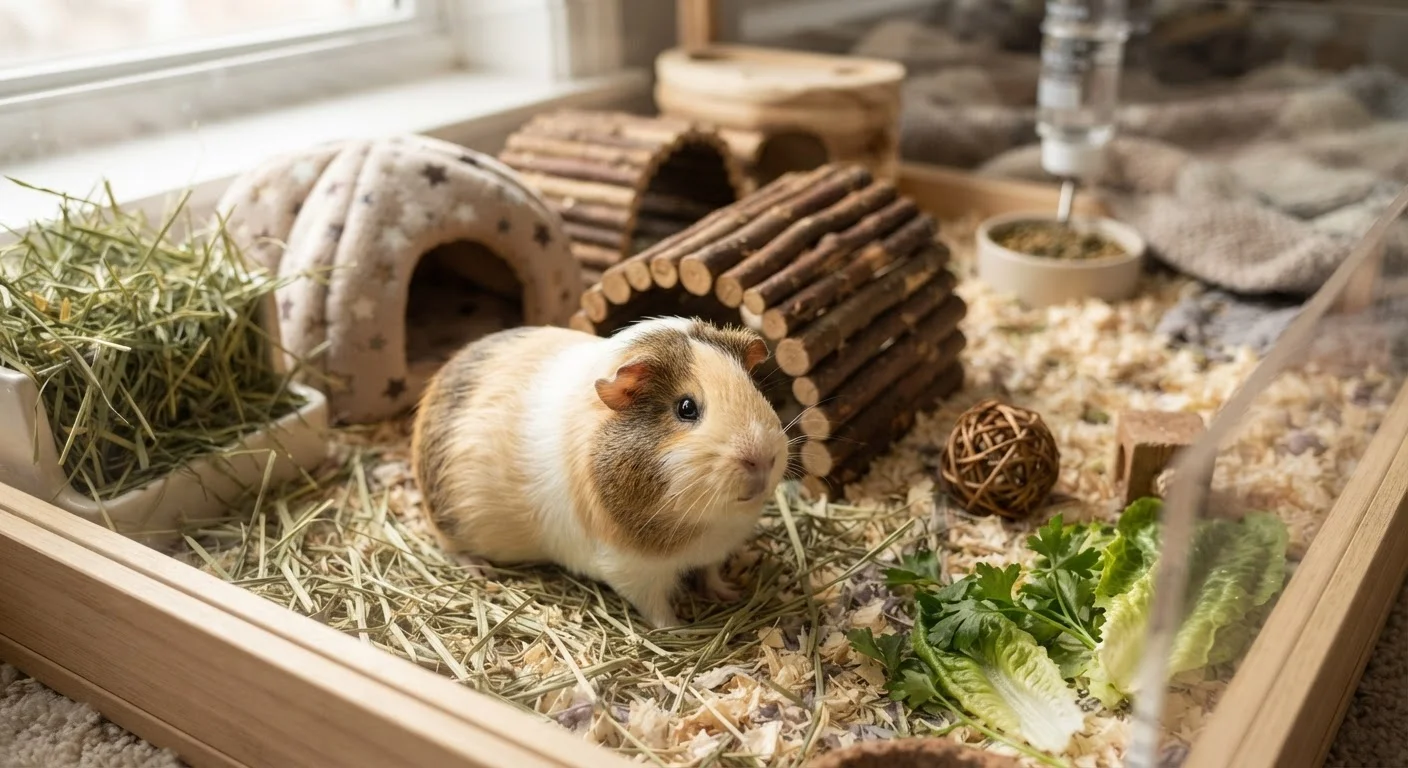
Guinea pigs are fine living alone - they're independent animals.
Fact
Guinea pigs are highly social and can experience loneliness and depression when housed in isolation. Most welfare organizations recommend keeping them in same-sex pairs at minimum.
In the wild, guinea pigs live in groups and rely on social contact for safety and communication. A solitary guinea pig may show signs of depression, reduced activity, or increased stress-related behaviors. Several countries, including Switzerland, have made it illegal to keep guinea pigs alone - recognizing their social needs as a welfare requirement rather than a preference. If you're considering a guinea pig, budgeting for two and providing appropriate space for both is part of responsible ownership. For a broader look at what different small species need, see the guinea pig vs. rabbit comparison.
Myth
Small pets don't need vet visits - they're cheap and easy to replace if something goes wrong.
Fact
Small animals require specialized veterinary care and many illnesses are treatable if caught early. Delaying care on the assumption these pets are disposable causes unnecessary suffering.
Many exotic and small animal veterinarians note that owners often wait too long to seek care because they assume treatment isn't available or isn't worth the cost for a small pet. In reality, hamsters, rabbits, guinea pigs, and birds are all susceptible to conditions that respond well to early treatment - and poorly to neglect. Finding a vet experienced with your specific species before an emergency arises is an important part of ownership. Hamsters in particular get sick more often than many owners expect, and subtle symptoms can be easy to miss.
Myth
Rabbits are gentle, quiet pets that are ideal for young children without much supervision.
Fact
Rabbits are prey animals that can become seriously stressed by improper handling and are prone to injury if dropped. They typically suit older, calmer children with consistent adult supervision.
Rabbits are not naturally inclined to enjoy being held - most prefer to have their feet on solid ground. When frightened or mishandled, a rabbit can kick powerfully enough to fracture its own spine. Their fragility, combined with their tendency to hide illness, means that a rabbit showing visible distress is likely already significantly unwell. They're rewarding pets for households that can provide appropriate space, a species-appropriate diet, and calm, respectful interaction - but they're not a low-effort option for busy families or very young children.
Myth
Pet birds are happy in a small cage as long as they have a mirror and a few perches.
Fact
Most pet bird species need significantly more space, mental stimulation, and often social interaction than a small cage with basic accessories provides.
Birds kept in cramped cages with limited enrichment can develop behavioral problems including feather-destructive behavior, excessive vocalization, and aggression. Mirrors can be particularly problematic for single birds - some species become fixated on their reflection in ways that interfere with normal behavior. The right setup depends heavily on the species. Different bird species have very different needs in terms of cage size, social requirements, and diet. Researching the specific species before acquiring a bird prevents many common welfare mistakes.
Putting the Facts Into Practice
Knowing the truth is a starting point, but applying it takes some practical effort. Upgrading a habitat, finding an exotic-animal veterinarian, or introducing a companion animal all come with real considerations - including cost. Our article on the hidden costs of owning a small pet lays out what owners should realistically budget for, beyond the initial setup.
Hiding Illness Is a Survival Instinct
Prey animals - including rabbits, guinea pigs, hamsters, and birds - instinctively conceal signs of weakness. By the time a small pet appears obviously unwell, the condition may already be advanced. Regular hands-on checks and familiarity with your specific animal's normal behavior are more reliable than waiting for visible symptoms. When in doubt, consult a veterinarian experienced with your species rather than waiting to see if things improve.
If you're comparing species or considering a new small pet, understanding each animal's actual social, spatial, and dietary needs upfront prevents many of these myths from ever causing harm. The guinea pig vs. rabbit comparison is a useful place to start for two of the most commonly misunderstood species. And if birds are on your radar, this quick-reference overview of common pet bird species covers what each type genuinely needs.
This article is for general informational purposes only and does not constitute veterinary advice. If you have concerns about your pet's health or behavior, consult a licensed veterinarian experienced with your specific species.