

Key Takeaways
High-quality protein from whole animal sources
Raw diets typically use minimally processed muscle meat, which retains a full amino acid profile. Some dogs with sensitivities to heavily processed proteins may tolerate raw formats better.
Potential improvements in coat and skin condition
Many owners report shinier coats after switching to raw, possibly due to higher fat quality and the absence of certain preservatives. Controlled studies on this specific outcome remain limited.
Mechanical dental benefits from raw bones
Chewing appropriately sized raw meaty bones can help reduce plaque and tartar buildup. This should be supervised and is not a substitute for veterinary dental care.
Reduced filler ingredients and artificial additives
Well-formulated raw diets eliminate corn-based fillers, artificial colors, and synthetic preservatives commonly found in lower-quality kibble, which some owners prefer for sensitivities.
Higher moisture content than kibble
Raw meat is naturally high in moisture, which may support kidney function and urinary tract health in dogs prone to dehydration or urinary crystals.
Serious bacterial contamination risk
Raw meat commonly carries Salmonella, Listeria, and E. coli. These pathogens can infect both dogs and humans in the household, with documented cases in veterinary and public health literature.
Nutritional imbalances in homemade recipes
Studies reviewing homemade raw diet formulations have found the majority to be deficient in at least one key nutrient. Without professional formulation, deficiencies can develop over months without visible symptoms.
Risk of bone-related injuries
Even raw bones can fracture teeth, cause intestinal blockages, or perforate the GI tract. These emergencies carry significant veterinary costs and recovery time.
High cost and time commitment
Sourcing, storing, and preparing a nutritionally balanced raw diet requires consistent effort and expense that significantly exceeds the cost of commercial complete diets.
Not appropriate for all life stages
Growing puppies, pregnant or nursing dogs, and immunocompromised animals have needs that are especially difficult to meet safely with raw feeding and face greater consequences from any imbalance.
Inconsistent quality in commercial raw products
The raw pet food market is less standardized than conventional pet food, and not all products undergo rigorous pathogen testing or meet AAFCO nutrient adequacy standards.
Our Verdict
Raw feeding is neither the miracle cure its strongest advocates claim nor the unequivocal danger its harshest critics suggest. The evidence shows real benefits are possible, but so are serious risks - particularly around food safety and nutritional completeness. Getting the balance right requires professional guidance, not just passion.
Dog owners willing to invest significant time, budget, and veterinary oversight - and who do not have young children, immunocompromised household members, or vulnerable dogs - may find a professionally formulated raw diet worth exploring.
What Raw Feeding Actually Means
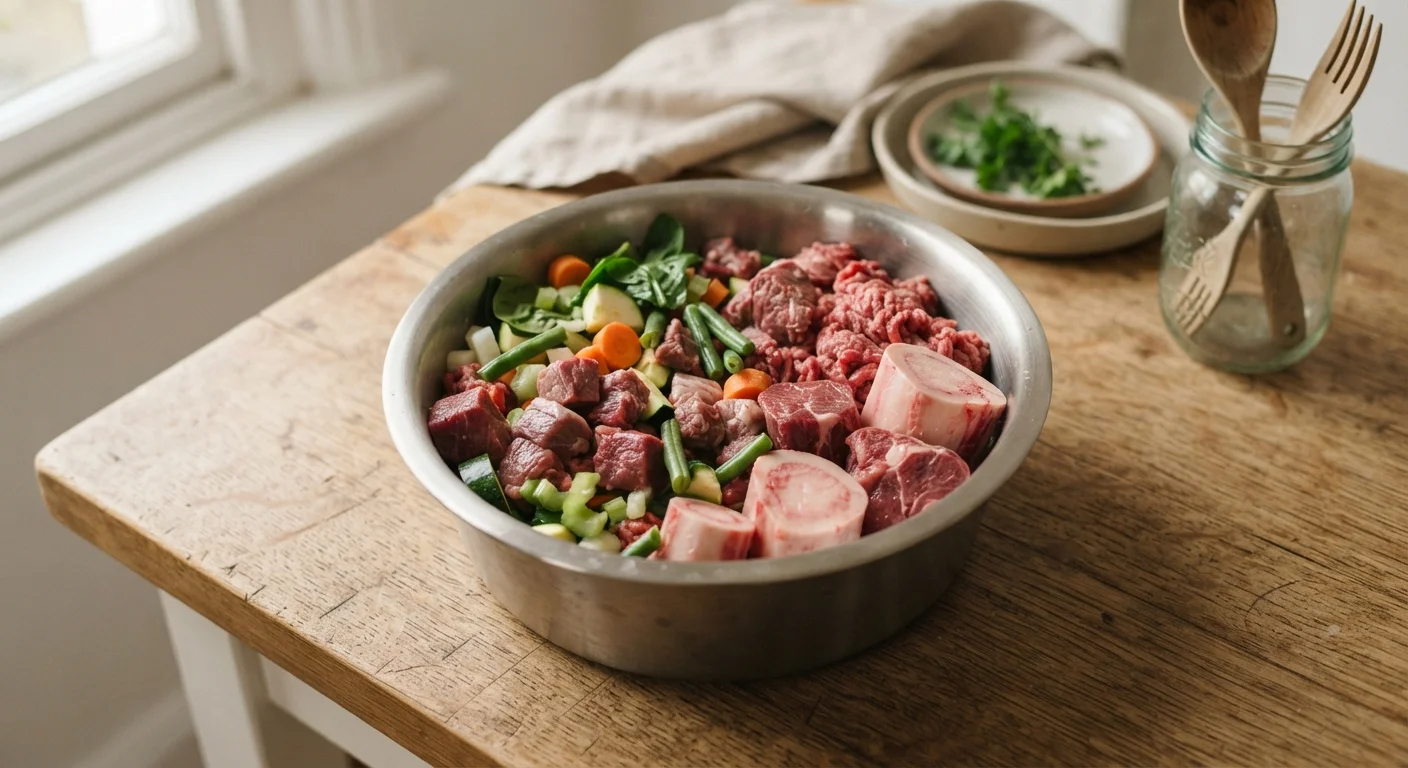
Raw diets for dogs - often called BARF (Biologically Appropriate Raw Food) or whole-prey feeding - typically include uncooked muscle meat, raw meaty bones, organ meat, and sometimes raw fruits, vegetables, and eggs. The idea is that dogs evolved eating prey animals, so an unprocessed diet more closely matches their biological needs.
In practice, raw feeding takes several forms: fully homemade diets, commercially prepared frozen or freeze-dried raw products, and hybrid approaches that mix raw components with conventional kibble. Each carries its own nutritional profile and handling requirements. Understanding those differences matters before drawing conclusions about the diet as a whole. For a primer on reading commercial pet food packaging, see how to decode dog food labels.
The Case for Raw: What Proponents Point To
Supporters of raw feeding cite a range of observed benefits, and some of these do have partial support in veterinary literature - though robust, large-scale clinical trials remain limited.
High-quality protein from whole animal sources
Raw diets typically use minimally processed muscle meat, which retains a full amino acid profile. Some dogs with sensitivities to heavily processed proteins may tolerate raw formats better.
Potential improvements in coat and skin condition
Many owners report shinier coats after switching to raw, possibly due to higher fat quality and the absence of certain preservatives. Controlled studies on this specific outcome remain limited.
Mechanical dental benefits from raw bones
Chewing appropriately sized raw meaty bones can help reduce plaque and tartar buildup. This should be supervised and is not a substitute for veterinary dental care.
Reduced filler ingredients and artificial additives
Well-formulated raw diets eliminate corn-based fillers, artificial colors, and synthetic preservatives commonly found in lower-quality kibble, which some owners prefer for sensitivities.
Higher moisture content than kibble
Raw meat is naturally high in moisture, which may support kidney function and urinary tract health in dogs prone to dehydration or urinary crystals.
Coat and skin improvements are the most consistently reported owner observations. Some dogs also show firmer stools and smaller stool volume on raw diets, which may reflect higher digestibility of certain proteins. Dental health advocates note that gnawing raw meaty bones can mechanically reduce tartar buildup, though this must be weighed against bone-related injury risks.
The Risks You Need to Take Seriously
The concerns around raw feeding are not merely theoretical. Major veterinary organizations, including the American Veterinary Medical Association (AVMA) and the American Animal Hospital Association (AAHA), have issued policy statements discouraging raw meat-based diets, primarily on public health and nutritional safety grounds.
Serious bacterial contamination risk
Raw meat commonly carries Salmonella, Listeria, and E. coli. These pathogens can infect both dogs and humans in the household, with documented cases in veterinary and public health literature.
Nutritional imbalances in homemade recipes
Studies reviewing homemade raw diet formulations have found the majority to be deficient in at least one key nutrient. Without professional formulation, deficiencies can develop over months without visible symptoms.
Risk of bone-related injuries
Even raw bones can fracture teeth, cause intestinal blockages, or perforate the GI tract. These emergencies carry significant veterinary costs and recovery time.
High cost and time commitment
Sourcing, storing, and preparing a nutritionally balanced raw diet requires consistent effort and expense that significantly exceeds the cost of commercial complete diets.
Not appropriate for all life stages
Growing puppies, pregnant or nursing dogs, and immunocompromised animals have needs that are especially difficult to meet safely with raw feeding and face greater consequences from any imbalance.
Inconsistent quality in commercial raw products
The raw pet food market is less standardized than conventional pet food, and not all products undergo rigorous pathogen testing or meet AAFCO nutrient adequacy standards.
~60%
Homemade raw recipes with nutrient deficiencies
Multiple peer-reviewed analyses of published homemade raw dog diet recipes have found a majority lacking in at least one essential nutrient when assessed against established canine nutritional requirements.
Up to 35%
Raw commercial samples testing positive for Salmonella
Studies published in veterinary journals, including research cited by the FDA, have found Salmonella contamination rates in commercially prepared raw dog food ranging from roughly 20-35% of samples tested.
Nutritional imbalance is perhaps the most underappreciated risk. Studies examining homemade raw diet recipes have found a significant proportion to be deficient in critical nutrients such as calcium, phosphorus, zinc, and vitamins D and E. These deficiencies can cause skeletal problems, immune dysfunction, and organ damage - especially in growing puppies. The risks of misapplied nutrition advice apply in pet feeding just as they do in human diets; common reasoning errors in nutrition are worth understanding regardless of species.
Bone-related hazards deserve specific mention. Raw bones carry lower splintering risk than cooked bones, but they are not without danger. Fractured teeth, gastrointestinal obstruction, and internal lacerations are documented in veterinary emergency settings.
A Note on Freeze-Dried Raw Products
Freeze-drying reduces moisture but does not reliably eliminate bacterial pathogens. The FDA has noted that freeze-dried raw pet foods can still harbor Salmonella and Listeria. If you choose this format, follow the same careful handling protocols as fresh raw meat, and look for products that have undergone high-pressure processing (HPP), which is more effective at pathogen reduction.
Who Should Avoid Raw Diets
Some dogs and households are poor candidates for raw feeding regardless of how carefully it is managed. Puppies under 12 months have heightened nutritional demands and immune systems still maturing - getting the calcium-to-phosphorus ratio wrong during growth can cause lasting skeletal damage. Dogs undergoing chemotherapy or managing chronic immune conditions face elevated infection risk from bacterial exposure in raw meat.
On the human side, households with infants, elderly adults, pregnant individuals, or anyone immunocompromised should weigh the bacterial shedding risk carefully. Research has documented that dogs fed raw diets can shed pathogens like Salmonella and Campylobacter in their feces and saliva even when showing no illness themselves.
Making an Informed Decision
If you are seriously considering a raw diet for your dog, start with a consultation with a board-certified veterinary nutritionist (Diplomate, ACVN). A professionally formulated plan - not a generic recipe found online - is the baseline for nutritional safety. Commercially prepared raw diets that carry an AAFCO nutritional adequacy statement have at least met a defined nutrient profile, though AAFCO certification does not address pathogen risk.
Safe handling practices are non-negotiable: dedicated prep surfaces, thorough handwashing, proper frozen storage, and keeping raw food away from other household items. These steps reduce but do not eliminate contamination risk.
The raw diet debate mirrors broader tensions in how people think about processed versus whole foods. Research on whole versus processed foods shows that the picture is rarely as simple as one category being uniformly superior - and that holds true for pet nutrition as well.
This article is for general informational purposes only and does not constitute veterinary medical advice. Always consult a licensed veterinarian or board-certified veterinary nutritionist before making changes to your dog's diet.