

Key Takeaways
Option A
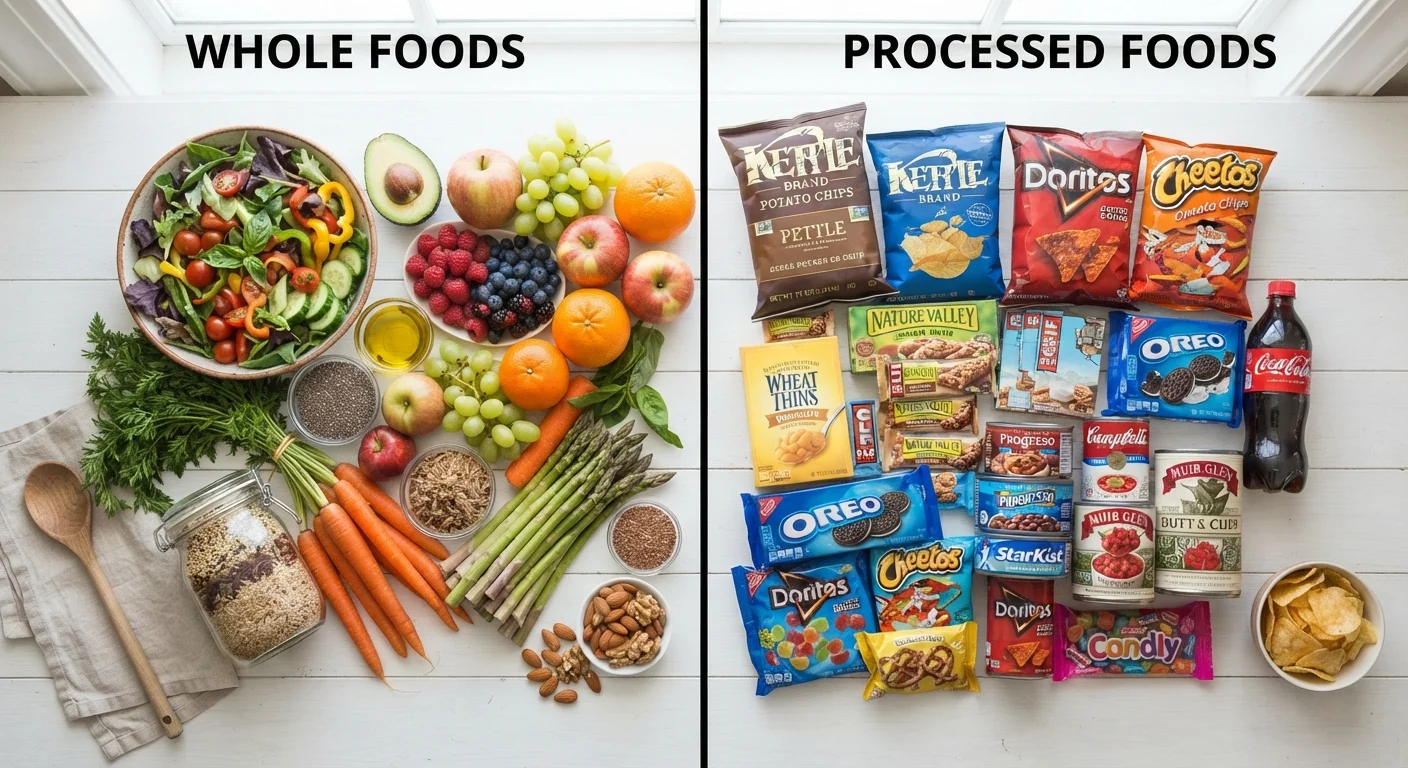
Whole Foods
The minimally altered, nutrient-dense baseline.
Best for: People prioritizing micronutrient density, fiber intake, and long-term dietary quality.
Option B
Processed Foods
A broad, often misunderstood category with real variability.
Best for: Anyone seeking convenience, affordability, or shelf stability - with room for smart choices within the category.
If you want to maximize nutrient density in your diet
Whole Foods
Whole foods provide fiber, micronutrients, and phytochemicals in their most intact form, supporting overall dietary quality.
If cost and convenience are your primary constraints
Processed Foods
Minimally processed options like canned beans, frozen vegetables, and fortified cereals can deliver solid nutrition at lower cost and effort.
If you're trying to reduce added sugar and sodium intake
Whole Foods
Whole foods contain little to no added sugar or sodium, making it easier to manage intake without scrutinizing every label.
If you're building a practical, sustainable everyday eating pattern
Processed Foods
A balanced approach that includes both whole and selectively chosen processed foods is more realistic and sustainable for most people.
What Do These Terms Actually Mean?
The word "processed" is used so loosely in nutrition conversations that it has nearly lost practical meaning. Technically, any food that has been altered from its raw state - washed, cut, frozen, cooked, or packaged - has been processed. That definition puts frozen peas, pasteurized milk, and canned tomatoes in the same category as cheese puffs and soda, which isn't especially useful.
A more helpful framework comes from the NOVA classification system, developed by researchers at the University of São Paulo. NOVA divides foods into four groups based on the extent and purpose of processing: unprocessed or minimally processed foods (fresh produce, plain meats, eggs); processed culinary ingredients (oils, flours, sugar); processed foods (canned fish, cheese, cured meats); and ultra-processed foods (soft drinks, packaged snack cakes, instant noodles made predominantly from industrial ingredients).
For everyday purposes, "whole foods" generally refers to foods in or close to their natural state - fruits, vegetables, legumes, whole grains, nuts, seeds, and plain animal proteins. Understanding this spectrum is essential before drawing any firm conclusions. For a broader grounding in how nutrition research is framed, see our guide to nutrition from food labels to dietary patterns.
What the Research Compares
Most of the research distinguishing whole foods from processed foods focuses specifically on ultra-processed foods - NOVA Group 4 - not processing in general. A large body of observational evidence, including cohort studies published in journals such as The BMJ and JAMA Internal Medicine, associates higher ultra-processed food consumption with elevated risks of cardiovascular disease, type 2 diabetes, and all-cause mortality.
Importantly, these are observational findings. They show association, not proven causation. People who eat more ultra-processed foods may also have other lifestyle factors - lower incomes, higher stress, less access to fresh food - that contribute to health outcomes. Researchers continue to work on isolating the effect of ultra-processing itself.
| Criterion | Whole Foods | Ultra-Processed Foods |
|---|---|---|
| Fiber content | Naturally high | Often stripped out |
| Micronutrient density | Generally high | Variable; some fortified |
| Added sugar | None | Frequently added |
| Sodium levels | Naturally low | Often elevated |
| Shelf life | Short to moderate | Extended |
| Cost per serving | Variable; can be high | Often lower |
| Preparation time | Requires more effort | Minimal to none |
| Long-term health associations | Positive in most studies | Mixed; ultra-processed linked to risk |
On the whole foods side, diets rich in vegetables, fruits, whole grains, and legumes are consistently associated with better long-term health outcomes across diverse populations. The Mediterranean and DASH dietary patterns, both grounded in whole food emphasis, have some of the strongest evidence bases in nutrition science. For a closer look at how individual nutrients behave within these patterns, our article on macronutrients and what they actually do offers useful context.
Where Processing Can Actually Help
Not all processing degrades nutrition - and some improves it. Pasteurization eliminates dangerous pathogens in milk and juice. Fermentation increases beneficial bacteria in yogurt and kefir. Canning preserves vegetables and legumes at peak ripeness, and research has shown that canned tomatoes can deliver more bioavailable lycopene than fresh, because heat breaks down cell walls.
Fortification is another example: iodized salt, vitamin D-added dairy, and iron-enriched cereals have historically reduced nutrient deficiency diseases in the US population. Frozen vegetables - often flash-frozen shortly after harvest - can retain comparable or superior vitamin content to fresh produce that has sat in transit for days.
A Note on Minimally Processed Staples
Foods like plain rolled oats, canned legumes, frozen vegetables, and plain Greek yogurt are technically processed but nutritionally close to their whole food counterparts. These options can serve as practical bridges between convenience and nutritional quality. When evaluating processed foods, the key question is what was added or removed - not simply whether any processing occurred.
The practical takeaway is that processing exists on a continuum, and the goal of evaluating any food is to understand what was added or removed during that process - not to apply a blanket label. For a more detailed exploration of how nutrition claims can mislead, see where nutrition advice goes wrong.
Building a Practical Approach
Nutrition research consistently supports dietary patterns over individual food rules. Rather than aiming to eliminate all processed foods, most evidence-based guidance suggests tilting the overall balance toward minimally processed options - more vegetables, whole grains, and legumes - while being selective about which processed foods you rely on regularly.
Reading ingredient lists can help: a shorter list of recognizable ingredients generally signals lower levels of processing. Products with added sugars, hydrogenated oils, or sodium listed prominently warrant more consideration. Our article on added sugar vs. natural sugar breaks down why the source and food matrix around sugar matters in those evaluations.
It's also worth acknowledging that access to whole foods is not equal across all communities. Cost, geography, time, and cooking infrastructure all shape what's realistic. A can of black beans or a bag of frozen broccoli represents a nutritionally sound, budget-accessible choice - and framing all processing as harmful ignores that reality. For perspective on how food myths can cloud practical decisions, the article nutrition myths that persist is worth a read.
This article is for general informational and educational purposes only and is not a substitute for personalized medical or nutritional advice. Consult a qualified healthcare professional or registered dietitian before making significant changes to your diet.