

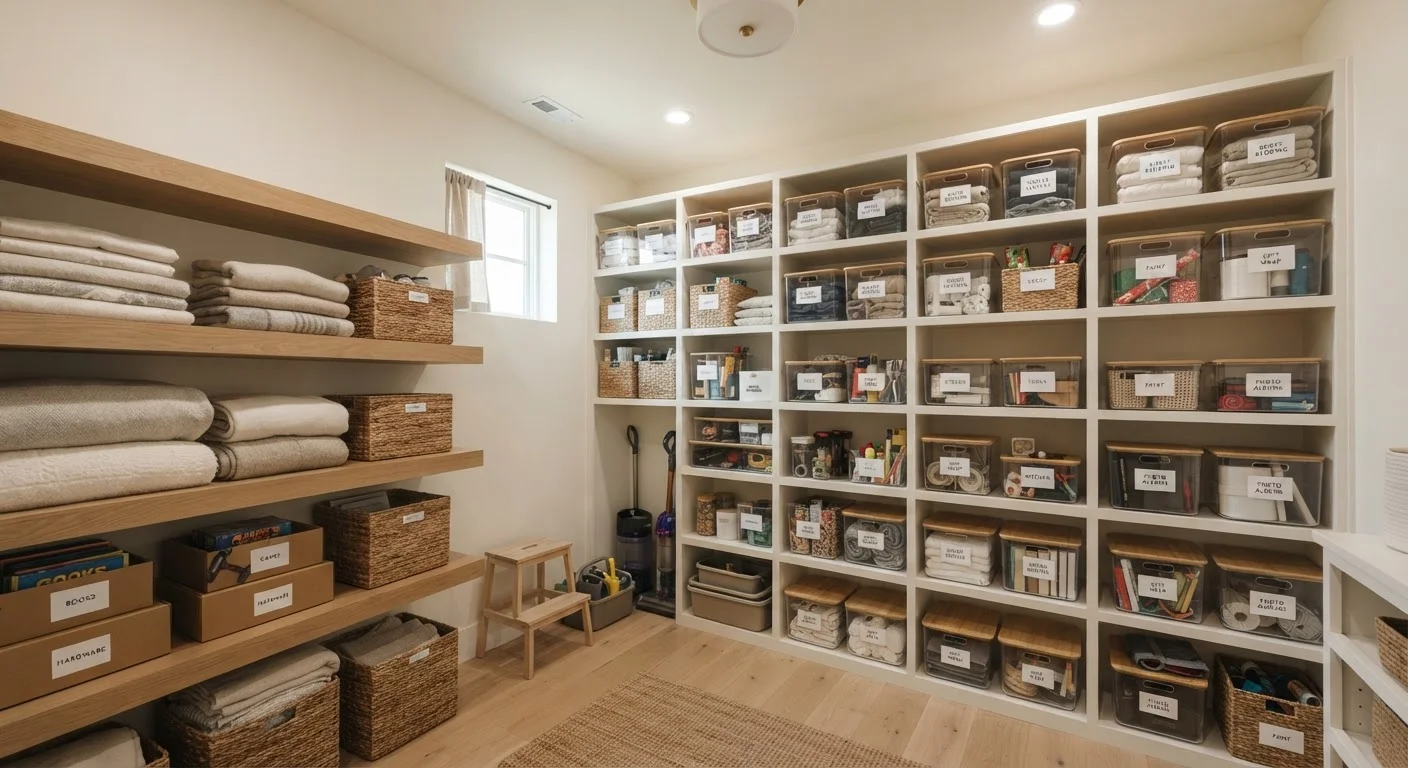
Key Takeaways
Option A
Vertical Storage
The height-maximizing, floor-space-saving approach.
Best for: Smaller rooms, narrow footprints, or any space where floor area is too valuable to sacrifice.
Option B
Horizontal Storage
The accessible, spread-out layout for ease of reach.
Best for: Spaces with generous square footage, low ceilings, or households prioritizing ergonomic, eye-level access.
If you have a small apartment or limited floor space
Vertical Storage
Tall shelving units draw the eye upward and free up floor area, making compact rooms feel larger and more functional.
If you need frequent, effortless access to everyday items
Horizontal Storage
Items stored at eye or waist level are quicker to find and retrieve without crouching, stretching, or using a step stool.
If you're organizing a kitchen with minimal counter space
Vertical Storage
Wall-mounted racks, tall pantry shelves, and stacked organizers make full use of kitchen wall height without consuming precious countertop area.
If you share your home and need a system everyone can use intuitively
Horizontal Storage
Spread-out, visible storage is easier for multiple household members to navigate consistently, reducing the chance of items being misplaced.
If you want maximum flexibility and efficiency across multiple rooms
Vertical Storage
A hybrid approach leaning vertical for bulk and rarely used items - combined with targeted horizontal zones - delivers the strongest overall results.
How Each Layout Uses Your Space Differently
The fundamental difference between vertical and horizontal storage is which dimension they prioritize. Vertical storage climbs upward - wall shelves, tall bookcases, stacked bins, and pegboards all use ceiling height rather than floor area. Horizontal storage spreads outward - wide dressers, under-bed organizers, long open shelving at counter height, and lateral filing systems all trade floor real estate for accessibility.
Neither orientation is inherently superior. What matters is how a room's proportions, your household's daily habits, and the specific items you're storing interact with each layout. A studio apartment with nine-foot ceilings has an entirely different storage calculus than a basement with a low ceiling and generous square footage.
One useful starting point: measure the wall height you actually have available, then map out which items you access daily versus which items are seasonal or rarely needed. That distinction alone will steer most storage decisions more reliably than any general rule. For a structured approach to assigning functions to different areas, zone-based organization is worth exploring before you commit to either layout.
| Criterion | Vertical Storage | Horizontal Storage |
|---|---|---|
| Space used | Wall height; minimal floor footprint | Floor or surface area; wider spread |
| Accessibility | Variable; upper shelves need a step stool | High; items at eye or waist level |
| Best item type | Seasonal, bulk, rarely used items | Daily-use, frequently accessed items |
| Ideal room profile | Small rooms with tall ceilings | Larger rooms or low-ceiling spaces |
| Safety considerations | Keep heavy items low; anchor tall units to wall | Generally stable; watch for tripping hazards |
| Visual impact | Draws eye upward; can feel dramatic | Wide and grounded; easier to keep tidy-looking |
| Shared household usability | Can be harder for shorter household members | More universally accessible at varied heights |
Where Vertical Storage Has the Clear Advantage
Vertical storage shines in rooms where floor space is a non-negotiable asset. In small kitchens, reaching upward with tall pantry units or wall-mounted spice racks preserves the countertop area that makes cooking functional. If counter clutter is a persistent problem, organizing a small kitchen with vertical strategies can make a measurable difference without any structural changes.
Garages and utility rooms often benefit most dramatically from vertical shelving. Stacking bulk items from floor toward ceiling - with heavier loads on lower shelves for safety - can double usable capacity without expanding the room's footprint at all.
There are limits, however. Items stored above shoulder height require a step stool or ladder to retrieve safely, which makes vertical positioning a poor choice for anything you reach for every day. Reserve upper vertical space for seasonal items, backstock, or anything used less than once a month.
~35%
Unused vertical space in typical homes
Home organization research commonly estimates that a significant share of wall height above six feet goes unused in most American households, representing untapped storage capacity.
2×
Capacity gain from floor-to-ceiling shelving
Converting a standard mid-height shelving unit to a floor-to-ceiling configuration in the same footprint can roughly double the volume of items stored, depending on ceiling height.
18-54 in
Ergonomic reach zone for most adults
Occupational health guidelines generally identify the zone between 18 and 54 inches from the floor as the most efficient and comfortable storage height for frequent retrieval.
Where Horizontal Storage Earns Its Place
Horizontal layouts prioritize ergonomics and visibility. When items are arrayed at eye or waist level across a wider surface, they're faster to scan, quicker to grab, and less likely to be forgotten. This makes horizontal storage particularly effective for frequently used collections - a low dresser in a bedroom, a wide drawer organizer in a home office, or open shelving at counter height in a kitchen.
Horizontal storage also tends to be more intuitive in shared spaces. When multiple people maintain the same storage system, visible, spread-out layouts reduce the friction of remembering where things go. If your household navigates disagreements about tidiness or organization systems, a low-barrier horizontal layout can minimize daily conflict over where items belong - a dynamic explored further in organizing shared spaces with different standards.
Horizontal storage does consume more floor or surface area, which is its primary constraint. In rooms already pressed for space, every horizontal unit added represents a trade-off against open movement and air flow.
Combining Both Approaches for Maximum Efficiency
The most practical home storage systems don't pick a side - they assign each orientation to tasks it handles well. A common and effective pattern: use vertical storage for bulk, backup, and seasonal items; use horizontal storage for everyday essentials at accessible heights.
In a living room, for example, tall built-in or freestanding shelves can house books, display pieces, and media - while a low horizontal console or cabinet holds the remote, coasters, and items reached every evening. In a bedroom closet, vertical stacking of storage bins above the rod frees horizontal rod space for hanging clothes at an easy reach.
Kitchens offer perhaps the richest opportunity to blend both. Open shelving at eye level - explored in depth in open shelving in kitchens - keeps daily dishes accessible, while tall pantry columns or wall-mounted systems handle bulk and less-used items higher up. Understanding how the two orientations complement each other allows you to treat storage as a system rather than a collection of individual decisions - which is ultimately what separates a room that functions smoothly from one that just holds stuff.
A Safety Note on Tall Shelving Units
Freestanding vertical shelving units - especially those reaching above six feet - should be anchored to wall studs to prevent tipping. This is particularly important in households with children or in earthquake-prone regions. Always check manufacturer guidance and, where structural questions arise, consult a qualified professional before installation.