

Key Takeaways
Makes kitchens feel larger and more open
Removing upper cabinet bulk opens sightlines and allows light to move through the room more freely, which is especially noticeable in smaller kitchens.
Everything in daily use stays visible and reachable
Frequently used items require no searching - they're immediately visible, which can reduce the time spent locating dishes and glasses during meal prep.
Often less expensive to install than full cabinets
Simple shelf brackets and boards can cost a fraction of factory-built upper cabinets, making open shelving an accessible option for budget-conscious updates.
Encourages keeping only what you use regularly
Visible storage creates natural pressure to reduce clutter, which can be a useful prompt for households working to pare down excess kitchenware.
Grease and dust accumulate on exposed items
Cooking releases airborne grease particles and steam that settle on open shelves and everything on them, requiring more frequent cleaning than closed storage.
Requires consistent, curated organization to look good
The visual appeal of open shelving depends entirely on what's displayed - mismatched, cluttered, or overflow items undermine the effect almost immediately.
Significantly less total storage volume
Upper cabinets hold items that don't need to be visible; open shelves do not accommodate the same volume without appearing chaotic or overcrowded.
Costly and disruptive to reverse
Removing structural cabinets often requires wall patching, outlet relocation, and repainting - returning to closed storage is not a minor undertaking.
Works poorly for households with diverse tidiness standards
When multiple people use a kitchen with different habits, open shelves make disagreements about organization immediately visible rather than containable behind closed doors.
Our Verdict
Open shelving delivers genuine visual appeal and practical accessibility, but it transfers the burden of organization from behind closed doors to plain sight. For households willing to curate what they keep and maintain a tidy display, the trade-off can work well. For those who prefer to close the door on kitchen clutter, the reality of open shelves often disappoints.
Homeowners with limited dishware, a consistent tidiness habit, and a desire to make a small or dark kitchen feel more open and personalized.
Why Open Shelving Has Staying Power
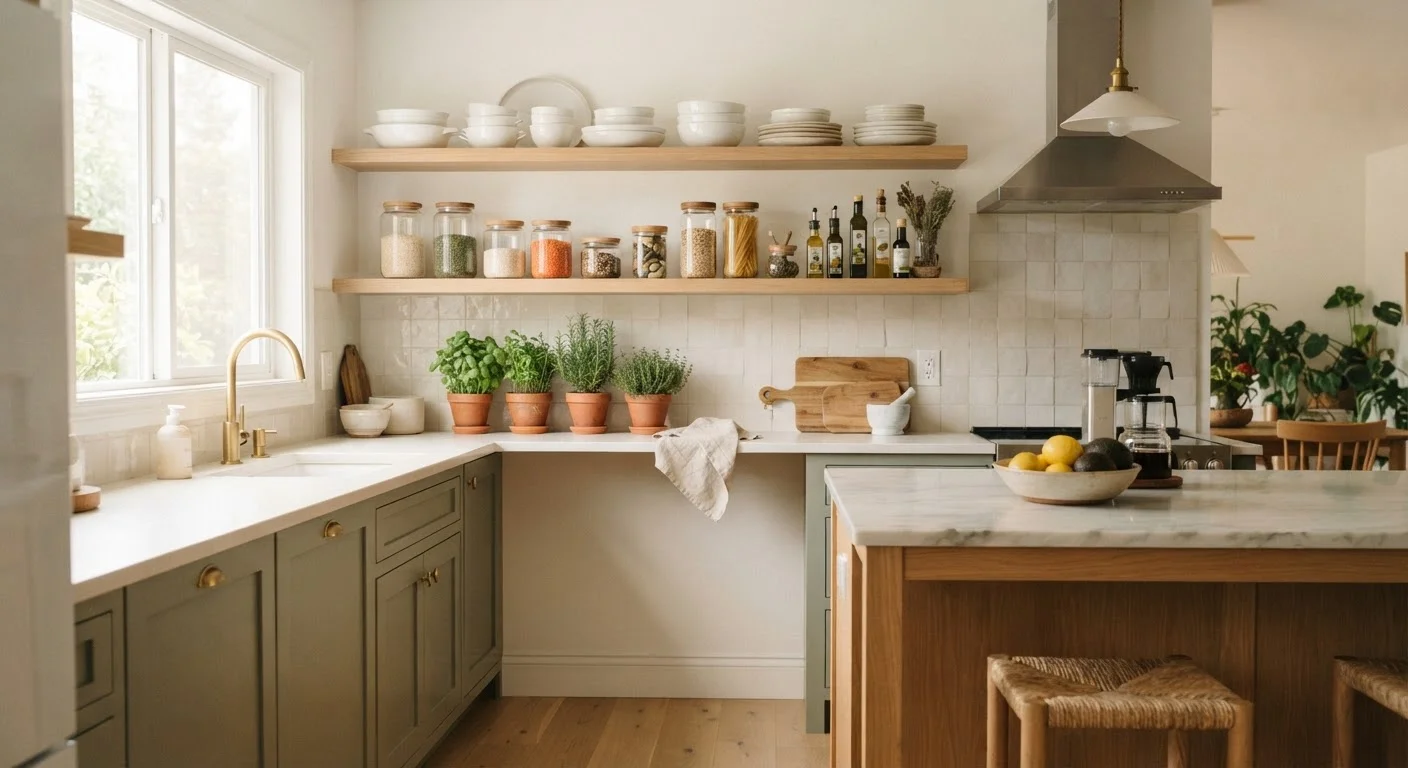
Open shelving has moved in and out of kitchen design trends for decades, but its appeal is rooted in something practical: it makes a kitchen feel less boxed in. Removing upper cabinet doors - or the cabinets themselves - opens sightlines, brings in light, and turns everyday objects into part of the room's visual character. For smaller kitchens especially, that sense of visual breathing room matters. See the organizing a small kitchen guide for related strategies on making compact spaces work harder.
The appeal also has a functional side. Items stored on open shelves are immediately visible and reachable - no rummaging behind cabinet doors or forgetting what's pushed to the back. For frequently used dishes, glasses, and pantry staples, that accessibility is a genuine daily convenience.
But the decision to go open is rarely as simple as lifting the doors off the hinges. What changes in the kitchen once the cabinets come down touches storage capacity, cleaning routines, organization habits, and even household dynamics.
The Real Advantages
Makes kitchens feel larger and more open
Removing upper cabinet bulk opens sightlines and allows light to move through the room more freely, which is especially noticeable in smaller kitchens.
Everything in daily use stays visible and reachable
Frequently used items require no searching - they're immediately visible, which can reduce the time spent locating dishes and glasses during meal prep.
Often less expensive to install than full cabinets
Simple shelf brackets and boards can cost a fraction of factory-built upper cabinets, making open shelving an accessible option for budget-conscious updates.
Encourages keeping only what you use regularly
Visible storage creates natural pressure to reduce clutter, which can be a useful prompt for households working to pare down excess kitchenware.
The visual lift open shelving provides is often immediate. A wall of upper cabinets can dominate a kitchen; removing them creates a lighter, more connected feel. For renters or homeowners doing budget-conscious updates, open shelves can also cost significantly less to install than full upper cabinet runs - especially when working with salvaged wood or simple bracket systems.
Accessibility is another underrated benefit. When every item is visible, household members are more likely to put things back in their designated spot - particularly if the display is simple enough that misplaced items are obvious. This connects to broader home organization principles about visibility driving behavior.
The Honest Disadvantages
Grease and dust accumulate on exposed items
Cooking releases airborne grease particles and steam that settle on open shelves and everything on them, requiring more frequent cleaning than closed storage.
Requires consistent, curated organization to look good
The visual appeal of open shelving depends entirely on what's displayed - mismatched, cluttered, or overflow items undermine the effect almost immediately.
Significantly less total storage volume
Upper cabinets hold items that don't need to be visible; open shelves do not accommodate the same volume without appearing chaotic or overcrowded.
Costly and disruptive to reverse
Removing structural cabinets often requires wall patching, outlet relocation, and repainting - returning to closed storage is not a minor undertaking.
Works poorly for households with diverse tidiness standards
When multiple people use a kitchen with different habits, open shelves make disagreements about organization immediately visible rather than containable behind closed doors.
The most consistent complaint from households that switch to open shelving is the cleaning load. Grease particles and cooking vapor settle on every exposed surface, including dishes sitting on shelves near the stove. Items used infrequently collect dust. What looks styled in a showroom requires real maintenance in a working kitchen.
Storage capacity is the other major trade-off. Upper cabinets are volume storage - they hold the mismatched mugs, the rarely used serving dish, the extra canned goods. Open shelves reward curation, which means many households find themselves with nowhere practical to put the overflow. For more on navigating shared household storage standards, the shared spaces organizing guide offers grounded perspective.
~30%
Typical upper cabinet storage lost when switching fully open
Kitchen designers generally estimate that removing full upper cabinet runs eliminates roughly a quarter to a third of enclosed storage volume in an average kitchen layout.
2-3×
More frequent cleaning needed for open shelf items near stovetop
Items stored within two feet of cooking surfaces collect grease residue at a meaningfully higher rate than those in enclosed cabinets, according to general home maintenance guidance.
The commitment level also deserves consideration. Removing structural upper cabinets typically means patching walls, potentially relocating electrical outlets, and a meaningful cost to reverse course. It is not a change most homeowners undo casually.
Making the Decision: Questions Worth Asking First
Before pulling cabinets down, a candid assessment of your household's habits matters more than the aesthetic outcome. Consider how much dishware you actually own and use regularly, how often you cook in ways that produce grease or steam, and whether everyone in the household is likely to maintain a displayed-level of order - not just when guests visit.
The honest pros and cons of minimalism at home covers related territory: when a streamlined aesthetic works in practice versus when it creates friction. Open shelving has the same dynamic. It rewards households that have already pared back, not those hoping the shelves will encourage them to.
A hybrid approach - open shelving on one wall, closed cabinets on another - preserves flexibility and is worth considering before committing fully. Vertical storage planning can help you think through which walls and configurations work hardest for your space.
Consider a Temporary Trial Before Committing
Rather than immediately removing cabinets, try living with the doors taken off for four to six weeks. This simulates the open-shelf experience - including the dust and organization demands - without structural changes. If the reality matches the appeal, you can proceed with more confidence. If not, the doors go back on at no cost.