

Key Takeaways
Why Popular Organizing Advice Sometimes Backfires
Home organization advice is everywhere - in social media feeds, bestselling books, and weekend workshop flyers. Much of it is genuinely helpful. But some widely shared tips create extra work, trigger unnecessary spending, or set expectations so unrealistic that most people give up entirely.
The problem isn't that people lack discipline. It's that certain popular ideas are built around an idealized version of a household rather than how real homes actually function day to day. Understanding what 'organized' actually means for your household is the first step toward systems that genuinely stick.
The myths below are among the most commonly repeated - and the most likely to cost you time rather than save it.
Myth
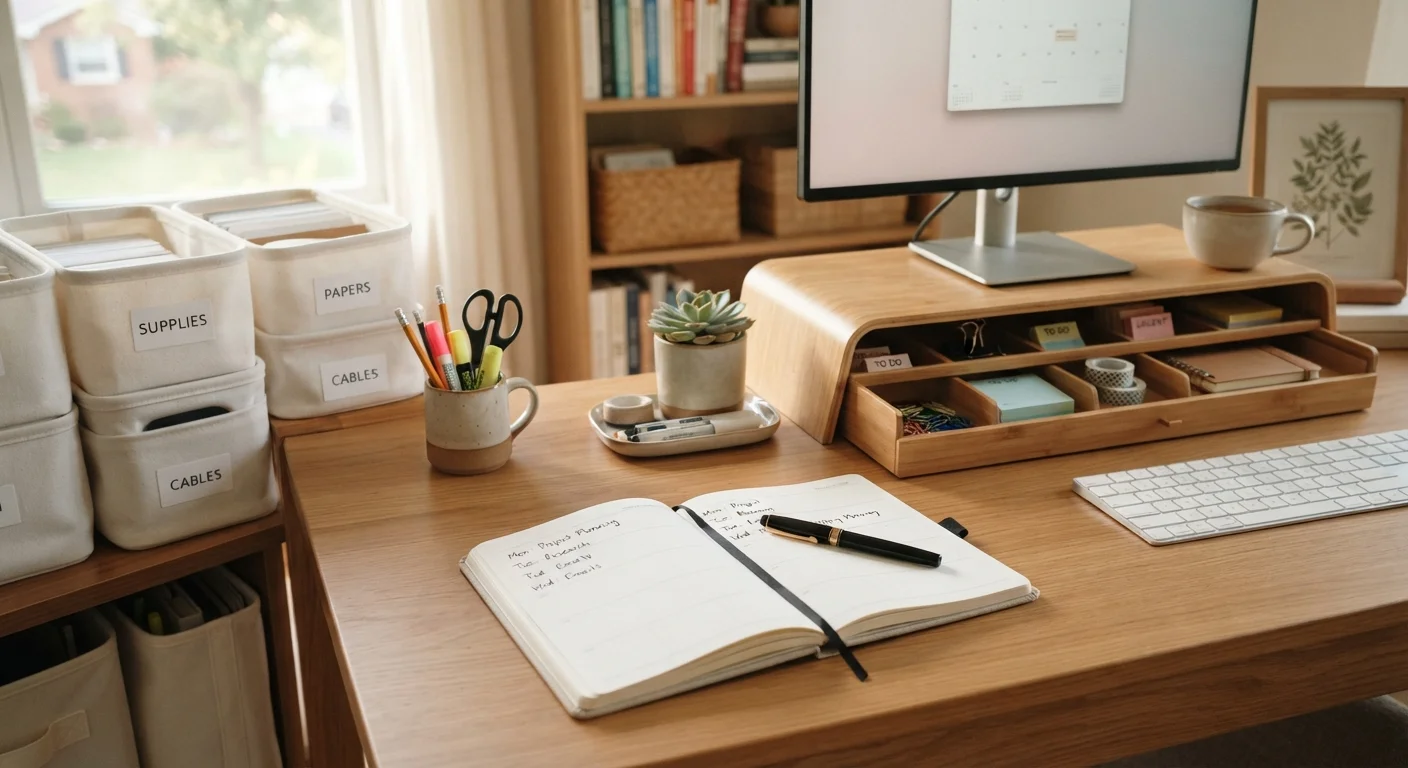
Everything needs a labeled bin or container to be truly organized.
Fact
Containers help only when the categories match how you actually retrieve items - labeling for its own sake adds maintenance without improving function.
Buying matching bins and labeling every shelf feels productive, but if the categories don't reflect how your household searches for things, the labels get ignored. A single drawer where everyone reliably drops chargers beats six labeled compartments that nobody sorts correctly. Start with behavior, then add containers where they solve a real friction point.
Myth
A big weekend overhaul is the most effective way to get organized.
Fact
Research on habit formation consistently shows that small, repeated actions build more durable routines than single large efforts.
The appeal of a one-day purge is understandable, but decision fatigue sets in quickly when you're evaluating hundreds of items at once. Most all-day declutter sessions end with unfinished piles and an exhausted household. Fifteen minutes of focused attention on one area - a drawer, a shelf, a cabinet - repeated consistently, tends to produce more lasting results without the burnout.
Myth
If it's visible, it's clutter.
Fact
Visibility and disorder are not the same thing. Items used daily often function better in open, accessible storage than tucked out of sight.
The aesthetic preference for hidden storage has practical limits. A coffee mug on an open shelf you reach for every morning is not clutter - it's efficient placement. Hiding frequently used items behind cabinet doors can actually slow down routines and lead to surfaces being used as temporary landing zones anyway. Reserve concealed storage for items used infrequently or items that genuinely benefit from being out of sight.
Myth
You need to organize everything before you can start maintaining order.
Fact
Waiting for a 'perfect' starting point is one of the most common reasons organizational projects stall indefinitely.
Perfectionism masquerading as preparation is a real obstacle in home organization. The idea that you must first sort every room completely before any system can work keeps many households stuck. In practice, implementing even one reliable routine - like a consistent spot for keys or a weekly five-minute counter reset - creates immediate benefit and builds momentum for larger changes over time.
Myth
More storage space means better organization.
Fact
Additional storage typically expands what people accumulate rather than solving underlying disorganization.
Adding shelves, cabinets, or storage units to a disorganized space tends to delay rather than resolve the underlying problem. Without a system for what comes in and what leaves, new storage fills up just as quickly as the old space did. Reducing volume - being selective about what stays - is usually more effective than increasing capacity.
Myth
Organization systems need to be complex and detailed to work.
Fact
Simpler systems with fewer decision points are consistently maintained at higher rates than elaborate ones.
A system with many sub-categories, color codes, and rules creates more opportunities for items to end up in the wrong place - and more friction when you're in a hurry. The most durable organizational habits tend to be the ones that require the least thought to follow. Broad categories, obvious homes for items, and routines that take under two minutes are the hallmarks of systems real households sustain long-term.
Building Systems That Actually Last
The most effective organizational systems share one trait: they are sized to your actual life, not a Pinterest-perfect ideal. That means fewer categories, less hardware, and more honest assessment of how you and your household members behave naturally.
If you want to explore structured approaches before committing, an honest look at popular home organization frameworks can help you match a method to your specific situation rather than adopting one by default.
~2.5 hrs
Average time lost per week to disorganization
Studies on workplace and household productivity suggest adults lose roughly 2-2.5 hours per week searching for misplaced items or managing disorganized spaces.
~23%
People who feel disorganized at home regularly
Surveys by home organization researchers indicate roughly one in four US adults describes their home as regularly disorganized in ways that affect daily routines.
It's also worth understanding the real costs at stake. Disorganization isn't only a visual problem - the hidden costs of disorganization go well beyond a messy room, including lost time, duplicate purchases, and elevated daily stress. That context makes it easier to prioritize which organizational habits are worth your energy and which popular myths you can safely ignore.
If you're building household systems from the beginning, a ground-up guide for first-time households offers a practical starting framework before habits become harder to change.
The Best System Is One You'll Actually Use
No organizational framework - however elegant or well-reviewed - delivers results if it doesn't fit your household's real patterns. Before investing in storage products or committing to a specific method, spend a week observing where friction actually occurs. That honest audit is more valuable than any trend-driven approach.