

Key Takeaways
Start here
Why Organization Matters From Day One
Next
Start With a Zone-Based Approach
Then
The Paper and Document Problem
Apply it
Kitchen and Pantry Systems That Stick
Keep it going
Maintaining Order Over Time
Why Organization Matters From Day One
Moving into a new home - whether it's your first apartment, a rented house, or a place you've purchased - is one of the best opportunities you'll ever have to build solid organizational habits. Spaces without established systems fill with clutter quickly, and retrofitting order into an already chaotic home takes far more effort than setting things up correctly from the start.
Organization isn't about perfection or aesthetics. It's about reducing daily friction: knowing where your keys are, finding documents when you need them, and keeping shared spaces functional for everyone who lives there. Small, well-designed systems compound over time - the five minutes you invest setting up a mail-sorting station now can save hours of searching and stress over the months ahead.
If you're simultaneously working out how to manage household finances, it's worth reading our guide to building your first household budget alongside this one - financial and physical organization reinforce each other in practical ways.
Zone-based organization
A system that divides a home into areas defined by function, so every item has an assigned location based on where it's actually used.
Daily reset
A short, consistent routine - typically five to ten minutes - of returning items to their designated spots to prevent clutter from building overnight.
Action tray
A designated spot, usually a tray or inbox, where incoming items requiring a response or decision are placed temporarily until dealt with.
Declutter
The process of deliberately removing items from a space that are no longer needed, used, or wanted, to reduce excess and create clarity.
Storage zone
A defined area within a room where a specific category of items is kept, making it easy to locate things and return them after use.
Start With a Zone-Based Approach
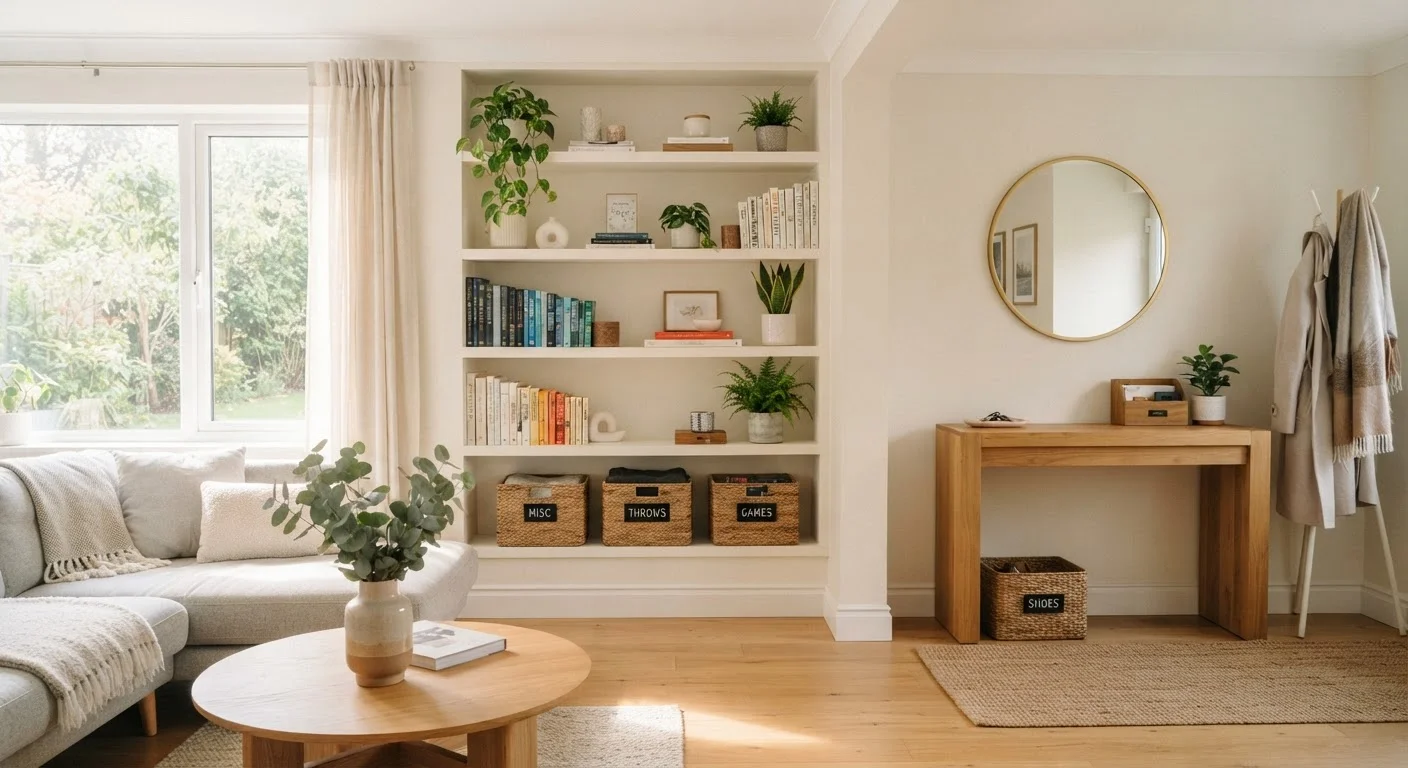
Zone-based organization divides your home into functional areas - each zone has a defined purpose and holds only items that serve that purpose. Common zones include: entryway (keys, bags, outerwear), kitchen (food prep and storage), office or paperwork corner, bathroom, and bedroom storage.
To set up your zones, walk through each room and ask: What activities happen here, and what items do those activities require? Anything that doesn't belong in a zone gets relocated or removed. This simple audit often surfaces duplicates and forgotten items that can be donated or discarded immediately.
Zones work best when storage within them is visible and easy to access. Open baskets, hooks at eye level, and drawer dividers all reduce the effort of putting things away - which is the moment most organization systems break down. If returning an item to its home takes more than a few seconds, the system will eventually be ignored.
Label Before You Buy More Storage
Before purchasing bins or organizers, complete your declutter and assign zones. Many households find that removing excess items frees enough existing space without any additional storage purchases. Buy only what a specific, identified need requires - not in anticipation of future clutter.
The Paper and Document Problem
Paper is the silent enemy of organized households. Unopened mail, instruction manuals, warranty cards, school notices, and receipts accumulate rapidly and quickly overwhelm surfaces. A simple three-category system handles most of what comes through the door: action required (bills, forms to complete), to file (important records to keep), and recycle or shred (everything else).
For important documents - leases, insurance policies, medical records, vehicle titles - a single accordion folder or binder organized by category is sufficient for most households. Digital scanning of critical papers provides a useful backup and reduces physical bulk over time.
Establish a weekly habit of clearing your action tray. Letting it build for more than a week means deadlines get missed and the pile becomes psychologically daunting. Even ten minutes on a consistent day each week is enough to keep paper from taking over.
Kitchen and Pantry Systems That Stick
The kitchen is the most-used room in most homes and the area where disorganization has the most immediate daily impact. A few structural decisions early on make a lasting difference.
Group pantry items by category - grains, canned goods, snacks, baking supplies - and position the categories you use most at eye level. When everything has an assigned spot, restocking after a grocery run takes minutes rather than becoming a puzzle. Labeling shelves (even just with masking tape and a marker) removes any ambiguity about where things go, which matters especially in multi-person households.
In the kitchen proper, keep counters as clear as possible. Store appliances you use less than twice a week in cabinets. A cluttered counter is harder to clean and signals disorder that tends to spread. Drawer inserts for utensils and a consistent pot-and-pan arrangement in lower cabinets are small investments that eliminate daily frustration.
For households growing in complexity - particularly once children are involved - our article on decluttering with kids in the house addresses how to adapt these systems as needs evolve.
Organization Methods Vary - Pick What Fits
There's no universally correct way to organize a home. What matters is that your system is simple enough that you and everyone in your household will actually use it day to day. If a highly structured approach feels restrictive, a looser zone-based system may serve you better. Experiment and adjust rather than committing rigidly to any single method.
Maintaining Order Over Time
No organizational system maintains itself. The difference between households that stay organized and those that don't is usually a small set of daily and weekly habits - not heroic weekend cleanups.
A nightly reset of five to ten minutes - returning items to their zones, clearing surfaces, and checking tomorrow's action items - prevents small disorder from compounding into overwhelming clutter. This works best when everyone in the household participates, even briefly.
Seasonally, reassess what you own. Households accumulate new items constantly, so older items need to be deliberately evaluated and removed to keep storage from overflowing. This is also a good time to review whether your systems still suit your current lifestyle - needs change, and a system that worked last year may need adjustment now.
For a deeper dive into the frameworks that underpin different organizational philosophies, our honest overview of home organization systems can help you refine your approach as your household evolves.