

Key Takeaways
Our Verdict
Most cosmetic and maintenance tasks are genuinely DIY-friendly, but work touching electrical systems, gas lines, structural elements, or the main plumbing supply belongs with licensed tradespeople. The distinction isn't about skill level alone - it's about safety, code compliance, and protecting your home's value long term.
| Best for | Recommended |
|---|---|
| Homeowners comfortable with tools and basic repairs | DIY approach |
| Any project involving electrical panels, gas, or structural walls | Licensed professional |
| Work that requires permits or inspections in your municipality | Licensed professional |
| Cosmetic upgrades like painting, caulking, or tile replacement | DIY approach |
The Real Dividing Line Between DIY and Licensed Work
Not every home repair is created equal. Swapping a light switch cover, patching drywall, or refreshing grout are tasks most attentive homeowners can handle safely with the right preparation. But the moment a project intersects with your home's primary systems - electrical wiring, gas supply, structural framing, or mains plumbing - the risk profile changes dramatically.
The dividing line isn't purely about technical complexity. It's about three overlapping concerns: physical safety, local building codes, and the legal standing of completed work. In most U.S. jurisdictions, certain categories of work require both a licensed contractor and a permit issued by the local building authority. Completing that work without both can expose you to fines, forced removal, or complications when you sell the home.
Before starting any project, check your local municipality's requirements. What's permitted for homeowner self-completion varies by state and county, and the rules are not always intuitive. Our guide on hidden renovation costs covers permit fees and inspection expenses that DIYers frequently underestimate.
| Task Type | DIY-Appropriate | Requires Licensed Pro | |
|---|---|---|---|
| Painting walls and trim | Yes | No | |
| Replacing outlets or switches (existing circuit) | Often, varies by state | Check local code first | |
| Electrical panel upgrades or new circuits | No | Yes - always | |
| Gas line work of any kind | No | Yes - always | |
| Removing or altering walls | Cosmetic only | Yes if structural | |
| Toilet or faucet replacement | Generally yes | Not typically | |
| Connecting to main plumbing supply/drain stack | No | Yes in most jurisdictions | |
| Subfloor or joist repair | Minor patching only | Yes if structural |
Categories That Consistently Require a Licensed Tradesperson
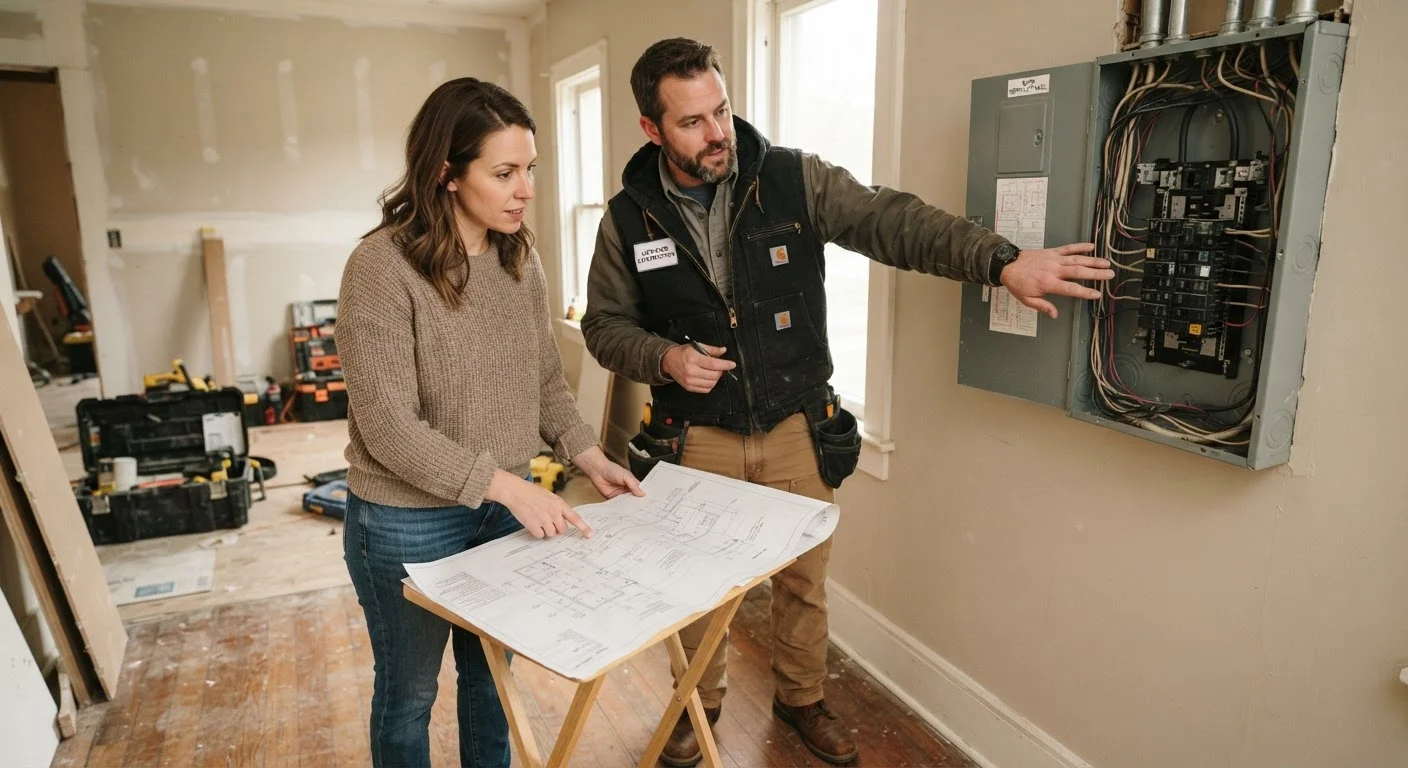
Electrical panel work and new circuits. Replacing a breaker, upgrading a panel from 100 to 200 amps, or running a new circuit to a garage or kitchen island all fall under licensed electrician territory in virtually every state. The consequences of improper wiring range from failed inspections to house fires. This is not a gray area.
Gas line installation and repair. Whether it's adding a gas line to a new range location or repairing a suspected leak, gas work requires a licensed plumber or gas fitter. Natural gas and propane leaks are invisible and can accumulate to explosive concentrations. No amount of YouTube confidence makes this DIY-appropriate.
Structural modifications. Removing or altering a wall - especially one that may bear load - demands professional assessment before any work begins. Our article on understanding load-bearing walls explains how these elements are identified and why guessing wrong has serious structural consequences.
Main plumbing supply and drain connections. Replacing a faucet or a toilet fill valve is generally DIY-friendly. Tying into the main supply line, relocating drain stacks, or working on sewer connections is not - most jurisdictions require a licensed plumber and an inspection.
Permits Protect You - Not Just the Inspector
A building permit creates a documented record that work was completed to code and inspected by a qualified official. This record travels with the home and protects future owners as well as your current insurance coverage. Skipping a permit to save time or money often creates a larger financial liability than the permit itself would have cost.
When a DIY Task Crosses Into Regulated Territory
Some projects start squarely in DIY territory and drift into regulated work as the scope grows. Installing a ceiling fan on an existing circuit with a rated box is typically fine for a competent homeowner. Discovering there's no existing switch leg and deciding to run new wire mid-project pushes the work into licensed-electrician territory in most states.
Similarly, replacing a damaged tile is cosmetic. Discovering that water has rotted the subfloor beneath it and deciding to sister in new joists turns a weekend project into a structural repair that may require a permit and inspection.
The practical rule: define the full scope of a project before starting, not as you go. If that scope could expand into a regulated category, price out professional involvement upfront. Stopping partway through a permitted project is costly, and partially completed unpermitted work is worse. Staying organized with a seasonal maintenance checklist can help you catch small issues before they become scope-creep candidates.
What Skipping a Professional Can Actually Cost You
The appeal of DIY is real: labor costs are eliminated, and the satisfaction of self-completion has genuine value. But unpermitted or non-code-compliant work carries costs that accumulate quietly.
- Insurance implications: Homeowner's insurance policies often exclude damage caused by unpermitted work. A fire traced to DIY wiring may result in a denied claim.
- Sale complications: Real estate disclosures in most states require sellers to identify unpermitted improvements. Buyers' inspectors routinely flag these, leading to renegotiation or required remediation before closing.
- Mandatory removal: Local building departments can require unpermitted structural or electrical work to be opened up, inspected, and potentially rebuilt to code - at the homeowner's expense.
For projects that are genuinely within DIY scope, precision matters. Even straightforward measuring tasks have a learning curve - our tape measure guide is a useful reference before cutting materials.
This article provides general home improvement information for educational purposes only. Building codes, permit requirements, and licensing rules vary by location. Always verify requirements with your local building authority and consult a licensed professional before undertaking work that may affect your home's structure, electrical system, gas supply, or plumbing.