

Key Takeaways
Option A
Caulk
The flexible, waterproof gap-filler for movement-prone joints.
Best for: Best for sealing corners, transitions, and joints where two surfaces meet at an angle or where slight movement is expected.
Option B
Grout
The rigid, uniform filler that locks tiles in place.
Best for: Best for filling the joints between tiles on flat, stable surfaces such as floors, walls, and backsplashes.
If you are filling the joints between tiles on a flat bathroom floor or shower wall
Grout
Grout provides the rigid, uniform fill needed between tiles on stable surfaces and is available in sanded and unsanded formulations to match different joint widths.
If you are sealing an inside corner where a tiled wall meets the tub or shower floor
Caulk
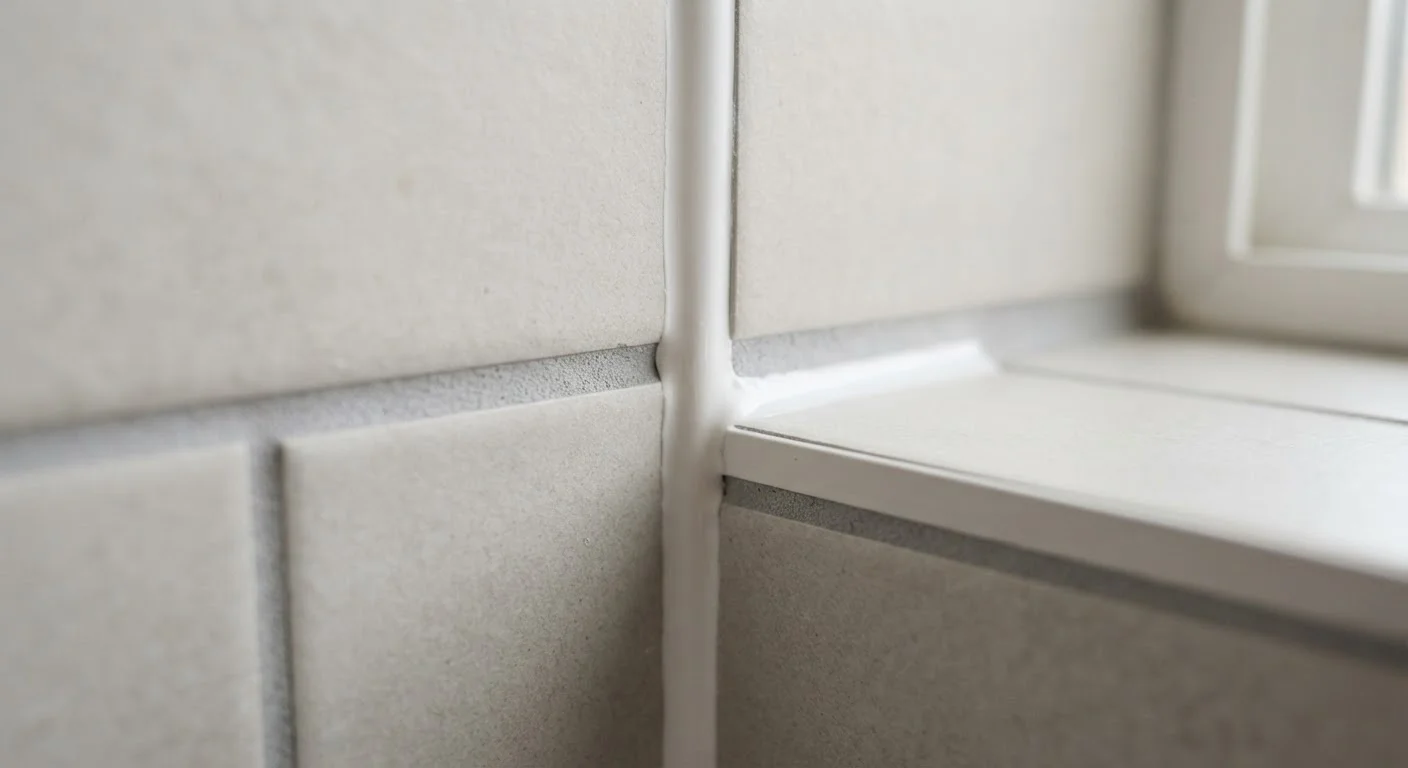
Corner joints experience movement from both surfaces; flexible caulk absorbs that movement without cracking, keeping the seal watertight over time.
If you are finishing the joint where tile meets a different material such as a countertop or wood trim
Caulk
Transitions between dissimilar materials expand and contract at different rates, making a flexible caulk seal far more durable than rigid grout.
If you notice hairline cracks forming in an existing grout joint at a corner
Caulk
Recurring cracks at corners signal ongoing movement; removing the grout and replacing it with caulk resolves the root cause rather than patching a symptom.
What Each Material Is - and Is Not
Caulk and grout are both used in tiling projects, but they are chemically and structurally different materials designed for distinct jobs. Confusing them is one of the most common - and most consequential - mistakes in bathroom and kitchen repairs.
Grout is a cement-based (or sometimes epoxy-based) compound that hardens to a rigid, stone-like finish. It is formulated to fill the narrow joints between tiles, creating a uniform, load-bearing surface that resists foot traffic and everyday wear. Once cured, grout does not flex.
Caulk is a polymer-based sealant - most commonly silicone or latex - that remains pliable after curing. That flexibility is its defining feature: caulk can compress and stretch slightly as building materials shift with temperature changes, moisture, and the natural settling of a structure. It also forms a fully waterproof bond at the surface where it is applied.
For a deeper look at how grout fits into a full tile installation, see our step-by-step floor tiling guide.
| Criterion | Caulk | Grout |
|---|---|---|
| Flexibility after curing | Remains pliable and flexible | Hardens to a rigid finish |
| Primary use location | Corners, edges, transitions | Between tiles on flat surfaces |
| Waterproofing | Fully waterproof seal | Requires sealer for water resistance |
| Handles structural movement | Yes - absorbs expansion and flex | No - cracks under movement |
| Typical lifespan in wet areas | 3-7 years before reapplication | 10+ years with periodic sealing |
| Common base material | Silicone or latex polymer | Portland cement or epoxy |
| DIY repair difficulty | Low - straightforward to replace | Moderate - requires grout saw |
The Rule: Where Each One Belongs
A reliable rule of thumb used by professional tile setters is this: grout fills flat joints between tiles; caulk seals any joint where two planes meet or where tile meets a different material.
In practice, that means:
- Use grout between tiles on shower walls, bathroom floors, backsplashes, and countertops - anywhere tile meets tile on a continuous, stable plane.
- Use caulk at inside corners (where a wall meets a floor or where two walls meet), at the joint where a tub deck meets the tiled wall, where tile meets a countertop edge, and anywhere tile transitions to a different material like drywall, wood, or metal trim.
The reasoning is straightforward: inside corners are stress points. When you stand in a shower, the floor flexes ever so slightly. When a room heats up, walls expand. Grout, being rigid, will crack at these joints - often within months. Caulk absorbs that movement and maintains its seal for years when properly applied and maintained.
Matching Caulk Color to Your Grout
Most major caulk product lines offer colors formulated to coordinate with popular grout shades. When selecting caulk, bring a photo of your existing grout or note the grout color name so you can find a close match. A well-matched caulk bead at a corner is nearly invisible to the eye - there is no need to sacrifice aesthetics for performance.
The same logic applies to similar repair dilemmas elsewhere in the home. If you work with wood surfaces, our comparison of wood filler vs. wood putty explains a parallel situation where choosing the wrong product leads to failed repairs.
What Happens When They Are Mixed Up
Applying grout where caulk belongs is the more common error - and the consequences are predictable. Grout in a corner joint will develop hairline cracks as the surfaces shift. Water infiltrates those cracks, reaches the substrate behind the tile, and promotes mold growth and structural damage that can be expensive to remediate.
The reverse mistake - applying caulk between tiles on a flat surface - creates a different problem. Caulk is not designed to bear grout's load or to fill joints uniformly. It tends to sink, discolor, and collect grime more readily than grout, and it can make future repairs more difficult.
~70%
Bathroom water damage linked to failed seals
Industry estimates suggest the majority of water intrusion behind bathroom tile originates at improperly sealed or failed caulk joints rather than through tile faces.
3-7 yrs
Typical caulk lifespan in wet areas
Silicone and siliconized latex caulks in high-moisture environments generally require inspection and possible replacement every three to seven years, depending on use and application quality.
If you spot recurring cracks at a tiled corner, the fix is not to re-grout. The correct repair is to carefully remove the grout with an oscillating tool or grout saw, clean the joint thoroughly, and apply an appropriately colored caulk. Color-matched caulk is widely available and can blend nearly invisibly with most grout shades.
Maintenance and Longevity
Grout in flat tile joints is relatively low-maintenance if sealed periodically with a penetrating grout sealer. Most grout sealer manufacturers recommend reapplication every one to two years in wet areas, though you should follow the specific guidance on any product you use.
Caulk joints in wet areas have a shorter effective lifespan - typically three to seven years depending on material quality, surface preparation, and how much movement the joint experiences. Inspect caulk lines at least once a year, particularly around tubs, showers, and sinks. Signs of failure include peeling, gaps, discoloration, or a musty smell near the joint.
Recaulking is one of the most accessible DIY maintenance tasks in a home: remove the old caulk with a utility knife and a caulk remover tool, clean and dry the surface thoroughly, apply a fresh bead, and smooth it with a wet finger or caulk-finishing tool. Allowing the area to cure fully - usually 24 hours - before exposing it to water is essential for a lasting result.