

Key Takeaways
Why These Myths Are Dangerous
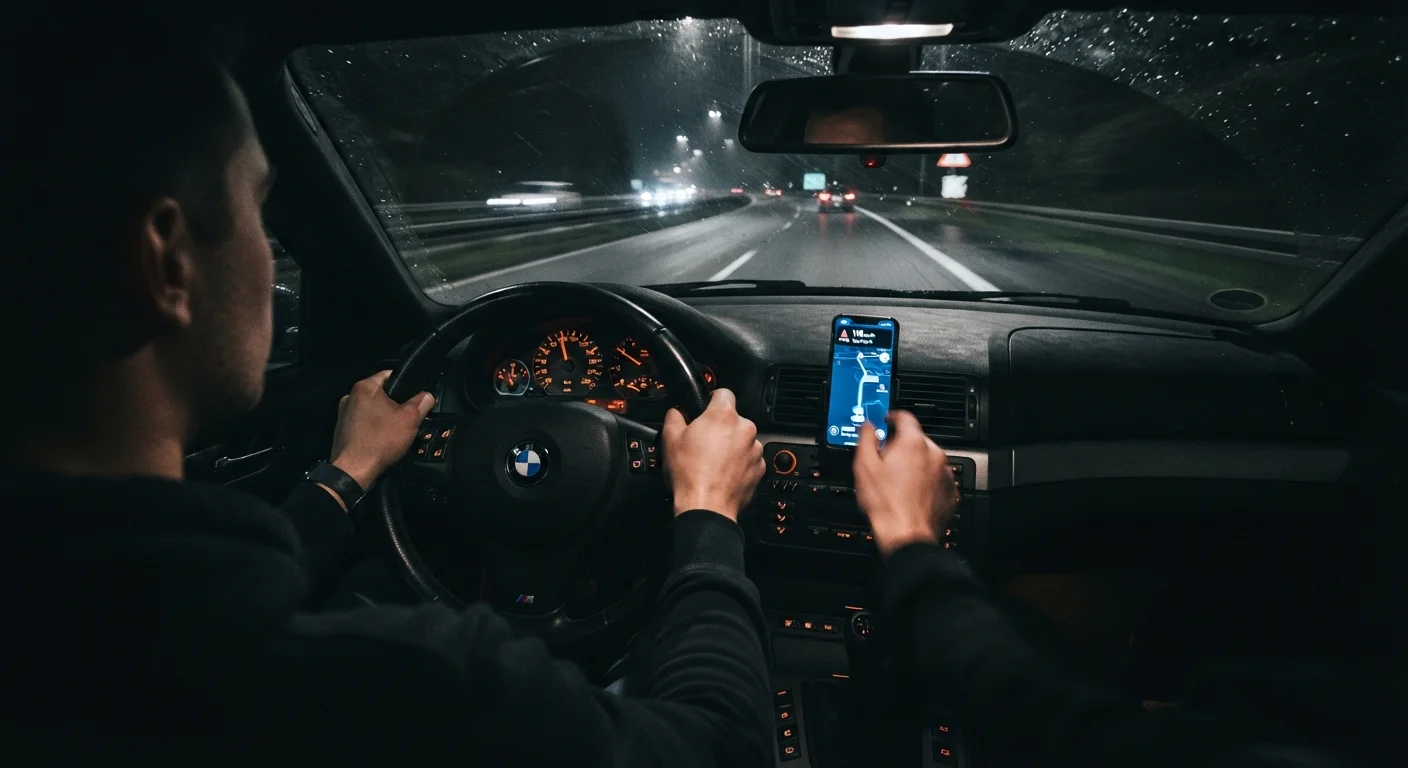
Distracted driving is one of the most preventable causes of traffic crashes in the United States, yet many drivers genuinely believe they are handling it safely. The reason is straightforward: a set of widely shared myths gives drivers permission to keep doing what they're already doing. Unlike fatigue or impairment, distraction feels controllable - and that feeling is exactly what makes it so deceptive.
Research from the National Highway Traffic Safety Administration (NHTSA) consistently links driver distraction to thousands of fatal crashes each year. Understanding where common beliefs diverge from the evidence is the first step toward making real changes. As you'll see below, many of the behaviors drivers consider low-risk carry consequences far beyond what intuition suggests.
For a broader look at how attentional failures behind the wheel compound other risks, see our guide on defensive driving principles.
Myth
Using a hands-free device keeps me safe because my hands stay on the wheel.
Fact
Hands-free calling still creates significant cognitive distraction that degrades driving performance.
The hands-free framing focuses on the wrong variable. The danger of phone use while driving is not primarily mechanical - it's mental. Maintaining a phone conversation requires the brain to construct and hold a mental model of the conversation, pulling cognitive resources away from the road. Research from the AAA Foundation for Traffic Safety found that voice-based tasks can create a measurable period of mental distraction lasting several seconds even after the task ends. A hands-free call keeps your hands on the wheel but does not keep your mind on the drive.
Myth
A quick glance at my phone only takes a second - that's not enough time for anything to happen.
Fact
At 55 mph, a five-second phone glance covers roughly the length of a football field with attention diverted from the road.
NHTSA has used this specific example to illustrate how ordinary a distraction feels versus how significant the exposure actually is. Drivers consistently underestimate both the duration of their glances and the distance traveled during them. At highway speeds, even a two-second look away means the vehicle travels more than 175 feet with the driver not fully processing the road ahead. Traffic conditions can change dramatically in that distance - a merging vehicle, a braking car, or a pedestrian stepping off a curb.
Myth
I've been driving for years, so I can handle a little distraction better than a new driver.
Fact
Experience does not protect against the cognitive costs of distraction, and familiarity with a route can make inattention worse.
Experienced drivers do automate many low-level driving tasks - steering adjustments, routine lane-keeping - but that automation does not free up attention for phone use in any meaningful way. Crash data shows that distraction-related incidents occur across all experience levels. More concerningly, driving a familiar route can actually reduce vigilance, a phenomenon sometimes called "highway hypnosis," making experienced drivers on known roads more susceptible to missing unexpected hazards when their attention is divided.
Myth
Talking to a passenger is just as distracting as using a phone, so there's no real difference.
Fact
Passenger conversations are generally less cognitively demanding than phone calls and naturally self-regulate during hazardous situations.
This myth is often used to rationalize phone use, but research suggests the comparison is not equivalent. A passenger shares the driving environment - they can see the traffic, feel a sudden stop coming, and instinctively pause or drop the conversation when conditions change. A remote phone caller has none of that context and keeps talking through the hazard, maintaining the demand on the driver's attention at exactly the wrong moment. That said, intense passenger interactions can still be distracting, and drivers should feel comfortable asking passengers to hold a discussion until parked.
Myth
Voice-to-text is safe because I never look away from the road.
Fact
Composing or reviewing voice-to-text messages creates substantial cognitive load even without visual distraction.
Voice-to-text feels safer because it eliminates the visual distraction of looking at a screen, but cognitive distraction remains. Formulating a message, listening to a playback, and deciding whether to send or edit all require focused mental attention. AAA Foundation research rated some voice-to-text systems as among the most cognitively demanding in-vehicle tasks tested - higher than manual texting in some conditions. The absence of screen-looking does not mean the absence of distraction.
What the Evidence Tells Us About Distraction
Cognitive science offers a useful framework here: the human brain does not truly multitask. What it does instead is rapidly switch attention between tasks - and each switch carries a cost. During that switching window, hazard detection slows, reaction times lengthen, and the driver's mental model of the road degrades. Researchers sometimes call this "inattention blindness" - the driver's eyes are open, but the brain is not fully processing what it sees.
~3,300
Annual US traffic fatalities linked to distraction
According to NHTSA data, distracted driving is associated with thousands of deaths on US roads each year, with many more injury crashes unreported.
~175 ft
Distance traveled in 2 seconds at 55 mph
NHTSA uses this calculation to illustrate how far a vehicle moves during even a momentary lapse in driver attention at highway speed.
27 seconds
Peak cognitive distraction duration after a voice task
AAA Foundation for Traffic Safety research found drivers can remain cognitively impaired for up to 27 seconds after completing a voice-based task.
This is also why distraction and fatigue are more closely related than most drivers assume. Both impair the brain's ability to monitor and respond to a dynamic environment. Our article on driver fatigue versus drunk driving explores how different forms of impairment compare in terms of reaction time and crash risk.
No Distraction Is Truly Low-Risk While Moving
There is no established safe threshold for distracted driving. Even brief, seemingly minor diversions of attention - adjusting a playlist, checking a navigation prompt, responding to a voice message - carry real risk on a live road. The only reliably safe approach is to address potential distractions before the vehicle is in motion: set navigation, silence notifications, and adjust controls while parked.
The practical takeaway is that no in-vehicle habit that divides attention - whether a phone, a navigation screen, a meal, or an intense conversation - is truly without risk. Drivers who understand the cognitive mechanics are better equipped to make honest assessments of their own behavior, rather than relying on the comfort of popular myths.
Many of the same critical-thinking habits that apply to automotive safety apply elsewhere too. If you've found value in separating myth from fact here, our piece on fuel efficiency myths applies the same approach to common misconceptions that quietly drain your wallet.
This article provides general road safety information for educational purposes and is not a substitute for official traffic safety guidance. Always follow applicable state and federal laws regarding distracted driving.