

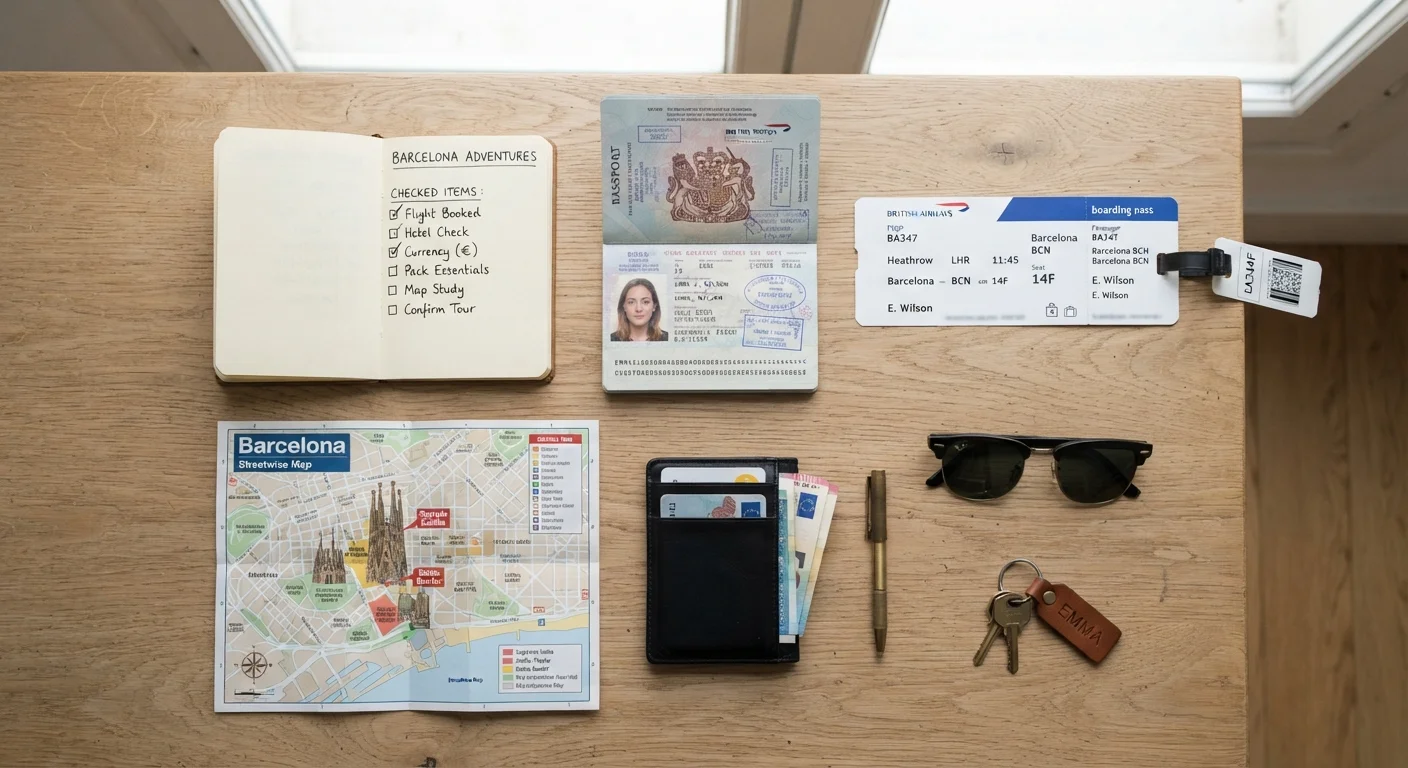
Key Takeaways
Summary
28 items · 45 minutes to 2 hours
Why a Pre-Trip Checklist Pays Off
The most avoidable travel problems - a declined card, a missed visa requirement, a dead phone at baggage claim - share a common cause: skipped preparation. A structured checklist turns vague intentions into verified tasks, and it works whether you're flying internationally or driving to the next state.
This checklist is organized by category so you can work through it in stages rather than one frantic session the night before departure. Bookmark it, print it, or copy the categories into a notes app. The goal is confidence, not perfection.
If you're road-tripping, pair this with the mechanical readiness checklist to cover vehicle prep alongside your travel logistics. For international trips specifically, the international travel quick reference is worth keeping open as a companion lookup.
Documents & Identity
Financial Preparation
Health & Safety
Bookings & Logistics
Tech & Connectivity
Home & Security
Tools That Make This Easier
You don't need specialized software to work through this checklist, but a few free tools substantially reduce the friction of managing confirmations, documents, and logistics in one place.
Google Maps Offline
Download destination maps to your device so navigation works without cellular data or Wi-Fi.
Cloud storage or PDF wallet app
Store copies of your passport, bookings, and insurance policy in an accessible, locally saved format.
Bank or card issuer mobile app
Set travel notices and monitor transactions in real time without calling customer service.
U.S. Department of State STEP (Smart Traveler Enrollment Program)
Register your trip so the embassy can contact you in an emergency or during a significant disruption abroad.
Portable power bank
Keep devices charged during long transit days when outlet access is limited or unavailable.
For travelers keeping a close eye on spending, the budget-focused pre-trip checklist adds a financial layer - covering flights, lodging comparisons, and daily spending targets - that complements the logistics covered here.
The Items Travelers Most Often Skip
Three categories consistently trip up otherwise prepared travelers:
Bank and card notifications
Fraud detection systems flag unusual geographic activity automatically. A charge from a foreign city - or even an unfamiliar domestic airport - can freeze your account within minutes. Call or use your bank's app to set a travel notice specifying your destination and travel dates. Do this for every card you plan to carry, not just your primary one.
Offline access to documents
Hotel Wi-Fi fails. International data roaming is expensive. Airport kiosks aren't always available. Download boarding passes, hotel confirmations, car rental vouchers, and any e-tickets to your phone's local storage - not just your email app, which requires connectivity. A PDF wallet app or your device's native files folder works fine.
Screenshots Aren't Always Enough
Screenshots of boarding passes can be rejected if the barcode doesn't render clearly on your screen or if the airline requires a specific format. Download the airline's official app and add your boarding pass to Apple Wallet or Google Wallet for the most reliable offline access. Always check in online within the window allowed by your carrier to lock in your seat assignment before the gate.
Entry and health requirements
Visa rules, vaccination documentation, and travel advisories can change with short notice. Don't rely on information from booking sites or travel blogs - verify directly with the U.S. Department of State and the destination country's official embassy or consulate. The entry, health, and safety requirements guide walks through exactly what to check and where to check it.
For luggage logistics - particularly how to tag and photograph your bags before check-in to speed recovery if bags are mishandled - see our piece on why luggage gets lost and what to do about it.
This article provides general travel planning information for educational purposes. Entry requirements, health rules, and travel advisories are subject to change; always verify current requirements with official government and embassy sources before traveling.