

Key Takeaways
When Does a Dog Become a Senior?
The answer depends on size and breed. Veterinary guidelines generally place small dogs in the senior category around age ten to twelve, medium dogs around seven to nine, and large or giant breeds as early as five to six years old. Giant breeds age faster because their bodies work harder to sustain greater mass over time.
Recognizing the senior transition early matters. Dogs rarely signal discomfort loudly - instead, you may notice subtle changes: reluctance to jump onto furniture, slower pace on walks, increased sleep, or mild stiffness after rest. These shifts deserve attention, not the assumption that they're simply inevitable. Many can be addressed with straightforward adjustments to routine and environment.
Because senior dogs are more vulnerable to health changes that progress quietly, most veterinarians recommend moving to wellness exams every six months rather than once a year. See our annual vet visit checklist for a practical guide to making the most of those appointments.
Supporting Joint Health Every Day
Osteoarthritis - the gradual breakdown of joint cartilage - is common in older dogs and is one of the leading sources of chronic discomfort. It cannot be reversed, but its progression and its effect on daily comfort can often be managed well.
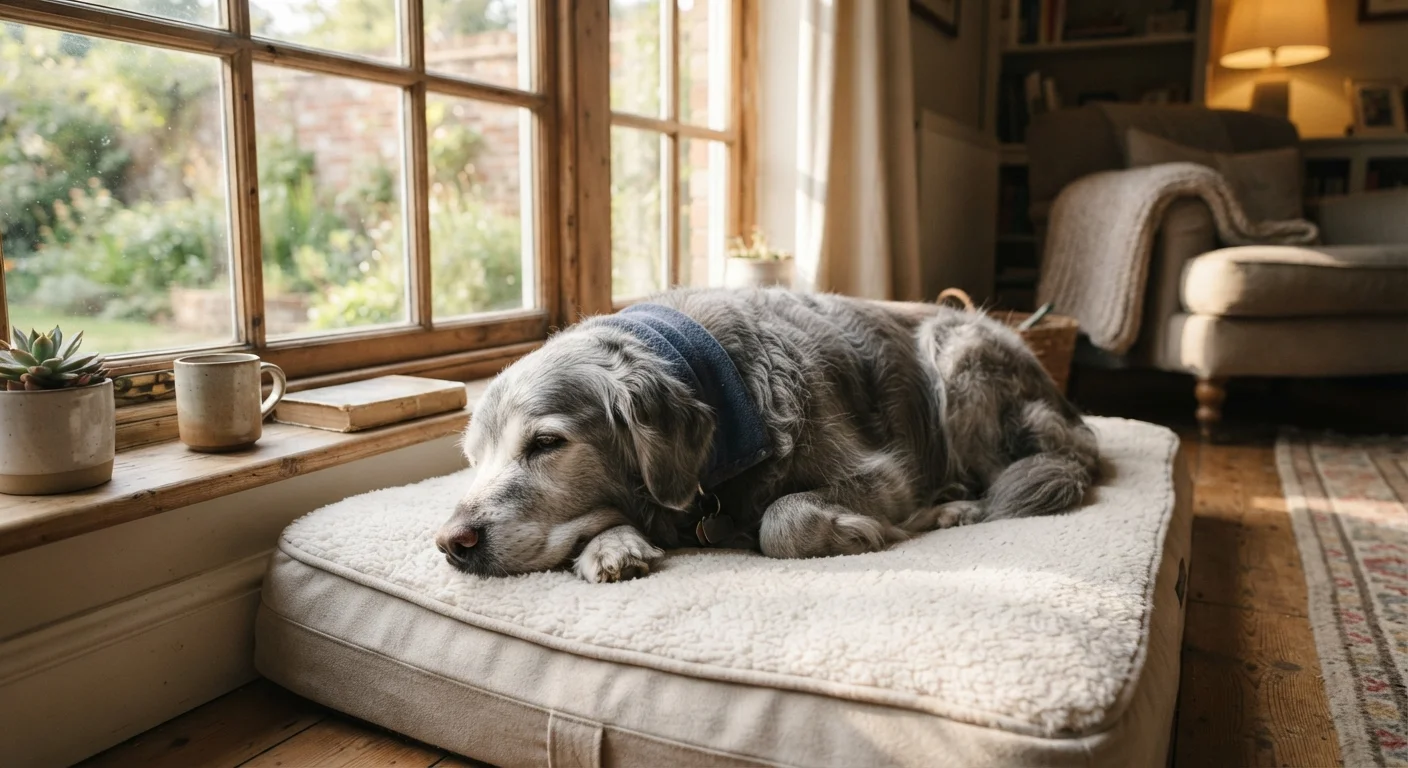
Environmental changes are among the most impactful interventions. Orthopedic foam beds reduce pressure on hips, elbows, and shoulders. Ramps or low steps allow dogs to access sofas or cars without stressing inflamed joints. Placing non-slip rugs on hardwood or tile floors prevents slipping, which can cause both injury and anxiety in dogs who've already lost some hind-end stability.
Warmth helps too. Cool floors aggravate stiff joints, so positioning your dog's sleeping area away from drafts and off cold surfaces can make a noticeable difference overnight.
Nutrition Adjustments for Aging Dogs
Senior dogs typically need fewer calories than they did in their prime, but their protein requirements often stay the same or increase slightly to help maintain muscle mass. Muscle loss - called sarcopenia - accelerates in older dogs and directly affects mobility and resilience. A diet that skimps on quality protein in the name of reducing calories can inadvertently speed that process.
Look for foods formulated for senior dogs that specify a protein source (such as chicken, salmon, or turkey) as the first ingredient. Reduced fat and moderate, easily digestible carbohydrate content are generally appropriate, though individual needs vary considerably by breed, weight, and underlying health conditions. Always discuss dietary changes with your veterinarian before switching foods - some senior dogs have kidney, liver, or heart considerations that affect what's appropriate.
Omega-3 fatty acids, particularly EPA and DHA found in fish oil, have meaningful research behind them for supporting joint inflammation and cognitive function in aging dogs. Your vet can advise on appropriate forms and amounts. Glucosamine and chondroitin supplements are widely used for joint support; evidence is mixed on their effectiveness, but they're generally considered safe and may benefit some dogs.
Rethinking Exercise for Older Dogs
Exercise remains essential for senior dogs - it preserves muscle, supports cardiovascular health, stimulates the mind, and maintains a healthy weight, which is one of the most important factors in joint comfort. The adjustment is in how it's structured, not whether it happens.
Long, strenuous sessions become harder on aging joints. Instead, shorter and more frequent outings tend to work better - two or three 15-to-20-minute walks daily often serve a senior dog better than one long walk. Sniff-heavy, low-pace exploration is mentally enriching without physical strain. Swimming and gentle hydrotherapy are excellent low-impact options for dogs who tolerate water.
Because exercise needs vary so much by breed, our guide on dog exercise needs by breed group can help you understand a useful baseline, though a senior dog's individual condition should take priority over breed-general guidance.
Watch for post-exercise stiffness. If your dog is slow to rise or limping the morning after an outing, the intensity or duration likely needs to be dialed back. That feedback loop - observing, adjusting, and observing again - is how you find the right level for your individual dog.
Routine, Comfort, and Whole-Body Wellness
Consistency benefits older dogs more than younger ones. Senior dogs rely on predictable schedules to manage anxiety, digestion, and sleep - all of which become more fragile with age. Feeding, walking, and settling times that stay roughly stable from day to day reduce unnecessary stress on an aging nervous system.
Dental care is another area that often goes unaddressed until problems become serious. Gum disease is nearly universal in middle-aged and older dogs and has documented links to systemic health complications. Our article on dental disease in dogs covers why oral care matters and what daily maintenance looks like.
Senior dogs may also benefit from cognitive enrichment - puzzle feeders, gentle training sessions, or new scent experiences help keep their minds active as physical capacity declines. Social connection with their human family continues to be a significant contributor to wellbeing at every age.
This article is for general informational purposes only and does not constitute veterinary medical advice. Always consult a licensed veterinarian regarding your individual dog's health, diet, and care needs.