

Key Takeaways
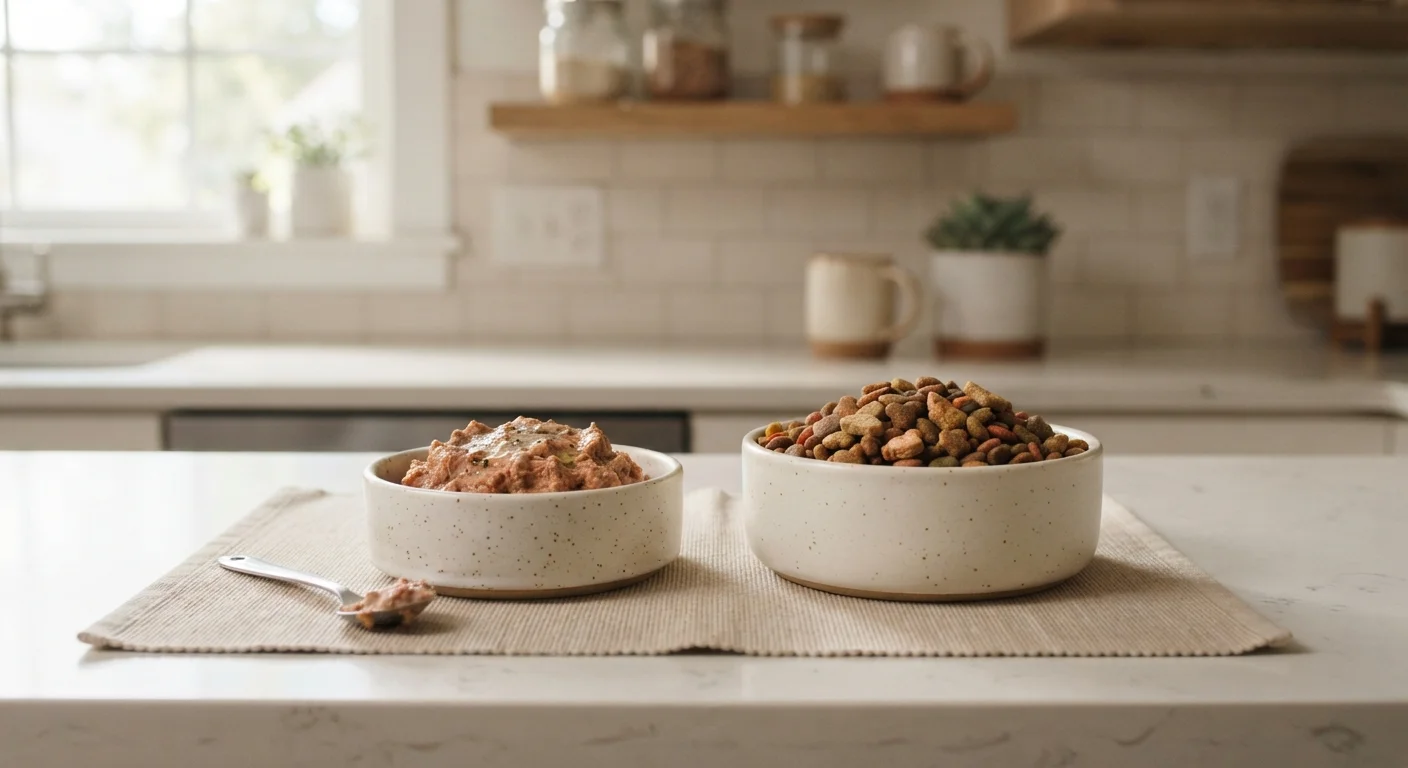
Option A
Wet Cat Food
The moisture-rich, palatable option closer to a cat's natural prey diet.
Best for: Cats needing extra hydration, senior cats, picky eaters, and those with urinary or kidney concerns.
Option B
Dry Cat Food
The convenient, shelf-stable option well-suited to free-choice feeding.
Best for: Multi-cat households, owners seeking easy portion management, and cats without hydration-sensitive conditions.
If your cat has a history of urinary tract issues or kidney disease
Wet Cat Food
Higher moisture content helps maintain adequate hydration, which is critical for urinary and kidney health in cats. Always consult your veterinarian for dietary guidance specific to your cat's condition.
If you need a low-maintenance feeding routine for a busy household
Dry Cat Food
Dry food is easier to store, measure, and leave out without spoiling quickly, making it practical for timed feeders and multi-cat setups.
If your cat is a senior or has reduced appetite
Wet Cat Food
Wet food's stronger aroma and softer texture tend to appeal more to older cats or those with dental discomfort who may resist harder kibble.
If you want to optimize nutrition without committing to one format
Wet Cat Food
Using wet food as the primary diet while offering dry food as a supplement can provide nutritional variety and encourage adequate hydration across life stages.
If you're managing a tight pet-care budget and feeding multiple cats
Dry Cat Food
Dry food typically costs less per calorie and generates less waste, which can make it more practical when feeding several cats consistently.
How Wet and Dry Cat Food Differ Nutritionally
The most consequential difference between wet and dry cat food is moisture content. Wet food is typically 70-80% water, while dry kibble contains only around 10%. Because cats evolved as desert-adapted predators who obtained most of their hydration from prey, many do not drink enough water on their own to compensate for a dry-only diet. This makes food format a genuinely health-relevant decision, not just a matter of preference.
Protein and fat profiles also vary. Wet food tends to have higher protein percentages on a dry-matter basis (meaning when water weight is removed from the equation), and lower carbohydrate content. Dry food often contains more carbohydrate-based binders to maintain its shape. Since cats have limited ability to digest large amounts of starch, lower-carbohydrate diets may be more appropriate for their physiology - though the degree of practical significance is still discussed among veterinary nutritionists.
For a deeper look at how to evaluate what's actually inside any food, see our guide to reading feline nutrition labels.
| Criterion | Wet Cat Food | Dry Cat Food |
|---|---|---|
| Moisture Content | 70-80% | ~10% |
| Protein (dry-matter basis) | Generally higher | Varies; often lower |
| Carbohydrate Content | Typically lower | Often higher (binders) |
| Shelf Life (opened) | 1-2 days refrigerated | Weeks in sealed container |
| Cost per Serving | Generally higher | Generally lower |
| Suitability for Urinary Health | Strong - boosts hydration | Less ideal without added water |
| Palatability for Picky Cats | Often preferred | Variable |
| Free-Choice Feeding Safety | No - spoils quickly | Yes - stays fresh longer |
Life Stage and Health Considerations
Food format needs shift across a cat's life. Kittens have high energy requirements and benefit from calorie-dense, easily digestible food - many kitten-specific wet formulas meet this well. Senior cats often face reduced kidney function and decreased thirst drive, making moisture-rich food especially beneficial in their later years. For a fuller look at how nutritional priorities differ at each stage, our article on kittens versus adult cats offers a helpful comparison.
Cats with specific health conditions may have clear dietary format requirements. Feline lower urinary tract disease (FLUTD) and chronic kidney disease (CKD) are commonly managed, in part, by increasing water intake - which wet food directly supports. Diabetic cats often do well on high-protein, low-carbohydrate diets that wet food more naturally provides. On the other hand, cats with certain gastrointestinal conditions may tolerate specific dry formulas better. A veterinarian should always be involved in feeding decisions for cats with diagnosed conditions.
One common misconception is that dry food meaningfully cleans cats' teeth. Veterinary dental specialists note that unless a food carries a specific dental health certification, the evidence for kibble as a dental hygiene tool is limited. You can explore more common cat health myths that often influence feeding decisions.
70-80%
Water content in typical wet cat food
Compared to approximately 10% in dry kibble, this difference has meaningful implications for feline urinary and kidney health.
~60%
Estimated indoor cats considered overweight
Veterinary industry surveys consistently find that excess weight is among the most common preventable health issues in pet cats, often tied to free-choice dry feeding.
3x
Higher water intake from wet food vs. dry
Research published in veterinary nutrition literature indicates cats eating wet food consume roughly three times more total water daily than those on dry-only diets.
Combination Feeding: Balancing Both Formats
Many veterinary nutritionists and cat owners find that feeding wet and dry food together - often called combination or mixed feeding - captures practical advantages from both. A common approach is offering wet food as the main meal once or twice daily to boost hydration and protein intake, while making a small amount of dry food available for grazing between meals. This can work well for cats who enjoy variety and owners who need flexible scheduling.
The main challenge with combination feeding is calorie management. It's easy to overfeed when mixing formats because each has different calorie densities. Obesity is one of the most prevalent health concerns for indoor cats, so portion discipline matters. Using measured amounts rather than filling bowls freely, and adjusting quantities based on body condition, helps prevent gradual weight gain.
Indoor cats also have naturally lower caloric needs than outdoor cats due to reduced activity levels. Feeding routines should account for this - and pairing good nutrition with adequate mental and physical stimulation matters just as much. Our guide on environmental enrichment for indoor cats explores practical ways to keep your cat active and engaged alongside a healthy diet.
This article provides general educational information about cat nutrition and is not a substitute for veterinary advice. Consult a licensed veterinarian before making dietary changes for cats with health conditions.